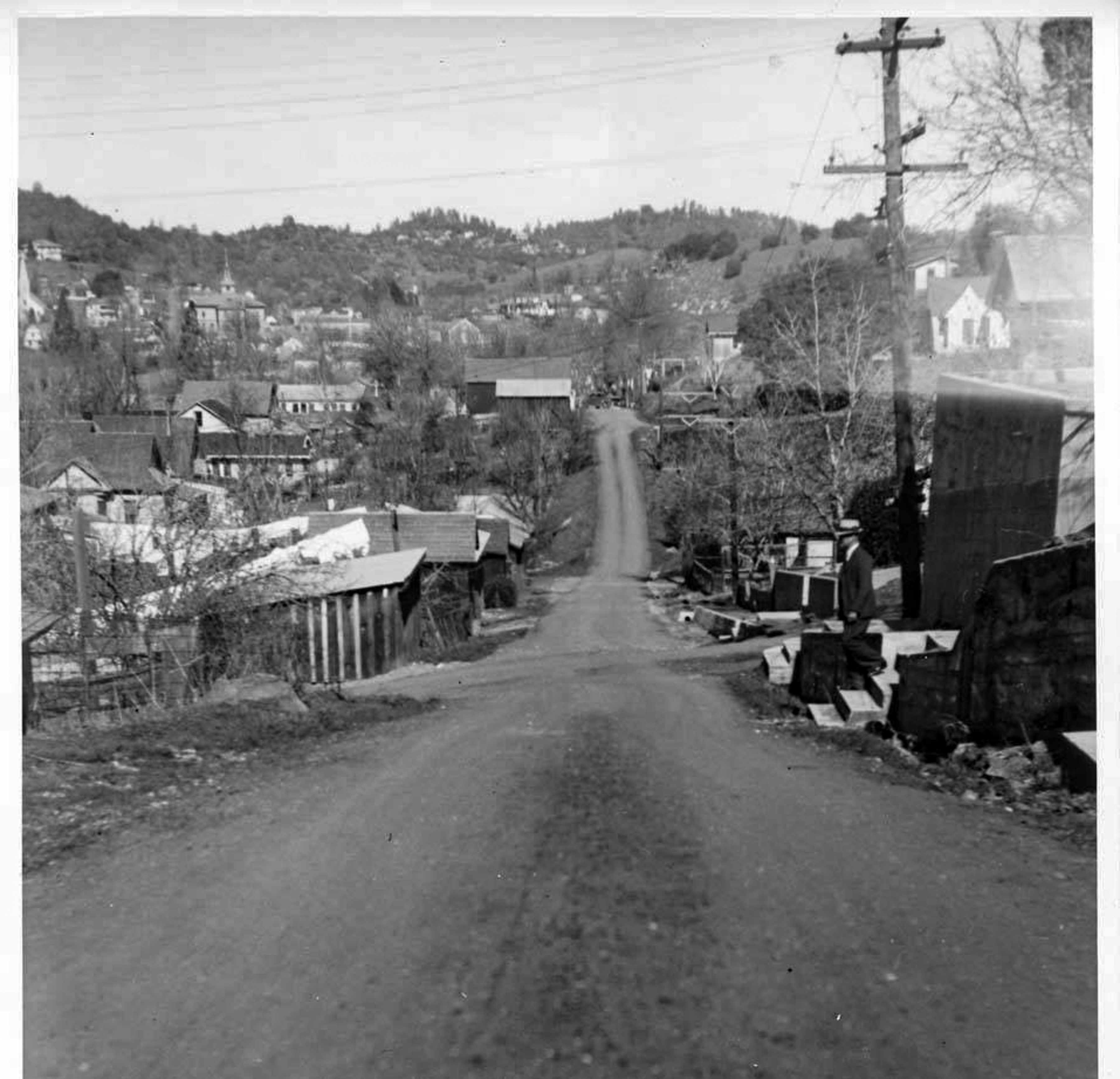
by Tim Konrad
Chapter Fourteen
In an old field that is now the parking lot for a small cluster of rental units, we used to play baseball after school. While not regulation-sized, our field was entirely adequate for our needs and was the site of many happy memories. There were personnel changes along the way as friends moved into or out of the neighborhood, but the core group, Bill Rasor, his brothers and me, remained throughout. The Rasor’s had an arsenal in their home–a proliferation of hunting rifles, WWII arms from different countries, among them a fine Italian carbine, pistols both automatic and revolvers, shotguns of various gauges and a 9mm German luger from WWI whose handle fit like a glove even though ergonomic design didn’t catch on until much later. When we would go out hunting, Bill would supply half the guns for the outing. While fond of guns, I didn’t like killing things, so my career as a hunter was short lived.
***
In high school, I studied Journalism. The class, enrollment of which was by invitation, was divided into two sections–one produced the school yearbook, while the other published the school newspaper. I was on the newspaper staff. When someone completed an assignment, they would place it in the copy bin on the teacher’s desk. I started writing poetry in my senior year of high school. After doing it for a while, I began to wonder what others might think of it. Since I wasn’t the most popular kid in the school, I was fearful I wouldn’t get honest feedback if I were to share my work. I struck upon a workaround that solved this problem. I began slipping poems into the copy box when no one was looking and then hung around to hear what kinds of reactions they elicited when they were discovered. I sometimes even participated in speculation about the identity of the author. To my delight, my poems were well received. I continued submitting poems anonymously and they continued to receive good reviews.
Finally, the teacher offered a reward–a set of volumes of Wallace Stevens’ poetry –for whoever would identify himself as the author of the poems. Anticipating there might be a time in which I would need proof I was the author, I had made carbon copies of everything I’d submitted right down to a signature I devised for my nom de plume–Frederick P. Gargoyle—which I had re-traced on each copy as I’d made them. I gathered my copies, my “proof,” and went, the next day, to class to reveal my identity. Imagine my surprise when I was told I was too late–that the author had already revealed herself and claimed the prize.
A fellow classmate in Journalism class had submitted one poem under my pen name and cheekily claimed ownership of the body of work. My claim was met with disbelief until I produced my evidence, at which point the teacher agreed the work was mine, but he didn’t want to make the other student give back the books, which had come from his library. He instead gave me a single volume–Pencils in the Air, by Samuel Hohenstein. The student, for whatever reason, never expressed remorse for her act.
Thereafter, I wrote poetic editorials on timely topics for the newspaper, to considerable acclaim within that insular little world. I was even invited to write the dedication for the inaugural issue of the school’s literary magazine, a great honor. But I suffered from writers’ block and was unable to come up with anything. My poetry writing otherwise continued through that year and into the next until one day when a friend was visiting. While showing him some of my poetry, I was taken aback by something he said. He asked me why it was all so negative. Up until then, negativity had been my muse, my inspiration, the driving force behind my writing. Hearing his reaction I resolved not to write any more until I could find motivation from positive sources to do so. Such motivation, it turns out, took decades, and my writing all but dried up in the interim.
A couple of decades later I found myself among a group of poets who would gather regularly for poetry readings. I never once during that time felt any sense of identification with them as poets, nor did I feel any desire to participate, since I hadn’t written anything in many years and seemed to have lost the impetus to produce new work. Writing is, after all, a discipline, and one that requires practice in order to improve. Letting one’s skills languish is akin to letting one’s fields go fallow.
My writing inspiration has surfaced from time to time over the years, usually only short-lived, but more so lately, fueled partly by the ongoing spectacle in Washington as a third of the nation continues to embrace a figurehead who fancies himself a leader, not realizing he is a leader of fools who, like him, are so enamored of their misguided notions they are incapable of realizing how far their views have drifted from reality. If there are words that accurately depict the utter absurdity of the trump regime, I’ve yet to find them. I doubt the person who first coined the phrase “truth is stranger than fiction” had any idea just how true that statement is.
Writing about trump alone would be more like a punishment than an outlet for creativity, but keeping silent in the face of his constant assault on decency, propriety and yes, even sanity–I mean, how could anyone with a pulse find the introduction of “fake news” into the lexicon acceptable?–is too much to ask.
That the nonsense that issues forth from trump’s oral orifice finds resonance with so many people in this country is perhaps more disturbing than his antics alone. The implications are difficult to ignore: misogyny, racial discrimination and homophobia are alive and well in America and, along with nationalism and isolationism, they threaten to upend decades of social gains and diplomatic progress. Never underestimate the power of fear to motivate people into making unwise decisions about who they want to represent their interests in government, to make them forget, as Mother Theresa said, that the reason we have no peace “is because we have forgotten that we belong to each other.”
In reality, we are all connected with each other, forever bound by common interests.
I doubt Mother Theresa ever read Ayn Rand; she was probably too busy exemplifying the antithesis of Rand’s teachings to take notice. People who fancy themselves Christians yet follow Rand’s brand of self-centeredness are a curiosity to me. I wonder how, in their quiet moments, they account to themselves for the cognitive dissonance inherent in their conflicting beliefs?
 sonora2sonoma
Leave a comment