The mood aboard our aircraft was somber as our plane re-traced its route back across the dullish-gray glaze of late afternoon arctic cloud-cover to more familiar surroundings. Our hopes for a happy ending was now tempered by the realization that the time necessary for the rescue party to reach the site greatly lessened the odds of the young man’s survival.
The crash site turned out to be in a remote location, far from any settlement. Reaching it required 4 to 5 treacherous hours’ travel via snowmobile under adverse weather conditions. This meant the soonest rescuers would be able to reach the site would be hours after nightfall.
Early the following morning, we learned it was almost midnight before the rescue party had finally reached the site of the wreckage. As it turned out, our worst fears were realized—the young man had perished in the crash. A popular member of a prominent Nome family, his loss was felt by the entire community.
***
©1981-Tim Konrad Photo
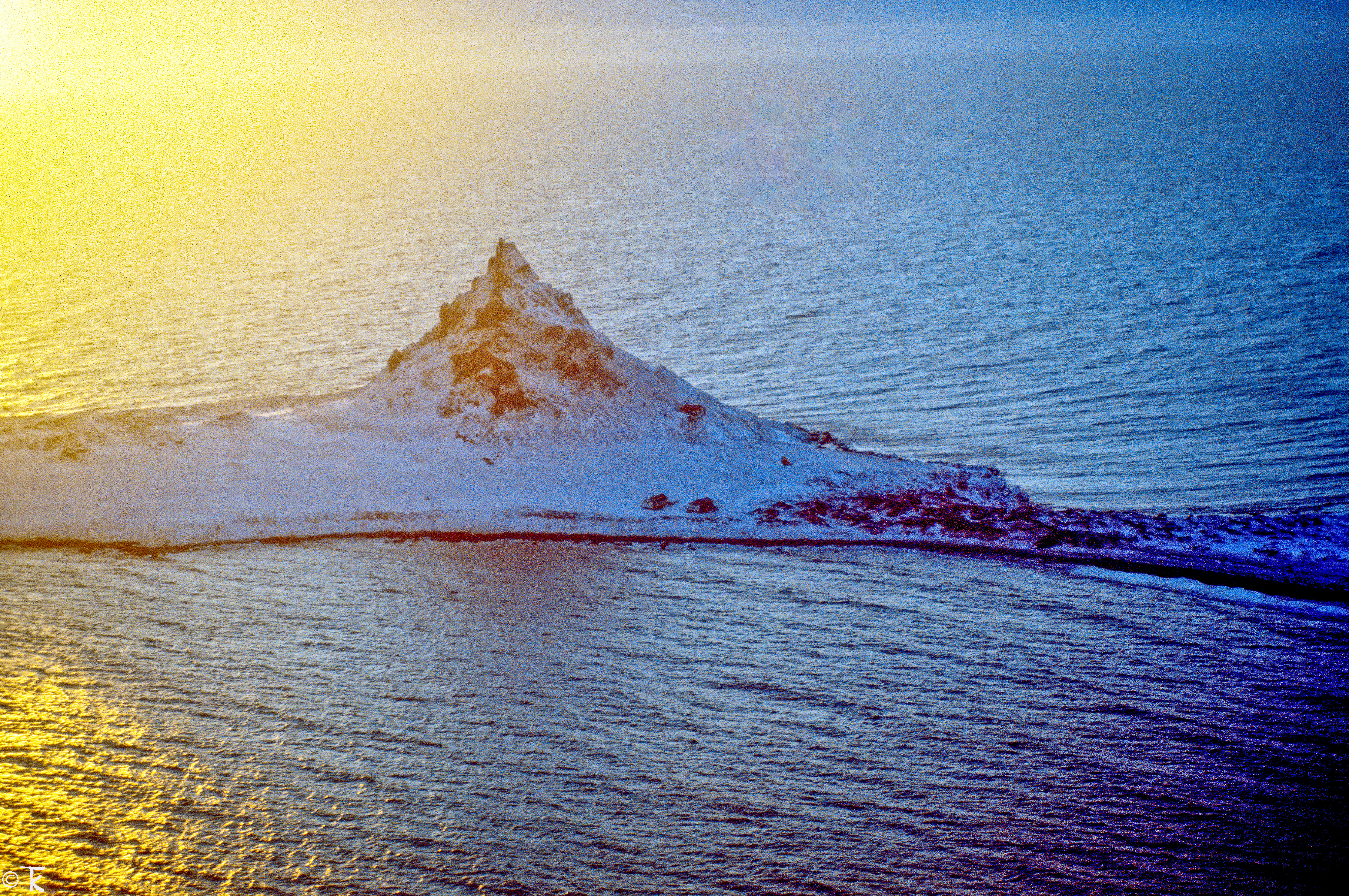
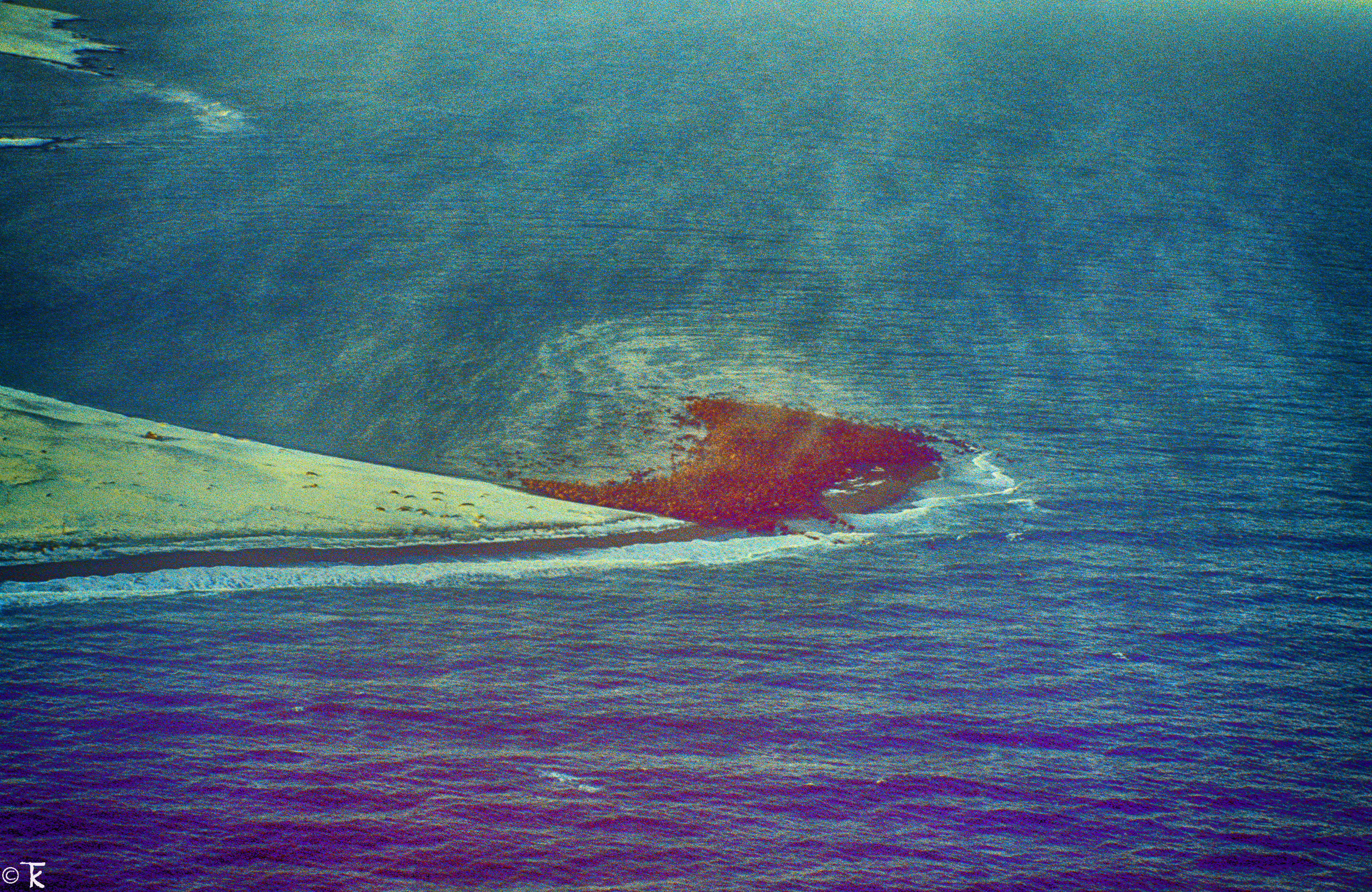
When we had been circling St Lawrence Island, we’d flown by a small islet sitting just off its coast. A long stretch of beach sand extended from the isle, arching gracefully out into the surrounding waters. As we drew nearer, a large brownish mass came into view, appearing like an appendage, on the spit’s distal end, quite out of place with its surroundings.
©1981-Tim Konrad Photo
Curiously, steam appeared to be emanating from the mass, curling into the sky above it in a manner resembling the way convection waves shimmer in the distance over long stretches of desert road on a hot summer’s day.
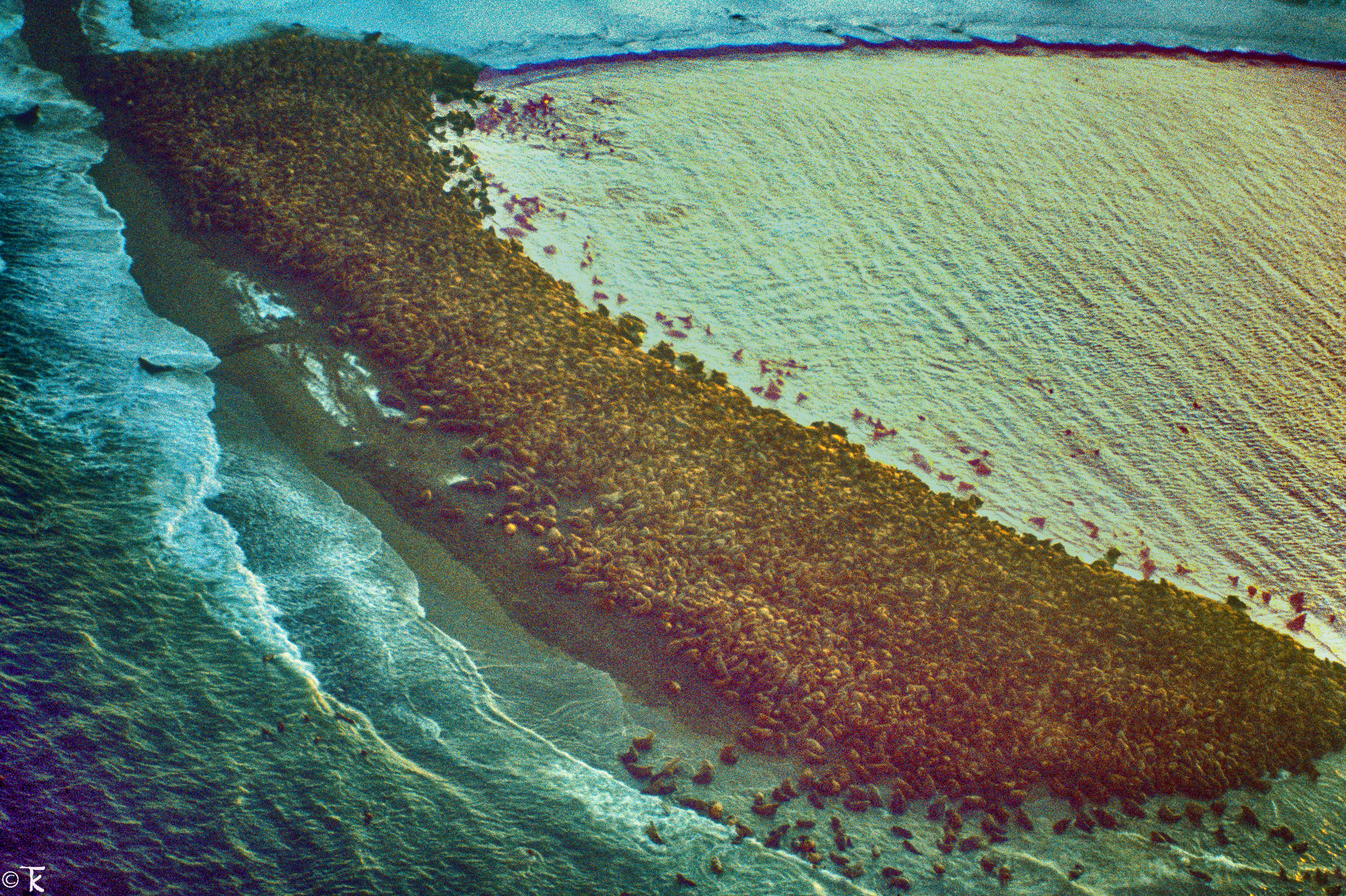
As we flew even closer and the darkened shape came into sharper relief, it became apparent the mass was comprised of hundreds of walruses, all huddled together tightly in a manner reminiscent of aphids on a stalk of brussels sprouts.
©1981-Tim Konrad Photo
I had seen the occasional lone walrus while flying around with Dave, but never imagined I’d see them clustered in such numbers.
The animals I’d seen before had all been left lying on beaches, dead, their bodies mutilated by Native hunters whose only interest had been the money they could make by selling the ivory harvested from the walruses’ tusks.
According to Dave, only the native people were allowed by law to possess or sell walrus ivory. Unfortunately, the lure of money too often spoke with more authority than any prohibitions against illegal harvesting practices might have.
This demonstration of misplaces priorities, like the scourge of alcohol, was yet another of the ways the sins of the White man’s world had been visited upon the indigenous people of the region.
The deleterious ways of western culture were first introduced to, or inflicted upon, the people of the far north by missionaries, just as they had been in many other areas across the globe following the “discovery” of the new world.
The at times bizarre ideas of Christian teaching slowly became intertwined in the culture of the area’s original inhabitants, who were wholly unprepared to assimilate the contradictions of a society whose cosmological world-view was far inferior to their own understanding of their intimate connection with the natural world.
The aforementioned price paid by Shooting Star’s grandfather so he could be “saved” well illustrates the tragic toll taken on a people when the experience of untold generations is cast out in favor of the embrace of fledging notions whose answers to the exigencies of daily living are found wanting in comparison to those that were discarded.
And all the while, we as a people congratulate ourselves and remark favorably about our work, calling it “progress,” and “an improvement over things as we found them,” little knowing the true price paid until it’s our turn to ante up.
Tim Konrad
(To be continued . . )
 sonora2sonoma
Leave a comment