The nexus of land meeting water along the coastlines and riverbanks of the Seward Peninsula created just enough thermal instability in those places to prevent an accumulation of snow from obscuring them. Fliers relied on this phenomenon for navigation under snowy, or “white-out” conditions.
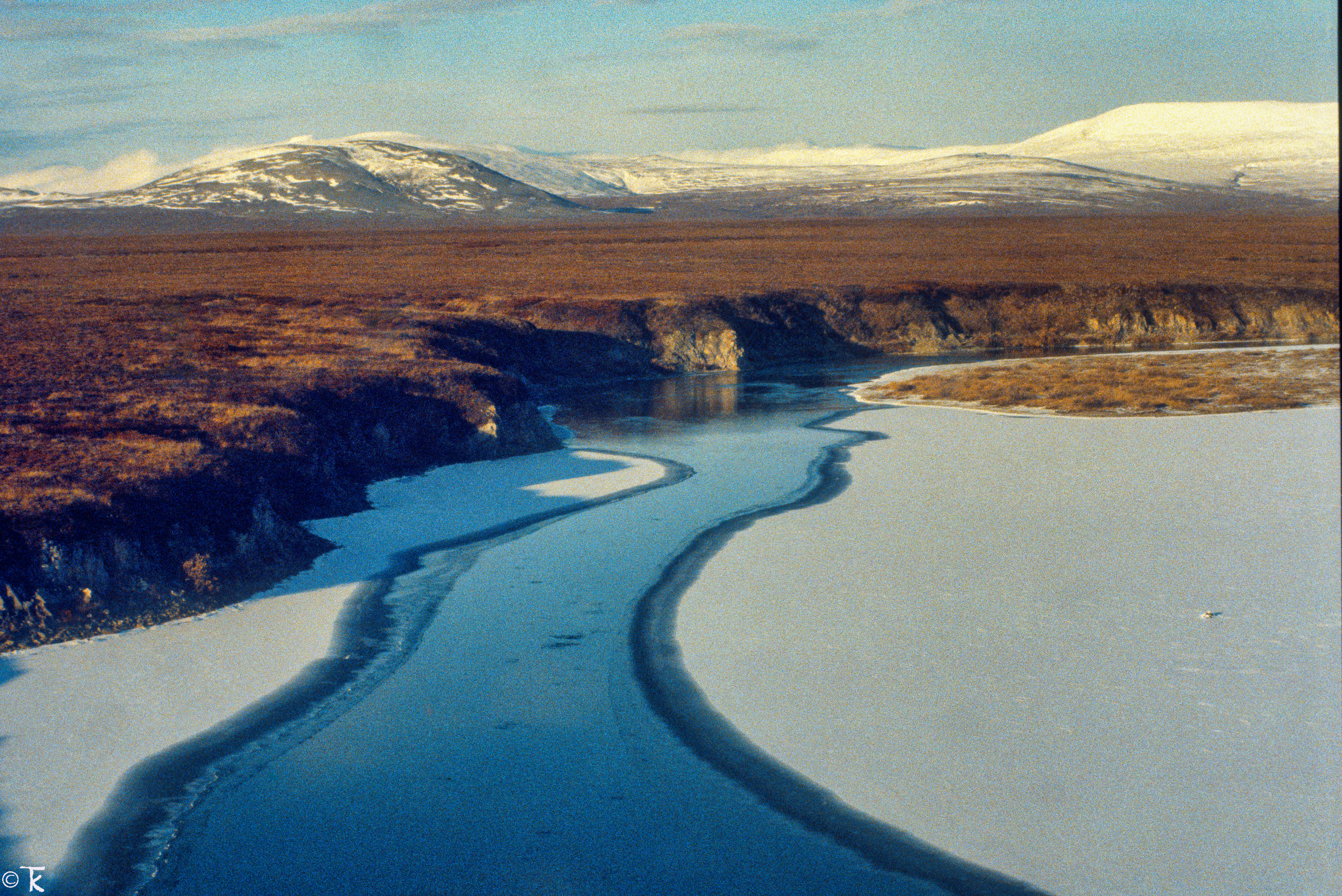
Flying Northwest of Nome ©1981-Tim Konrad Photo
When flying in such circumstances, sky and ground would often lose definition, making it difficult for pilots to discern the difference between them. The instinctive outlines created by riverbanks and coastlines provided visual reference points with which flyers could navigate with more confidence.
***
The Arctic weather created other kinds of difficulties for Alaska pilots not normally encountered by flyers in less frigid parts of the world. My friend, Bill, told of how close he came to disaster once during an incident involving an uncooperative frozen lake.
Bill had been mid-way into a multi-day trip when he’d stopped for the night to shelter at a friend’s cabin. The cabin sat beside a frozen lake. It was early spring, and the ice covering the lake still appeared thick enough to allow a plane safe landing. Bill landed his plane on the ice and, sleeping gear in hand, made his way to the cabin.
Everything seemed fine until the middle of the night, when Bill was awakened by the sound of his friend excitedly shouting something to him about having to move his plane fast, followed by the words, “The ice is breaking up!”
Throwing on his clothes and running out to the plane as quickly as he could, Bill found the ice had, indeed, started to melt. He hopped onboard, fired up the plane’s engine, and lifted off just as the ice cracked and split into pieces. Had he waited a minute or two longer, his plane would have become transformed into a submersible vehicle.
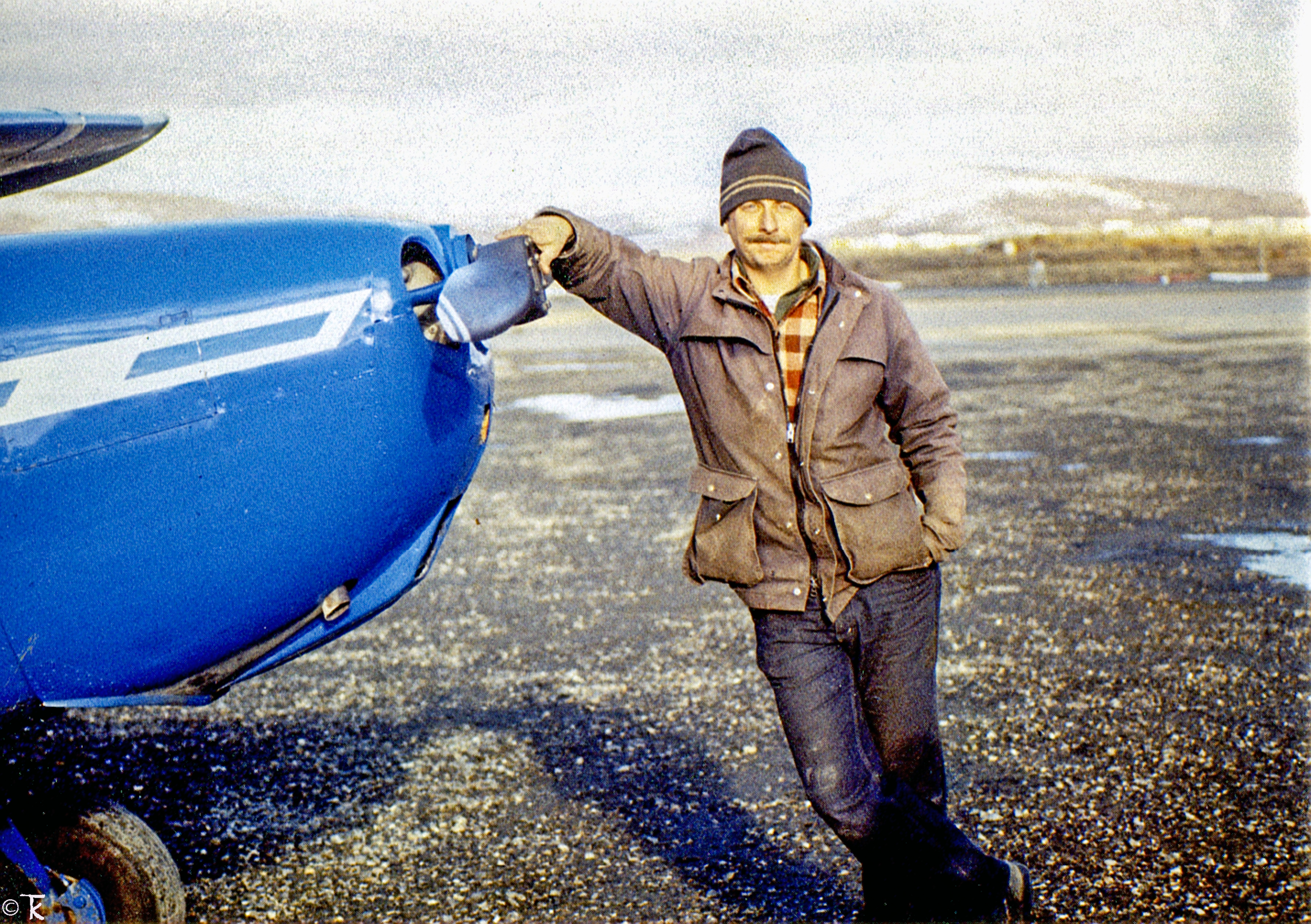
Bill next to Dave’s plane ©1981-Tim Konrad Photo
***
Normally possessed of a keen sense of direction, there was something about having the sun set in the south that raised absolute hell with my ability to orient myself. The practical import of this was I continually found myself having to stop and work out directions in my head for the duration of the time I spent in Nome.
Apparently, I wasn’t the only one flummoxed by having had to contend with a south-facing sunset. Johnny Horton, the guy who wrote the song “North to “Alaska” evidently shared my confusion when he wrote the lyrics to his song. In his line, “Below that old white mountain, just a little south-east of Nome,” his geography was a bit off, as White Mountain actually sat a little north-east of Nome.
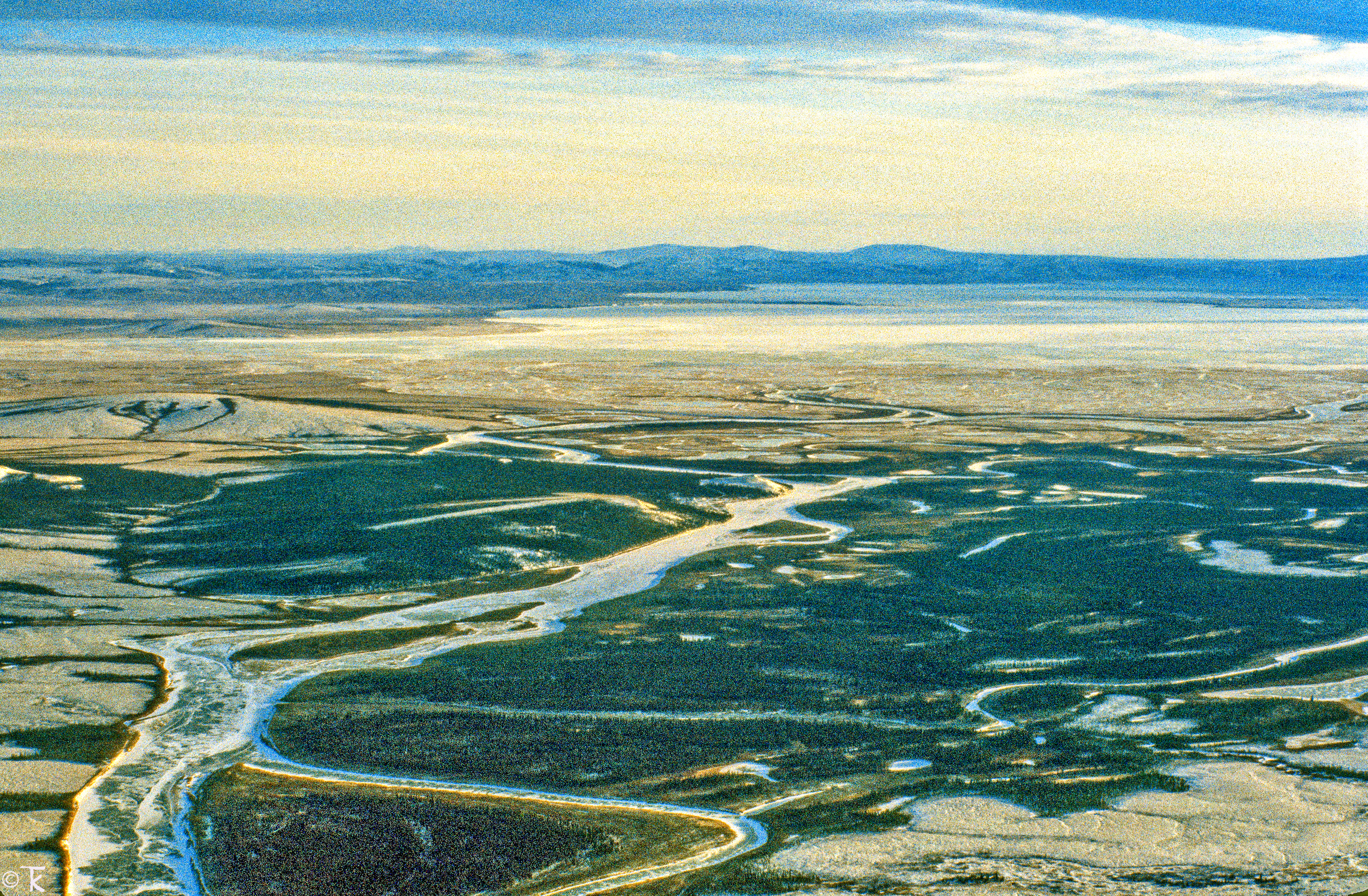
White Mountain, NE of Nome ©1981-Tim Konrad Photo
Paradoxically, despite the fact that White Mountain sat north of Nome, it wasn’t far enough north to discourage tree growth. Despite the latitude, the terrain where White Mountain was situated provided sufficient shelter from the elements to permit scattered groves of Sitka Spruce to thrive in place of the ubiquitous arctic tundra found around Nome and its environs.
Also, unlike Nome, White Mountain provided the shelter from the elements essential for the area’s original inhabitants to establish a presence there long before the arrival of Europeans to the area.
Tim Konrad
(To be continued . . )
 sonora2sonoma
Leave a comment