By Tim Konrad
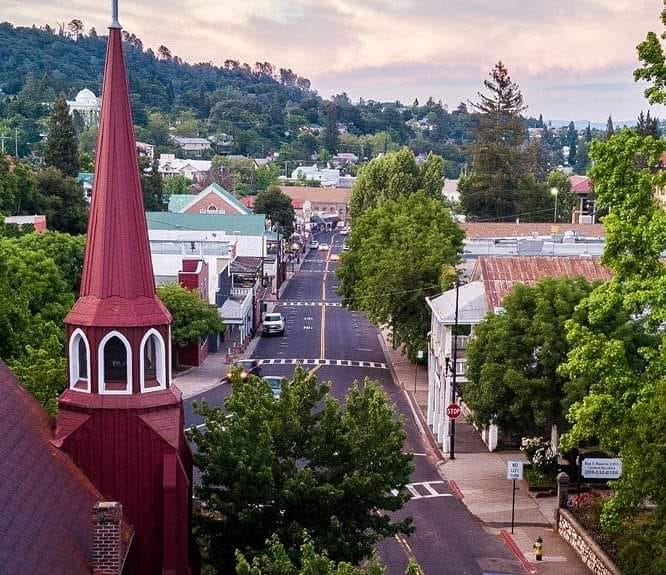
The experience of growing up in Sonora, a charmingly small town in the Sierra foothills of northern California, contributes significantly to the “constant nostalgia” that spins around in my head.
To quote from Orhan Pamuk, in his tribute article in the November 1, 2018 edition of the New York Times, honoring the late Turkish photographer, Ara Guler, “For those who, like me, have spent (a long time) in the same city, the landscapes of the city eventually turn into a kind of index for our emotional life. A street might remind us of the sting of getting fired from a job . . A city square might recall the bliss of a love affair . . An old coffeehouse might evoke the memory of our friends long since gone.”
Such is my experience when I return to Sonora—a place now much different than it was in my formative years, but loaded nonetheless with memories waiting to be resurrected at the slightest provocation.
A walk down most any street in Sonora will elicit, for me, an outpouring of memories whose mental imprints often span decades. The chronicle of experiences thus recalled serves as a veritable history of personal development and transformation, anecdotally defined by the events, large and small, that influenced and helped to guide my becoming.
Histories of places usually focus on descriptions of locations, events and timelines. They seldom pay much notice to the internal dialogues of the places’ inhabitants, those aspects of the story being considered capricious, or unreliable, shaded as they are by emotions, making them unverifiable and therefore not worthy of inclusion.
But this is not a history of place so much as it is a history of personal experience of place, a chronicle of becoming, a tale of metamorphosis, a transformation from youthful naivete to, if sophistication is too generous a descriptor, a more seasoned understanding of what the business of living is all about.
Therefore, the act of strolling by a house is apt to stir memories not only of the people who once lived there but also of different interactions I had with them over the years, including the flavor and tenor of those interactions and the impact they had, for better or worse, on my developing psyche.
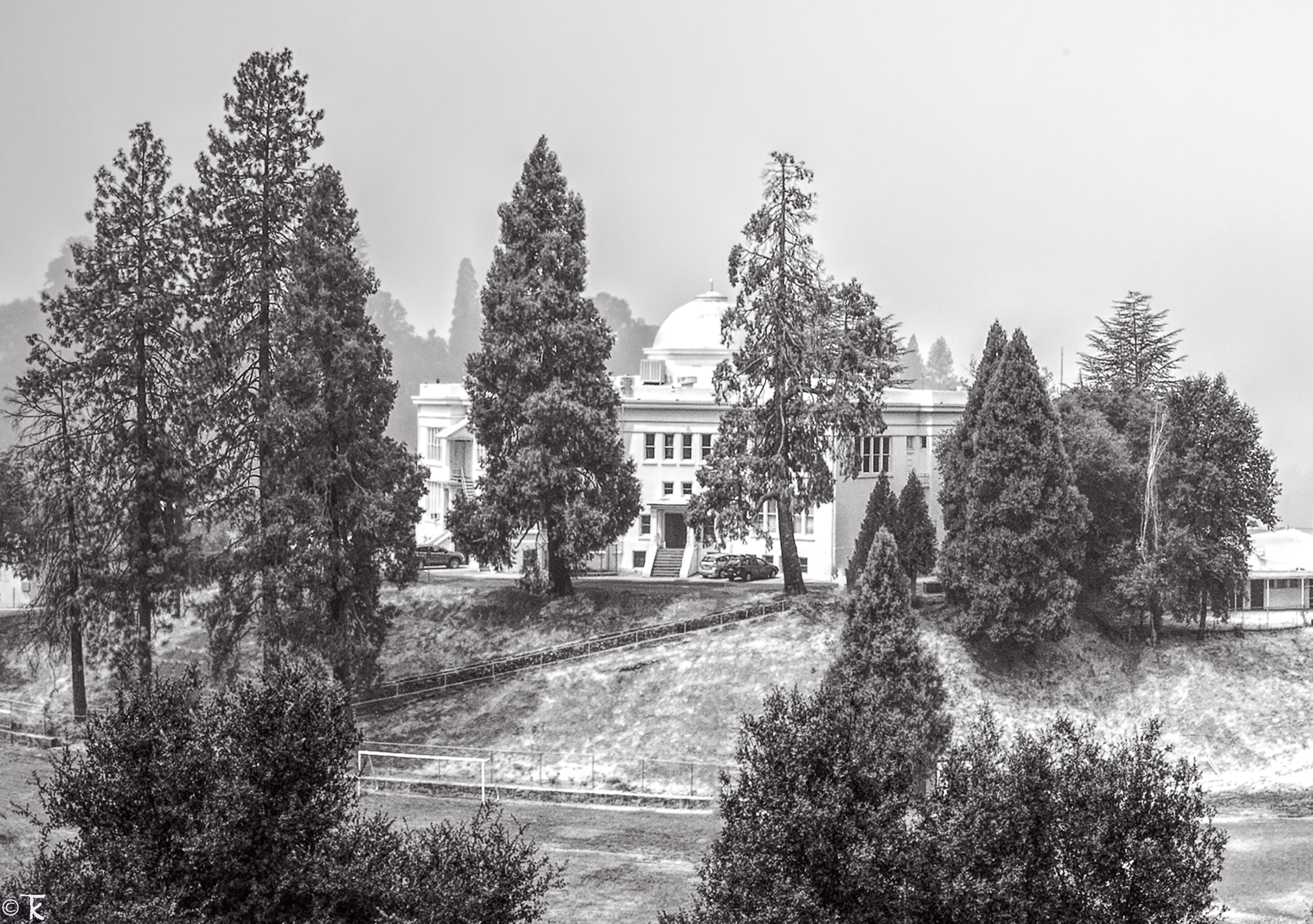
A walk to the old “Dome” where I attended grammar school might elicit a flood of memories spanning the nine years I spent there between kindergarten and eighth grade—memories such as being kept after school over mischief by my 4th grade teacher, more often than I’d like to remember, when it was time to go to cub scouts, or fonder recollections of going fishing on Saturdays with my sixth-grade teacher, or having an eighth-grade teacher who moonlighted as a disk jockey at the local radio station and would let us submit requests to dedicate songs we wanted to hear on his show.
And then there are the not-so-happy memories from grammar school, like not raising my hand to avoid appearing stupid when I didn’t understand certain of the more arcane nuances of long division. Or being struck across the face with a whistle-strap by Mrs. McCormick, a teacher some thought was the devil’s spawn, while I sat on public display on “the bench”—a mid-50s variation of the pillory used during the middle ages to utilize public embarrassment as a disciplinary response to, in my case, some long-forgotten infraction.
Another recollection reminds me of the seminal decision I made in 5th grade, after being repeatedly befuddled by the hellishly difficult exercises unnecessarily inflicted upon us in the quest to teach us the ponderous science of sentence diagramming. It occurred to me that I could simultaneously end the torture and put that time to better use by tuning out the teacher and gazing out the second-story window, imagining I was soaring above the landscape on a flying carpet.
Choosing to follow my own course in this particular matter, while it allowed the finer points of sentence diagramming to forever languish in obscurity—arguably not a bad thing—did not appear to hamper my ability to construct complex sentences, and the lesson I gleaned from that experience concerning my power to choose where to focus my energies, and where not to, has been of far greater benefit to me over the years than any amount of sentence-diagramming expertise could ever have.
I employed that same strategy when burdened in high school several years later with the task of learning income tax preparation. To this day, the mere mention of W-2 forms makes my eyes glaze over and my brain go tilt like a pinball machine in an earthquake. After all, there are knowledgeable and qualified people available who are perfectly happy to act as surrogates when it comes to such mundane matters! Some of them, I am told, even enjoy doing so! And, while I can’t imagine how anyone could find pleasure in such mind-numbing pursuits, I say, let them do it!
It’s not as if I’m against learning. Far from it! It’s just that, pragmatically speaking, there is far, far more knowledge in the world than any one individual could ever absorb in a single, or even a handful of lifetimes. Knowing where to place one’s energies to greatest effect, therefore, seemed only prudent to my young sensibilities, as it still does today.
A walk down the hill from the “dome” might take me by the home once occupied by the town’s official librarian, Miss Mae Kelly. Now a bed and breakfast, I did some painting work on Miss Kelly’s house back in the 70s. A spinster and a prim and proper person accustomed to the formalities common in her youth, she’d insisted, when it came time to pay me, that I join her in her kitchen for a shot or two of whiskey, straight from a shot-glass.
In a similar manner, Carlo Sardella, uncle to famed local sheriff Miller Sardella, insisted I join him and his wife for drinks upon completion of a paint job I did for them, also in the 70s. Carlo and his wife lived over behind the old county hospital in the section of town formerly called “Little Italy.” Carlo’s drink of choice was red wine that he made personally in his basement from grapes grown in his front yard. The area around Carlo’s basement was teeming with fruit flies drawn by the pervasive background aroma of fermenting grapes. The wine he produced, which was served in old, recycled Welch’s jelly jars, made up in potency for what it lacked in flavor; two glasses of the stuff made you unsafe, not to mention illegal to drive.
And then there was the abandoned store front, between the red church and the high school, where I and some other students witnessed, on our way to school one morning, an oversexed monkey liberally spraying the large window separating us with his seed, embarrassing the Methodist minister’s daughter as she passed by pretending not to notice.
Walking about town, memories such as these present themselves, revealing, like exposed strata, layer upon layer of recollections from various points in my life, all clambering for attention in a cacophonous concerto of nostalgia-empowered and nuance-infused memorabilia and noteworthiness.
To be continued:
 sonora2sonoma
Leave a comment