sonora2sonoma

  • imrs.jpg

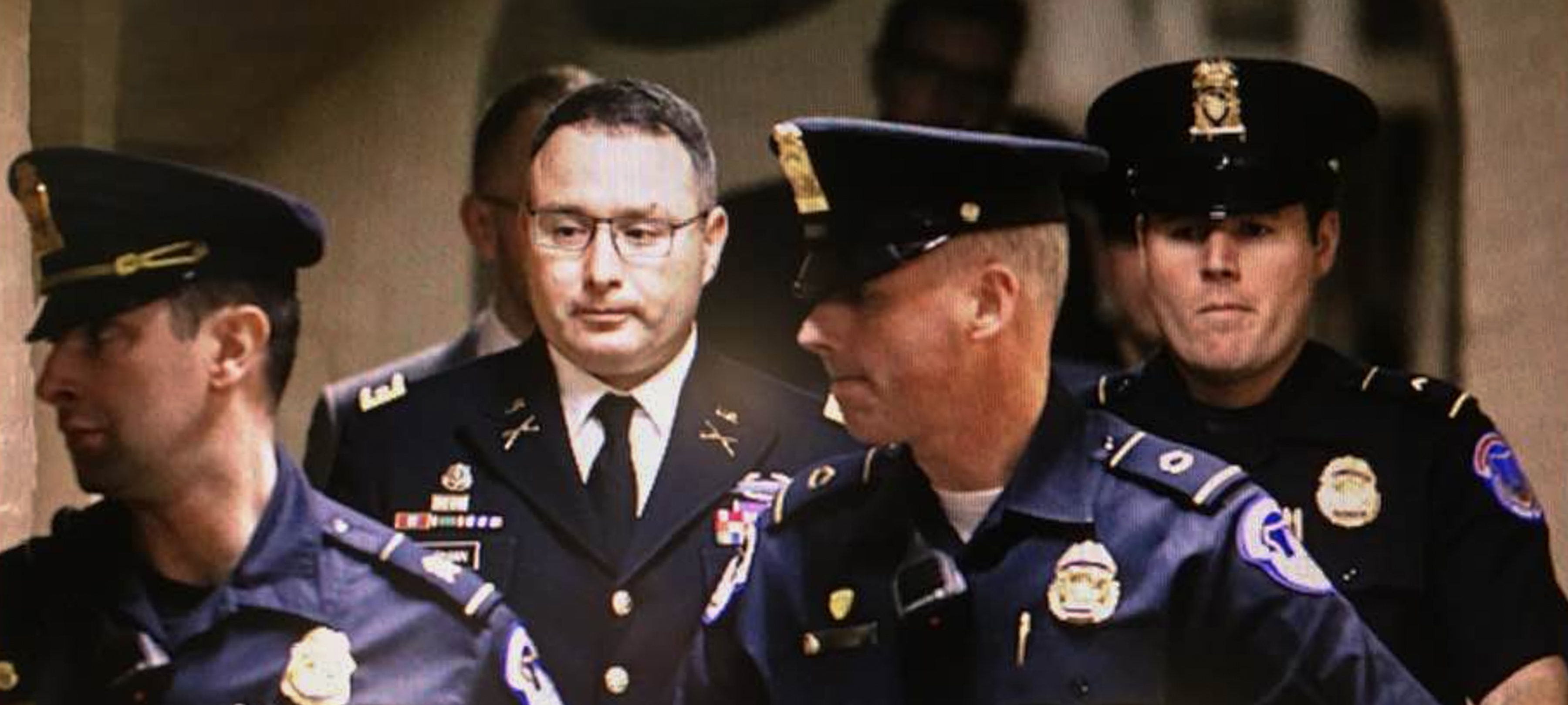
    (Jabin Botsford/The Washington Post)

    The current crop of Republicans resembles lemmings rushing toward the cliffs of ignominy. Their fear of trump, if they could only see it for what it is, should instead be aimed toward fear of becoming irrelevant.

    By forsaking their duty to act to counter the actions of a rogue president, Senate Republicans continue to align themselves with trump and his unhinged directives. Senators’ sanctioning of the ongoing corruption currently underway in major governmental institutions such as the Justice Department—growing closer each day to becoming the Department of Injustice— have made them co-conspirators in a conspiracy the dimensions of which are frightening to behold.

    Attorney General William Barr—the man who looks disarmingly like a teddy bear but whose actions more resemble those of a tick in the manner in which he has burrowed into the Justice Department and infested it with his poisonous policy pronouncements, the man with the likeness of an Ewok from the forest moon of Endor, the man who resembles a puffer fish when provoked or excited, appears hell-bent on derailing the wheels of justice. Looking more like the president’s counsel that the People’s’ attorney, Barr’s actions scream ‘conflict of interest.’

    After his intervention to lower the sentencing recommendations in the Roger Stone trial—a clearly inappropriate act to anyone not enveloped in the fog of wrongheadedness of those in trump’s orbit—the day after the president attacked prosecutors’ recommendations as “horrible and very unfair,” Barr sought to distance himself from the president’s actions via the fiction that the two events were not related.

    The implications of these actions for the concept of equal justice under the rule of law were hard to ignore.

    The perception that the two events in fact were connected was reinforced after trump subsequently congratulated the attorney general for, as quoted in yesterday’s New York Times “taking charge of a case that was totally out of control and perhaps should not have ever been brought up.” In expressing his gratitude, the president was obviously experiencing some degree of confusion concerning who it was who was out of control.

    The connections thus revealed may explain Barr’s telling ABC News yesterday that he wasn’t going to be “bullied or influenced by anybody,” be it “Congress, newspaper editorial board(s) or the president.” Time will tell if he means it, or if his statements amount to just more disingenuous Republican blather.

    Tim Konrad


  • Just spent a couple of hours in the doctor’s office waiting room at Kaiser, where I saw several people wearing masks over their faces, presumably out of fear of becoming infected.  Others appeared to be wearing masks to prevent the spread of infections already contacted. I observed one such person coughing into her mask. if more people were to act as she did, contagions would be less easily spread.  It’s more than a little ironic that medical personnel advise people to stay home when they’re sick yet require them to leave home and assemble in waiting rooms to receive medical treatment. Under such conditions, a trip to the doctor becomes the equivalent of playing medical Russian roulette. And the longer one must wait to receive treatment, the more opportunity there is for airborne pathogens to infect new victims.

    No immediate solutions to this problem come to mind, but the risk of getting sick posed by going to see the doctor under the current paradigm could be lessened significantly by the addition of more staff, or even more realistic appointment scheduling, aimed at ensuring shorter wait times; either would be a step in the right direction. The fact that such changes would negatively affect Kaiser’s (and other similar organization’s) bottom line provides one good argument in favor of single-payer healthcare.

    Tim Konrad

  •  (Evan Vucci/AP)

    (Evan Vucci/AP)

    Maybe that will be his undoing, I told myself after the president impulsively withdrew our troops from Syria. Maybe this will be enough, I thought, after he used murder for political distraction in the killing of General Suleimani. The revenge dismissal of Col. Vindman and his brother? No such luck! Waiting for the last straw to break the proverbial camel’s back has turned out to be, so far at least, like waiting for Godot!

    While transmuting besmirchment into exoneration after the conclusion of his senate trial, the president did indeed learn a lesson, but not the one Senator Susan Collins, ever the keen judge of human behavior, naively and self-servingly intuited; the lesson he took away instead was that he no longer has to concern himself with repercussions for his actions—that he can now operate with impunity. Newly emboldened by the Senate Republicans colossal blunder in acquitting the president in a sham trial, he is acting like he received a “get out of jail” card.

    It’s becomingly increasingly evident that no one in government in a position to do so intends to step up and put the brakes on this president’s lawless spree of offenses against the republic he promised to protect.

    Currently, a debate is waging among those principled government servants yet in service in the Justice Department over what should be done next.

    Torn between the dictates of their conscience and their guilt over the prospect of leaving the department in the hands of those who are more than willing to follow the president’s edicts without question, these loyal public servants can’t escape the knowledge that resigning their posts on principal would leave the department in the hands of people less inclined to try to slow the erosion of judicial norms currently underway.

    Minus the interference of career personnel in possession of the means to resist this sad decline, the deconstruction of the Justice Department will proceed unabated, no matter how heinous and destructive the results. If the president told his sycophantic enablers to march off a cliff, they would presumably comply, for this is what they do, metaphorically each time they do his bidding.

    If it all just seems too much to bear sometimes, if you, like me, find the steady onslaught of dreadful news emanating from trump-central too hard to take, solace can be found in the words of Pema Chodron, who reminds us that “things end, (and trump certainly qualifies as a ‘thing’), that things have no lasting substance (and this is true on several levels) and that everything is changing all the time.” Whether it’s from one too many hamburgers, long-overdue judicial action or electoral defeat, the president’s time in office will, sooner or later, like all “things,” end.

    Tim Konrad

  • 84016788_3181144401910230_7819404694454796288_n_DxO

    Mere days after the Republican senate acquitted trump in his impeachment trial, and following on the heels of the dismissal of Col. Alexander Vindman and his brother, Evgeny Vindman,  from their jobs at the National Security Council, they received yet another powerful indicator of how the acquittal has ‘modified’ his behavior going forward when, in spite of advice from Senators Susan Collins, Thom Tillis, Martha McSally and Ron Johnson, to do so, the president fired Gordon Sondland from his post as ambassador to the European Union. Citing concerns it would look bad, the senators, as reported in the New York Times on February 8, claimed dismissing him was an unnecessary step since the ambassador was thinking about departing anyway. When told by State Department officials on Friday that he had to resign that day, Sondland demurred, claiming he was unwilling to be included in a witness purge and instead stating if they wanted him gone, they would have to fire him; the president then obliged.

    Thinking back to the president’s bland and tepid reaction to the Khashoggi murder and dismemberment, senators should have realized at the time that his response was an early indicator of his true intentions.

    As if that weren’t enough, the man stared at the sun during the last eclipse. Who does that???

    Collins and Company would be well advised to snap out of whatever reverie they’re in that enables them to continue in their dismissal of the real danger to our way of life posed by the actions of this lawless and intemperate president.

    Tim Konrad


  • The members of the senate had an opportunity today to show the nation and the world, once and for all, what they are made of. One courageous senator, Mitt Romney of Utah, chose conscience over politics by announcing his vote to convict the president on abuse of power charges.  Romney is a true patriot and not a partisan tool for the outrage currently being perpetrated by the Republicans in the senate.

    The acquittal was, in the words of Senator Angus King, “an acquittal with an asterisk—not exoneration, not a finding of innocence . . . because it (was) the first impeachment ever to occur with no witnesses and no documents produced.”

    The abomination that is Mitch McConnell put his perfidy on full display during the closing arguments in the trial, oozing with hypocrisy as he sought to continue the grand illusion that his handling of the proceedings constituted a fair and reasonable response to Minority Leader Schumer’s eloquent entreaty, while simultaneously confirming that no limits exist to the depths to which he would plunge his party in his fevered quest to defeat justice.

    Mocking the House Speaker for her stated refusal to accept the results of the acquittal with all the feigned outrage he could muster, McConnell maintained his usual straight face throughout the proceedings. To see him abuse his office so blatantly and shamelessly only served to confirm beyond all doubt the need to defeat him in the upcoming election. Mere words alone fail to express the revulsion felt at the sight of this miserable excuse of a human being upending logic and reason in support of his unholy alliance with the devil he is seeking to protect from justice.

    We would all be well-advised to consider the mettle—the true character—of these people, as revealed by how they voted, and remember this November what they showed us on this dark day. There now remains no illusion about the true intent of these people and what they hold as most important. Now it’s up to us to show them ours.

    The future of our republic depends on it.

    Tim Konrad


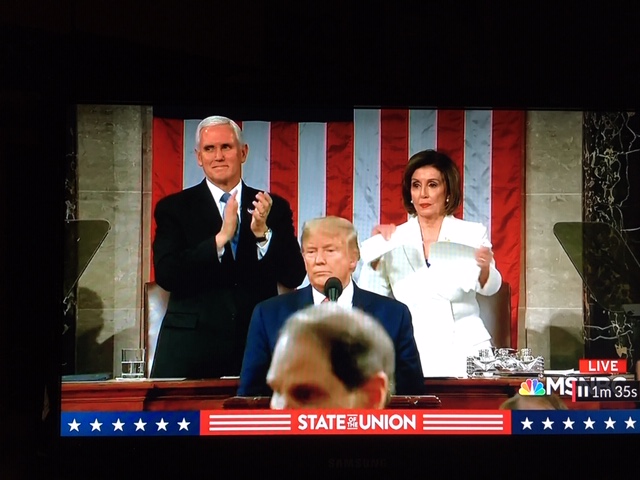
  • IMG_0963


    The president entered the House chambers

    Reservedly, apprehensively

    Minus his usual false bravado

    While his republican sycophants followed behind obediently

    Like the faithful lapdogs they have become

    Smiling as if their accomplishments

    Were something in which they could take pride.


    The Republicans stood repeatedly in praise of mammon

    While the Democrats sat silent in their seats

    As the president stated lie after lie about the state of the union

    While taking credit for economic improvements

    Due more to actions of the previous administration

    Than to any efforts on his part.


    The Democrats grimaced as the president claimed

    Respect for our nation has grown abroad since he took office.

    The Republicans applauded as he made false claims

    That his tax cuts have made the country more prosperous.


    The usually comatose vice president was smiling

    As if floating on a cloud of make-believe.

    The denial in the chamber was palpable.

    The illusion deepened and the fantasy level soared

    While alternative facts piled one upon another

    Until the truth was blurred beyond recognition.

    Such was the tenor of the moment.


    The fantasy put forth by this display of utter mendacity—

    As partisan as partisan can be—

    Enumerated many wonderful things

    Crafted to create the illusion of sincerity.

    The mirage was appealing

    Except for the fact that this man is the king of lies

    And that he will forget his promises

    At the first opportunity.


    While playing on the fears of the ignorant

    With outrageous claims about illegal immigration

    And praising his wall as a strong deterrent

    The president neglected to mention

    That part of his mighty wall

    Was blown over by a windstorm last week.


    His minions engorged themselves

    With self-congratulatory, smiling approval

    While the Democrats looked down at their laps

    Or stared into space.


    The president praised Rush Limbaugh

    “For all he has done for his nation”

    As he announced Limbaugh would receive

    The presidential medal of freedom

    Presented on the spot

    By the First Lady.

    A stirring moment, until one recalls

    That this man, over the years,

    Spread his lies with the virulence of the coronavirus.

    What Limbaugh has really done for his country

    Is to spread the hate, disinformation and lies

    On which bigots and racists depend

    For their legitimization.


    The president praised Moscow Mitch

    For his federal judgeship appointments

    As Gorsuch and Kavanaugh looked at each other approvingly.

    Like team-mates on an athletic squad,

    Both men were smiling like cats who just finished gorging on canaries.


    The president could not have written this speech.

    It utilized complete sentences

    And employed words with more syllables

    Then his usual staccato utterances.

    Curiously, he spoke of historical people and events

    As if he had knowledge about them.

    The speech employed special gimmicks—

    Limbaugh’s medal presentation,

    The surprise return of a soldier from combat,

    Reunited with his family on the spot.


    Half the audience stood in applause

    While the other half remained seated—

    Nothing unusual about that!

    But the incongruity of trump at the dais

    Flanked by Pence on one side and Pelosi on the other

    Was cognitive dissonance at it’s finest.


    The president maintained decorum throughout,

    Remaining on topic to the end.

    A remarkable display of self-control for a man

    Known for flying by the seat of his pants.

    Someone must have gotten through to him.

    Perhaps the impeachment will modify his behavior.

    Fear can be a powerful motivator.

    But, owing to his nature,

    whatever effect it may have had

    Will likely be short-lived.

     
    The only redeeming moment of the whole affair

    Occurred at the very end

    After the president had finished his speech

    When Madam Speaker gathered the pages

    Of the copy of the speech presented to her by the president

    At the beginning

    And tore them in half.


    A dinner-hour spectacle

    For those who’ve lost their appetite,

    In truth it must be said

    That all such displays are in many ways just that—

    Spectacles; long on show

    And short on substance—

    But this one was, beyond a doubt

    Every bit as superlative

    As this man routinely makes claims

    Of everything he does.

    Only this time, it was truly

    A superlative delivery of duplicity, deception and dissimulation.


    I need to take a shower now.


    Tim Konrad


  • Given the recent atypical weather being experienced in disparate parts of the planet, it’s becoming increasingly difficult to deny the role fossil fuels are playing in the changes we are witnessing.  But, as the changes wrought are made more manifest each day, resistance to the acceptance of the reality of climate change has shown no signs of abating.

    One of the more vexing aspects of this situation is how to account for the specter of otherwise intelligent-seeming people acting against their self interest in their continuing denial of the scientific consensus concerning rising global temperatures.

    To point out the self-serving nature of such attitudes only provides a partial explanation of the phenomenon; short-sightedness also plays a role. But why would Republicans, who as a group have learned better than Democrats how to play the long game, fail to appreciate the need to try to see around corners when regarding the potential dangers posed by a changing climate? One would think they would be eager to seize upon the many opportunities for economic enrichment to be found in developing and refining new and renewable energy sources and other technologies designed to address the environmental consequences of prior inaction. But no! What is seen instead is a chorus of denials, deceptions and distractions designed to assuage a body public that has largely moved beyond these leaders’ outdated and unsupported positions.

    In truth, these so-called leaders are, by their actions, demonstrating they no longer view themselves as beholden to the people who elected them to represent their interests and are instead working on behalf of entrenched interests to maintain the current power structure. There’s no news here, you might say, and you’d be right. Hasn’t it always been thus?

    Well, yes, there have always been people willing to compromise their convictions for cash. But oftener than not, they have been the outliers, the minority, held in check by precedent, propriety and common sense. When those practices fall out of vogue, as they appear to have done in our present circumstances, duller minds prevail, and the wheels of government begin to steer toward chaos. The resultant government by the few for the few and the nonsense it spews forth is readily consumed by all stripes of unenlightened people, the incurious, the undereducated, the skeptics, troglodytes and flat-earthers who are threatened by the truth and folks who lap up the anemic bullshit they see on Fox

    There’s a certain type of person who’s impervious to the truth, for whom ‘alternate facts’ hold special significance because they conform to their preconceived notions and biases. These folks can be seen anywhere in history and their story is always the same–marked by resistance to new ideas, they are driven to maintain power at any cost, even if it means burning down their own houses. For people like these, reason doesn’t even enter the equation.

    Tim Konrad

    2020.01.09


  • Impeachment Day

    82609575_2695736243839903_6882730987860525056_n

    As I sit watching Adam Schiff introduce the articles of impeachment

    To the assembled senators

    On this dark and rainy day

    (Why do so many auspicious occasions occur against a backdrop of gloom?)

    The honesty of the rain

    Stands in stark contrast

    To the great trickery, the subterfuge,

    Afoot in the senate chambers

    As those august members

    Steel their minds against

    Any stirrings of conscience

    That may still cling

    To whatever tattered shards of decency

    Yet remain

    Struggling, to maintain buoyancy

    In their hearts and minds.


    No one can serve two masters

    With equal fidelity

    When the interests of one

    Collide with those of the other

    And no senator

    Can provide impartial consideration of evidence

    Of their leader’s wrongdoing

    After stating publicly their belief

    That acquittal is a foregone conclusion.


    The rain has no guile, No hidden agenda,

    Nothing to hide and nothing to do

    But follow the law of gravity.

    The rain plays its part

    With fidelity to the whole.


    The members of the Senate

    Whose job it is to set aside partisanship

    And act with impartiality

    In their deliberations

    Should do likewise

    And be true like the rain.


    Tim Konrad

    2020.01.16

  • 1937_23172885_10209201896758890_550425826655817869_n

    by Tim Konrad

    Chapter Eighteen


  • 1937_23172885_10209201896758890_550425826655817869_n

    by Tim Konrad

    Chapter Seventeen

    My parents were fond of gambling and would make the drive to Reno or Carson City for weekend getaways several times a year. To their credit, they would only bring enough money with them that they figured they could lose to gambling each time they went. One time, when I was quite young, they woke me up in the middle of the night and bundled me up and took me along on an all-night drive across the mountains—a spontaneous scenery change in which we awoke to the early morning light parked in a roadside turnout the other side of Ebett’s Pass en route to Carson City. The excitement I felt from the spontaneity of that adventure has remained with me to this day!

    More often, my parents would arrange for someone to babysit me when they went off on these trips, although I still seemed to be able to come along once or twice a year on such adventures. None of the later ones were spontaneous, however. I enjoyed getting to come along, because it afforded the opportunity to eat out, which I’ve always loved. There were also other perks—a motel swimming pool in the warmer months, and a movie theater for kids at Harrah’s Club in Reno, where they ran old pirate movies from the 30s, starring Errol Flynn or Lewis Hayward. There was also a movie theater in downtown Reno, where I saw the film Elmer Gantry when I was about ten. Although I was too young to understand the more sophisticated aspects of the film, I wasn’t too young to be able to appreciate Burt Lancaster’s fine acting in the title role, a performance for which he won an Oscar for best actor.

    I was also happy when my parents chose to leave me with my Godfather, Selby, who would take me camping sometimes, or fishing, if we stayed at his and his room-mate, Jim’s place. They had a big vegetable garden at their house, with all manner of different vegetable growing. I would roam through the garden marveling at all the wonderful plants, row upon row, that lined the hillside, each plant with its own reservoir beneath it to catch the water that gave it life. Of all the skills my father possessed, the skill of vegetable gardening was not among them. He enjoyed great success with camellias and azaleas, and we had a great rosemary bush in our back yard, but he left the growing of vegetables to others to perfect.

    Our next-door neighbor down the hill, a fellow of Italian extraction, grew a garden each summer that was the pride of the neighborhood, with all the usual staples displayed in neat little rows—tomatoes, squash, corn, etc. Where our yard was shaded by large sycamore trees, his was mostly exposed, allowing the sunlight needed to produce the bountiful crops that resulted. I tried my hand one year with a small garden plot, but the only plants that made it to maturity were a couple of anemic-looking radishes. My father theorized the problem was too much shade.

    I used to accompany my mother when she would purchase fresh vegetables from an older Italian woman who had a medium-sized commercial vegetable garden behind her house a ways out Highway 108 to the east of town. She had a glorious garden. Walking around it with my mother was, for me, a true inspiration. There was something about seeing big juicy tomatoes on the vine, huge zucchini squash lying about just waiting to be picked, and corn cobs, their tassels glowing in the morning sunlight, that excited me. I envied these peoples’ skills in their ability to produce their own food with such style and grace and thought to myself that, someday, this was something I wanted to learn how to do for myself.

    One weekend, in, I believe, it was 1956, my parents went off on one of their gambling junkets and I went camping with Selby and Jim. We found a place to camp on the south shore of the Walker River on the east side of Sonora Pass. It was in a large meadow with a good view to the east where, it was hoped, we might be able to witness the mushroom cloud from an atmospheric nuclear test that was scheduled for the following morning. The primary purpose of the expedition was to go fishing—something that, although I wasn’t very good at, I still loved doing in those days. My bigger hope, however, was that we would be able to see a real-life mushroom cloud. I suspect, looking back, that Selby and Jim knew the odds of that happening from our perspective were slim, and probably for the best, but they allowed that hope to remain alive in me until the facts on the ground proved otherwise. I remember the disappointment I experienced when I realized we weren’t going to be able to see the test, but what I recall most about that trip is a stunt Jim pulled on me early the following morning.

    There had been a herd of cattle bedded down across the river the night before when we retired. I had expressed some concern over this since, while Selby & Jim planned to sleep in the bed of Selby’s pickup truck, my sleeping bag was set up on the ground. They reassured me that I would be safe and that the cattle would not cross the river without warning and trample me in my sleep.

    Then, before the morning sun lit the hills to the west, I was awakened by Jim’s shouting “Get up! Get up! The cattle are crossing the river!” I leapt out of my sleeping bag and looked around, expecting to have to dodge marauding cows at any moment. Jim was an enigmatic person to me; he took pleasure in maintaining an air of mysteriousness about him that had me always feeling unsure when I was around him. He had been shot by someone as a young man in Canada, and still carried a bullet inside him, the details of which he was always a bit reticent to fully explain. Selby was a safer person for me to be around. A straight shooter, he didn’t play games like Jim did. When I sought reassurance, he was there to supply it. In this instance, however, Selby played along with Jim and lent an air of authenticity to his alert.

    Once up, and, thanks to the jolt of adrenaline, fully awake, Jim said “Well, it looks like the cows changed their minds. But since you’re up anyway, you might as well start the fire.”

    ***

    Selby had two brothers. Hailing originally from Mississippi, all three spoke with a southern drawl. The eating habits of Southerners, my father told me, were different than those I was accustomed to in California. Where Selby came from, he explained, squirrels, opossums, and rabbits were fair game.

    I won a baby duckling at the carnival one summer when I was eleven or so. For a short while, it had the run of the house, until my parents, tired of its incessant pooping, banished it to a large box. Named Quackie, it never had a chance to grow big enough to actually live up to its name. While I was at summer camp for two weeks, my parents gave Quackie to Selby who, it was reported, lost it under mysterious circumstances. My father later admitted the duckling might have entered the food chain, Mississippi-style.

    Of Selby’s two brothers, one of them died as a young man, the victim of a fall during the construction of the second phase of Hetch-Hetchy Dam in the 1930s. The other brother, a general contractor, lived to the ripe age of 102, although he spent the last decade of his life as a paraplegic after falling from his roof while cleaning his gutters. Selby himself lived to be 101.

    Jim Covington, the younger brother who perished during the construction of the dam, is buried in my families’ burial plot in Sonora, alongside my older sister, Pearl, who died 18 hours after she was born. My father’s brother’s wife, Verna, once intimated to my ex-wife that Jim and my mother had been lovers back in the 30s. I have no evidence with which to corroborate this claim, everyone who might have known something having passed on years before. Selby had, however, always displayed an almost paternalistic manner toward my mother and continued to do so as long as she lived.

    Selby himself might have had his long life cut short were it not for his cigarette lighter, which, tucked in his shirt pocket, had stopped a bullet meant for him during his time in Europe during WWI. I always find it fascinating to learn that, but for the slightest of reasons, one sibling might leave this world early on while another sometimes remains far into advanced old age. This same aunt who had raised the question of my mother’s fidelity also suggested that the death of Jim Covington, who fell about twelve feet off a ladder—officially declared a work accident—might have been a revenge murder perpetrated by friends of my father bent on avenging his honor. But then, this aunt was never fond of my mother for reasons I never fully understood. And her judgment was somewhat suspect for other reasons as well. Once, while catching a ride with them to a restaurant we planned on invading for lunch, I spotted a crumpled copy of the National Enquirer on the back seat floor of their car. Asking Verna if she believed the stuff she read in the Enquirer, she said she believed with it when she agreed with it.

    All families have their black sheep, and, for this aunt at least, I fit that description. During a southwest vacation in 1969, my first wife, Jeannie, and I took our infant son, John, to visit Uncle Jack & Aunt Verna at their home in Los Alamos, New Mexico. Jeannie and Verna hit it off surprisingly well, or so it seemed, which made me happy until Jeannie confided that Varna was bashing me and my mother repeatedly with unflattering anecdotes about what a pain I was as a child. She said she had confided to Verna that I used marijuana, which caught me totally off guard, since I had assumed she knew better than to reveal such information without first telling me she was thinking about doing so. That revelation seemed only to Verna more evidence, I imagined, of my shadiness of character and, knowing that she knew that about me increased my sense of unease around her.

    After a few days’ visit, we departed for California and home. One day into the journey, however, I received a phone call from Aunt Verna saying that my Uncle Jack was very disappointed with me. Puzzled, I asked why. Because, she said, I stole a fork from them. This floored me, as I had no idea what she was talking about. Apparently, after we left, one of the forks in their silver set—the one that had been in the family for generations and had been given to Jack by his father, etc., etc., and, the one that I had apparently stated an interest in inheriting when I was a child (I have no recollection of this)—went missing. And she was certain I had taken it. My attempted denials fell on deaf ears. I was guilty until proven innocent.

    And worst of all, she said she had almost called the police to have us pulled over and searched, which might have proved disastrous, since, while no errant silverware would have been located, they might have accidentally come upon the pot and mescaline concealed in the bottom of the diaper bag. Thank goodness for miracles—big or small. The fork never turned up, I suppose, since I heard no more about it. Things were never the same between us afterward and I always after felt wrongly judged by them. My guess is our son, a toddler at the time, might have knocked the fork into the garbage.

    Verna developed Alzheimer’s disease and passed before Jack, who, when he died at 92 left everything, such as he had, to the daughter of one of Verna’s co-workers . And while I’ve never lamented the loss of the silverware, there was one thing I had longed to possess as a child that was long gone by the time he passed. A Springfield single-shot rifle, from somewhere around the Civil War, had been in my grandfather’s possession before he gave it to my father. I used to admire this rifle and loved to pull it out of the cupboard where it rested and look it over and turn it in my hands and wonder at its history. My father assured me one time, after he had given it to Jack, that it would be mine someday. And I believe he believed it too. My father never told me a lie, which meant it was damn difficult to extract a promise from him—if he had any doubt whatsoever whether he could deliver—the answer was “no.”  But he had no way of knowing that Jack would one day sell the gun to someone else.