sonora2sonoma

  • 1937_23172885_10209201896758890_550425826655817869_n

    by Tim Konrad

    Chapter Seven

    When I was in my late teens I joined a car club. Back when gangs were a thing detailed in violence-tinged news accounts emanating from such far flung places as Los Angeles, the route we took in search of a sense of belongingness was a relatively benign affair. The living room of the rental shared by two of our members who were brothers served as our clubhouse. The smaller cottage adjacent to the main dwelling, dubbed “the Sugar Shack” (named after a popular song of the time) was the place to take a date if the stars were aligned in one’s favor; a dream that, for most members, remained just that. Handsome waist-length coats were ordered from a local haberdashery, emblazoned with the club logo–a cocked top hat and cane against a black backdrop, and the club’s name, The Gentlemen, at a price that would make one stop and take notice even today. But how does one place a price on acceptance? To feel a part of something, to be accepted by one’s peers, such things are difficult to quantify at any age, and especially so when one is first venturing out into the world.

    ***

    The ills of society thrive best in a climate under the kind of pressure—too many people crammed into too small a space—that accompanies urban living. Whether separated by distance, elevation, latitude or geography, the farther one removes from the source of this malaise, the more difficult it becomes for those exhibiting its effects to overcome the distance needed to spread it further. That’s why you find fewer up-tight people the farther away you get from civilization.

    ***

    It was a good time to be a young person. And it was a good place to be one too. Long before gang culture infiltrated the far reaches of California, decades before the methamphetamine revolution arrived in the foothills, there was an innocence, thanks to geography and provincialism, that created conditions in which there were fewer temptations that could waylay a young person struggling to find him or herself in his or her arduous journey into adulthood. The existential angst and the cynicism that were to follow had not yet taken root to any appreciable extent beyond the confines of the major metropolitan areas. That state of affairs, alas, did not hold for long.

    A few short years later, beginning with the “Summer of Love” in San Francisco, this awakening of metaphysical idealism, full of promise as it was, heralded a sea change in terms of recalculating the odds of surviving the perils of adolescence.

    Those blessed with some innate sense of groundedness had an advantage not afforded to the less prepared. Those disposed toward addictive processes were most at risk, as the massive influx of drugs flooded the country with virtually no instruction manuals but plenty of dishonest and misleading admonishments such as the garbage proffered in such classics as “Reefer Madness” that portrayed relatively harmless drugs like marijuana as “gateway drugs” leading to acceptance  and use of more dangerous, and potentially lethal, drugs such as heroin. While folks without anchorage to some sort of belief system were buffeted about by whimsy, going from full-blown hippie one month to Jesus freak the next, others, some more prone to hedonistic excess but not all, turned up in the obituaries as the victims of drug overdoses, presaging the regularity with which lives are being claimed by fentanyl overdoses today.

    I have long felt that the real appeal of drugs to those in less fortunate circumstances as well as to those for whom their everyday reality is just not quite meeting their expectations is the promise, false as it is, to transport one far away from one’s troubles, if only for a little while. Were it not in our natures to want to escape our troubles, alcohol would not play such as big role in our culture. The solution to such social ills lies not, however, in abstinence, as the failed war on drugs so aptly demonstrates. It lies in lifting people out of the mental states that promote substance abuse. It lies in addressing the social ills that foster such mental states. It lies in helping people out of poverty, in giving the underprivileged a bigger share of the bounty through job creation of the sort that allows folks a chance at obtaining a living wage without having to work 2 or 3 jobs to attain it. It lies in better access to education and health care. It lies in wiping out homelessness. And it works best the more people care about the welfare of their neighbors and care enough to show that caring in action.

  • 1937_23172885_10209201896758890_550425826655817869_n

    by Tim Konrad

    Chapter Six

    One of the more outsized, and fascinating, personalities I encountered growing up in Sonora was the former Tuolumne County sheriff, Miller Sardella. A shrewd lawman and an insightful politician who was always campaigning for re-election, no matter the season, Miller was a force to be reckoned with. He used to stop by and visit with me and my friends at the local coffeeshop, The Europa, where he would tell us stories about the shenanigans he and his friends got involved in back when he was a youth in Sonora. His stories, while varied in content, all shared certain thematic details—the foolhardy ideas young people come up with, the inevitability of consequences, the difference in how the laws were prosecuted then versus back when he was a kid, and the importance of 1) knowing the difference between misdemeanors and felonies and 2) the importance of avoiding the latter. Miller never forgot what it felt like to be an impressionable teenager, which gave him an accurate take on where we were coming from that, in turn, commanded our respect and made us open to his counsel.

    Two of Miller’s stories aptly illustrate the skill with which he ingratiated himself into our insular world.  He told us how he, his brother Curley and a few friends decided one night to raid a local farmer’s watermelon patch. The farmer caught them in the act and routed them with the aid of his shotgun, which he had loaded with shotgun shells in which he had removed the pellets and replaced them with rock salt. While the salt hurt when it hit, it did no serious damage and law enforcement involvement was not necessary in the redress of his grievance.

    The other parable was more ambitious and necessitated a more nuanced solution. Miller and some friends had come upon the idea of pilfering a large barrel of wine from a local Italian’s wine cellar. Making off with their haul under cover of night, they planned to re-group the following morning at the spot where they had stashed the barrel and where they intended to drain as much of it as possible. To their dismay, when they arrived at the appointed location, they were met by the local constable, who had somehow gotten wind of the operation and was prepared to teach them a lesson they would not soon forget. After “giving them a good licking,” as Miller recounted, he made them return the barrel to its rightful home, at midday, by pushing it right up main street where all could see. He would always end such accounts by pointing out that, while in his day the consequences were immediate, they did not normally involve the filing of charges and the compilation of police records that could follow a person throughout their lives like they could in later days. His motto was “don’t worry about the misdemeanors but avoid the felonies.”

    Miller was known to look after those who ran afoul of the law in much the same manner. He was more apt to drive a drunk person home than to take them to jail. He even put his life at risk in order to de-escalate dangerous situations, something practically unheard of nowadays. There was a situation in which an armed and disgruntled man of Italian heritage had barricaded himself in his house and was refusing to surrender to police. Miller showed up, sized up the situation, and announced that he was going in. A half-hour passed, then another, and finally, after a couple of hours with no sign of Miller,  one of the officers in charge snuck up to the house and peered inside, where he saw Miller and the other fellow drinking wine at the kitchen table. The situation was resolved when the man surrendered. Miller’s “main concept,” said former sheriff’s deputy Ray Antonini, “was to keep people out of jail if it was at all within (his) means. He (would) just as soon go out at 3 or 4 in the morning as any other time to settle family arguments and mediate their problems.”

    Ever the politician, Miller was perpetually running for office. In those days, one of the local restaurants had an attached bar sitting beside it. Miller, sitting in the bar one afternoon, noticed that one of his rivals in the upcoming election for sheriff was in the restaurant next door. Excusing himself from his friends at the bar, he announced to them that he was going next door to get them all a free drink. He then went into the restaurant and announced to his rival that there was ”a bar full of thirsty patrons next door wondering who to vote for.” The fellow jumped up and went into the bar and ordered a round of drinks. Miller followed him and told the gathering “see, I told you I’d get you a free drink.”

    Though not an “old-timer” in the sense his family hadn’t been in the area for generations (he was born in Italy), Miller’s status as an old timer was defined , as described in his obituary by Russell Frank in the Union Democrat in 1988, by “a system of values based on an ideal of neighborliness.” “We knew everybody,” Miller said during a 1985 interview just prior to a party in his honor. “When I was sheriff, every time a new house would go up, if I didn’t know ‘em, I’d go and visit,” he said. “Talking to people, telling them stories,” said his wife Mary, “was his whole life.” “He could start in the morning and tell stories ‘til the end of the night,” said his sister, Leona Kisling. While mostly true, Frank said, “his friends would tell you he wasn’t above an occasional embellishment if it made for a livelier tale.”It was his “gift for gab, for taking the time to talk to people,“ Frank said, “that made him such a popular figure.”

    Miller was elected sheriff four times in all, making him the recipient of more total votes than any other elected official in the history of Tuolumne County. Former Groveland area supervisor Ralph Thiel had this to say about Miller: “The thing that impressed me the most about Miller was he knew people so well. He had a way to cause a crime to be downscoped so it could be easily handled instead of making a federal case out of it.” Thiel also spoke of Sardella’s courage and compassion. “He was shot once by a boy with a pistol on the railroad grade near Sonora. The poor kid in his nervousness shot Miller in the stomach. But Miller never pressed charges because he knew the boy had no intention of shooting him. It had just happened because he was so nervous.”  Former county clerk Carlo de Ferrari added, “although he was injured in the line of duty several times, he never brought charges against the people who injured him. He just didn’t see the sense in wrecking somebody’s life by bringing charges against him.”

    Former sheriff Jack Litteral called Miller a “peacemaker.” He said Miller didn’t like to write reports and, if he “had two people with conflicts he could get them together and resolve most of the cases out in the field. Of course, as time goes by and the complexion of law enforcement changed, it got tougher and tougher to do that.”

    Among Miller’s favorite quotes were, “You can’t be a good sheriff unless you’ve been an outlaw first,” and “All the meanest person needs is a fair deal.” Former county clerk Carlo de Ferrari paid this tribute to Miller “When Miller passed away, it was the end of the era of the old-fashioned, practical, common-sense sheriff.”

    And finally, Miller had this to say about how the county has changed: “Everything’s changed. We knew everybody. That was the main battle, see. We lost all that and when we lose all that trust in people, we lost everything. See, now they offer you $50 and you’ll squeal on your mother, see, and it’s no good. And we had a good county then.”

  • 1937_23172885_10209201896758890_550425826655817869_n

    by Tim Konrad

    Chapter Five

    Everyone has their own favorite stories to tell, and my father was no exception. Among the stories he was fond of recalling from his earlier days was one in which a deer jumped over the moon. Back when they were living at the Von Tromp Mine, northeast of Columbia, the family had a roadster made by the Moon Motor Car Company. One evening, as they were descending a hill into Columbia, a deer leaped from the bank overhanging the roadway and passed over the car on its way down the hill, narrowly missing my father’s sister, Dorothy, my mother and father and Veda, who were seated in the car with the top open.

    Another story he would recall from time to time, usually after he’d had a few drinks, was about the time he and his brother, Jack, were in a bar in Angels Camp. As this occurred during one of the Frog Jump celebrations for which the town was known, the place was packed with celebrants, many of whom, my uncle included, were taking full advantage of the libations flowing freely from the bar. Never one to shy away from a good fight, my uncle became engaged in a scrap with a local, not realizing the fellow had a twin brother who was also a participant in the melee. No sooner would Jack knock the man down than he—actually his brother, unbeknownst to my uncle—would suddenly reappear asking for more punishment.  While Jack was holding his own, the better part of the crowd was disproportionately inclined toward seeing the twins prevail. My father, sensing this, grabbed Jack, whereupon they made a hasty retreat back to Tuolumne County.

    Rivalry between communities was not uncommon back then but was often moderated, as it still is today, through athletic competitions such as baseball and football leagues. Whereas these days this is mostly seen in high school sports, back then, before the rise of professional sports franchises, minor league baseball and football were an essential part of life in the foothills and beyond. The rules were a little different back then too. Contrary to the current emphasis in football concerning the long term effects of concussions on players, for instance, my uncle told of a football game he played in as a young man in which one of his team-mates—a big Indian fellow—played a whole quarter with a broken shoulder. Such behavior, while viewed as evidence of manliness in those days, would not be possible in this age of frivolous lawsuits.

    Sometimes community rivalry took on a deeper tone. A life foolishly lost at an E Clampus Vitus gathering in the 70s led to a decade of hard feelings between rival communities and a several-years suspension of Clamper festivities that wasn’t lifted until it was agreed that no more guns or knives would be allowed at gatherings. The event, or “Doins,” as they are referred to in Clamperdom, took place at the former site of a placer mining operation at the foot of Big Hill east of Columbia. The victim was the cook for the gathering and was from a prominent Angels Camp family with roots going back to the Gold Rush. The shooter was a member of an old-time Columbia family with similar tenure on the south side of the river. The latter fellow didn’t mean any harm and thought he was shooting blanks when he shot the cook in the stomach at near point-blank range as he was going through the food line. My father, a friend of his and myself had just been through the line and were sitting down eating around 50 feet away when we heard the gunshot. I remember seeing a crowd gather around the food line as confusion spread and medics were called. The hapless fellow was taken to hospital but his injuries were too severe to stop the blood loss and, late that night, he succumbed from his injuries. The Columbia man was convicted of manslaughter but justice is a bittersweet solution that does nothing to ease the pain of the loss of a loved one.

    The man who owned the property where the Doins took place had a colorful history himself. As the story goes, this fellow purchased a brand new Cadillac from the local General Motors dealer with the stated intention to pay if off in installments. Some time later, when the missed payments reached a certain point, he began to receive demands for payment from the lender, who was threatening to repossess the vehicle if the payments weren’t addressed. Not one to be outdone and inclined by nature not to bend to pressure of this sort, this fellow devised a novel way of dealing with the situation. He would dig a hole with his D-8 Caterpillar tractor sufficiently deep to conceal the vehicle somewhere on his property and then conceal its whereabouts, to thwart any attempts at repossession.

    The foothills were full of characters back then—in some cases tough individuals who had their own ideas about how to deal with life’s little problems. One such person was the owner of a famed and fabled downtown Sonora saloon. When I was a kid growing up I recall going inside the place and seeing large photographs on the walls—mural sized but crude in quality—that depicted large pits dug in the ground that were filled with dead cattle that were the result of an extermination campaign designed to eradicate an outbreak of hoof and mouth disease. The owner of this establishment had the misfortune, one evening, to be shot in the face by an unnamed assailant. Owing more to luck than anything else, the wound did not prove fatal. The police had their hands tied because the victim refused to identify the shooter, so the case remained, and still is to this day, unsolved. The owner was quoted at the time as having said he would deal with it in his own way. The man is now long since passed, but I had the good fortune to chat with his daughter a few years ago. She would not speak to the identity of the assailant except to say her father “dealt with it.”

    Another shooting incident, at another bar in downtown Sonora in the same general time period, involved a disagreement over a card game gone wrong. The guilty party, believing he was wronged, went full blown wild west and pulled out a pistol and shot the victim between the eyes from across the card table. Imagine this fellow’s surprise when the victim rose up out of his chair and proceeded to deal with the situation personally. It turned out the gun was a 22 caliber—not an efficient choice for a murder weapon—and his intended victim was an extremely large MiWok man with, apparently, a thick skull, as the bullet, deflected by his skull, circled to the left under the skin around his skull and exited the back of his head.

    There were a couple of MiWok families from Tuolumne who produced young men of exceptional size, averaging 6’ 5” and weighing in excess of 280#. I once saw one of these fellows wade through three booths of diners at a local diner in response to a challenge from an antagonist. Another time, I witnessed a handful of these behemoths cruising main street in Sonora one Sunday afternoon with a keg of beer clearly visible in the back seat of their vehicle. The local police chose discretion whenever possible with these folks, for obvious reasons. They pulled over the car in front of a liquor store on the south end of town, one patrol car in front and another behind the cruisers to contain them while they negotiated a solution—take the party elsewhere or face arrest.

  • 1937_23172885_10209201896758890_550425826655817869_n

    by Tim Konrad

    Chapter Four

    My father moved to Tuolumne County, with his father, brother and sister, in 1923, prior to the paving of the road from Oakdale to Sonora. Having lost his wife to a ruptured appendix in 1913 when they were living in San Mateo, my grandfather, Timothy  “Pop” Konrad, took in a roommate—my mother’s Aunt Veda—to help out with the children; their association continued until Veda’s death around 1951 despite her cycling through several husbands along the way. My father was seven when his mother died; he never warmed to Veda.

    His mother having died birthing him, my grandfather was orphaned at the tender age of three months when his father succumbed to an aneurysm; he was raised by family friends in Covington, Kentucky. As a youth, he longed to be a railroad engineer but he suffered from a partial hearing loss that rendered that dream unattainable. He became a machinist instead, but, longing for more, he took to adventuring in Mexico, where he searched for buried Spanish gold in the state of Colima on Mexico’s Pacific coast. This was during the period in which Pancho Villa was stirring up trouble in the region, but his return to the states was hastened after learning he was being sought by people who were bent on avenging the honor of some Mexican senorita.

    Eventually landing in San Mateo, Pop became by turns a blacksmith, an auto mechanic and an inventor.  In 1913 he invented a motorized airplane that he had patented in 6 different countries. Twenty-nine feet in length, it consisted of a long cylindrical fuselage, open on each end with propellers affixed front and aft, and with wings that were bi-plane by design but extending out the front and back rather than to the sides. The prototype he constructed was not designed to carry passengers and was piloted remotely with controls he operated while riding ahead of the contraption on a motorcycle. He used to fly it down the main street of San Mateo on Sunday mornings. Ironically, his other invention consisted of a new design for an anti-aircraft gun-sight that he donated to the US Navy for use in WW II.

    In 1917 the country and the world were ravaged by the Spanish Flu pandemic. Among its casualties was my maternal grandfather, Bert Cartwright. My mother and her brother, Jack, also contracted the illness but survived. My maternal grandmother told me how, during the early days of the epidemic, friends and neighbors would come to her window, wearing paper masks, to bring them food. As the days turned into weeks, she recounted, fewer and fewer of them appeared. My grandmother said they learned afterward that many of them—one third of the population of their little Utah town, in fact–had perished from the flu. My grandmother, newly widowed, sent my mother and uncle to live with her sister Veda in California and my extended birth family was born.

    Although the dust had settled from the bustle of the Gold Rush decades earlier, it was the promise of gold that brought my grandfather to the hills outside of Columbia where he and a small group of stock holders had purchased a working gold mine on the banks of the south side of the Stanislaus River not far upstream from Parrott’s Ferry. Known as the Republic Mine, the venture never turned out to be the source of riches “Pop” had hoped for but provided a stable base for him and his family to weather the depths of the Great Depression. The venture turned out to be unprofitable for the stock holders; what earnings the mine produced were expended to keep the home fires burning; the occasional poached deer kept food on the table. My father told stories about how he and his friends would gather firewood upstream and construct rafts out of driftwood to transport the wood down to where their cabin was located. This was a happy time, as evidenced by the wide smile my father displayed when recounting those adventures.

    My grandmother eventually followed her children to California. After some time, she met and married her second husband, Ernest Wolfe, with whom she bore her third child, who became my Uncle Bob. During this time she brought my mother and Uncle Jack to live with her and Ernest. My mother was a teenager by then, and she and Ernest didn’t get along. After an incident in which Ernest physically abused my mother, my grandmother sent her to Tuolumne County to live with Veda and my father’s family.

    Owing to these unusual and tragic developments, my mother and father essentially grew up together, largely in the same household. The early mining venture at the Republic Mine was abandoned in favor of another opportunity and the family moved upstream and took over the operation of the Von Tromp Mine on a hillside adjacent to the road to the Experimental Mine out Italian Bar Road from Columbia. My father and his brother, also named Jack, worked this mine with my grandfather and assorted others, among whom was Lyle Schoettgen, who in later years became Columbia’s constable.  My father and Lyle bunked together and drilled and blasted their way into the mountainside without air filtration, as was the custom in those days. As a result, both exhibited signs of respiratory distress in later life, accompanied by a frightening-sounding cough. Lyle’s cough sounded tubercular. I was told that Lyle suffered from silicosis, and it likely figured significantly in his eventual demise.

    During this time, my family became acquainted with the Ponce family who lived at a ranch just up the road from them. This friendship endured into the 1950s and beyond.

    At some point in the latter part of the 20s, my father became disillusioned with gold mining and got a job working as a house painter in Sonora. He had apprenticed as a teen under a Hungarian house painter  in San Mateo, where he had learned everything from how to make paint from lead paste and linseed oil to applying antique finishes to hanging fancy wallpaper.  The new job in Sonora afforded him the opportunity to put his skills to use. As he was still living at the mine, he gave his earnings to Veda, who handled the money for the family. He resented how she would, in his mind, “spend all the money on chocolates” instead of using it for things he considered more essential. When, after he’d been on the job for a while, he received a raise, he didn’t share the news at home, instead saving the extra funds until he had enough money to elope with my mother and establish a residence in Sonora.

  • 1937_23172885_10209201896758890_550425826655817869_n

    by Tim Konrad

    Chapter Three

    The onset of shorter days and cooler nights that is part and parcel of early November brings to mind the smell of burning leaves—an activity my father routinely performed this time of year back before air pollution caused the practice to be evaluated and subsequently prohibited. We had a number of large-leafed trees on our lot—mostly walnuts and sycamores—that each year produced large volumes of leaves in need of disposal. At that time, city residents had the option to dump their leaves and other yard debris on the side of the street, where city work crews would periodically come by and haul them off free of charge.  As noted previously, it was a simpler time.

    Anyway, for reasons I never fully explored, my father sometimes chose to round up the expired vegetable matter and instead burn it in his burning barrel. The device consisted of a recycled 50 gallon drum with the top removed and a small vent hole piercing the side near the bottom to provide better air circulation and thereby more efficient combustion. The top was covered by a suitably sized piece of heavy metal mesh designed to prevent sparks from escaping. Just as the startling displays of color provided each year by autumn foliage signal the approach of winter, the smell of leaves burning became forever associated in my mind with the onset of autumn.

    As the memories of summer became more distant and weather patterns favored rain, part of the annual ritual of the seasons dictated that exposed water pipes be inspected to make sure their newspaper wrappings were in good enough order to withstand the winter temperatures. Back in the 1950s, the weather was colder in Sonora and hard freezes were more the norm than the exception they are today. Snowfall was more frequent and significant then as well, and it was not uncommon for the careless or ill-prepared to wake up to discover their water pipes frozen or burst open.

    In December of 1955, it rained for two whole weeks without stopping. It rained so much it washed away the Highway 49 bridge spanning the Stanislaus River at Melones about a half-hour after my father drove across it. The storm also caused significant flooding around Sacramento. The Yolo Causeway was constructed afterward in response to this flood. The reason I remember this event so vividly is because the dates of the rainstorm corresponded with the two week break from school we schoolchildren got off for Christmas vacation. Because my mother would never let me play outside when it was raining, that was one very long and boring and frustrating vacation. The time was thereafter regarded as the Christmas Floods.

    Another local casualty of the flooding was the loss of an historic covered bridge that used to span the South Fork of the Stanislaus River at Pine Log, behind Columbia. The site was only accessible via a steep and strenuous hiking trail that descended the canyon from the lower end of Experimental Gulch Road. The site of a thriving mining camp back during the Gold Rush, few people these days have likely ever heard of Pine Log Crossing.

    ***

    I crossed this bridge on a hike my father took me along on in the summer of 1954, en route to a place called Crystal Cave, a limestone cave with several levels that extends deep underground.  There was a ramshackle cabin not far from the bridge my father told me was inhabited by an old hermit who avoided people when they came around. I recall seeing someone dart off into the bushes when we came by the place. A year or two afterward I saw a news item in the local paper saying the remains of someone—likely the old hermit—had been discovered in the vicinity by some deer hunters.

    The entrance to Crystal Cave was set into the side of a gully part way up the mountain atop which sat the American Camp Fire Lookout tower. The foundation outline was all that remained of what once had been a house situated in a pleasant meadow a couple hundred yards uphill from the cave’s entrance. Some years later, I had the opportunity to meet in Columbia with an old woman who had lived in that house as a young bride back in the 19th century. She told me her husband had discovered the cave while rabbit hunting when he was led to its entrance by a rabbit he had shot and wounded. She also recounted a time in which her husband had made the long trek to Columbia for provisions and she was home by herself when an Indian man came by. She said she was frightened and told the man her husband was off working nearby to dissuade him from trying any “funny business.”

  • 1937_23172885_10209201896758890_550425826655817869_n

    By Tim Konrad

    Chapter Two

    Sonora was,  to my young eyes, a more genteel place. A place of safety, of security, where kids could play outside at night, go to the movies downtown by themselves, and never worry about any of the kinds of things children fall prey to in this day and age. The same was true of the schools, although the threat of bullying by older and bigger kids was ever present, much as it appears to be today. In that regard, once I grew big enough that bullying became less of a problem, I was happy to leave my childhood behind me. Children, being unencumbered by the suppression of their basest impulses, can be exceptionally cruel!

    Tuolumne County in the 1950s offered many opportunities to swim in rivers, as the stretches of the Stanislaus and Tuolumne Rivers that are  now inundated by reservoirs were then free and wild. One of my favorite memories from childhood involved going swimming at Mountain River Lodge on the Tuolumne River. There was a long stretch of calm and deep water lined with beach sand and overhung with large trees in which were strung ropes with which one could swing far out into the river to plunge in to the cold depths. The lodge, situated next to the river, had an outdoor deck equipped with speakers that would broadcast whatever was on the bar’s jukebox, where it would filter across the river and into my psyche. I can still recall, almost as if it were yesterday, hearing the strains of  Hank Williams “Jambalaya” drift across the river on a lazy summer’s afternoon. Another summer the prevalent song was “A White Sports Coat” by Marty Robbins. There is no better way to recall such moments than when one’s recollections include the taste and feel of place in conjunction with the tune that accompanied it! The multiple modalities of such recollections strengthen and enrich them in ways unachievable through one modality alone.

    The rivers’ swimming holes are no longer accessible, thanks to people whose priorities ranked agriculture over aesthetics, a tilting of nature that will be corrected in the fullness of time. But not in our time, however. While I remain grateful that I was afforded the opportunity to experience these wonderful places that are no more, I lament that the kids of today have no chance to experience them as I did.

    In the midst of berating ‘progress,’ a word or two are in order concerning what it has meant for our lives, in spite of what it is doing to our planet, I am not unmindful of the sense of wonder I feel when I reflect on the fact that we live in an age in which we have the ability to step inside a car and drive pretty much anywhere we choose, crossing territorial divides with little cognizance of the fact that, in other times, if possible at all, such activities would have been fraught with peril. We have the ability to traverse great distances, mostly without restrictions, and can do so at speeds that our ancestors would have found impossible to comprehend. And we do so as if it were our birthright, which of course it is not, as by doing we are passing the buck to our descendents, in the forms of depleted finite resources and carbon pollution, fouled air and polluted groundwater. A sense of wonder indeed, but one tinged with more than a little regret plus a sizeable portion of guilt.

    We find ourselves part of a body politic in which we are at once participants and spectators, joined in something larger than ourselves that embraces self-defeating principals as a survival mechanism. How are we supposed to respond to such ridiculousness? Stick to your principles, they say? Not so easy if doing so will affect your bottom line, you say? What to do? What to do?

    I personally like swimming holes! Just sayin’!

    ***

    It’s tempting to think of the 50s as that idyllic time, immortalized in Norman Rockwell paintings, that used to be touted by Republicans, back when they acted like Republicans, as the birthplace of “traditional family values.” While Rockwell skillfully chronicled the spirit of the time, his work only represented the experience of one segment of society. America was anything but egalitarian back then, but the injustice was less obvious and kept hidden, as much as possible, from public scrutiny. Before the dawn of the internet age, information was not as readily available as it is today. The myth of traditional family values was an easy thing to swallow for a White kid growing up in a middle-class home in 1950s small-town California—a place relatively free of crime and the other social ills that vex more urban areas. Life seemed simpler because it was simpler. The pace was slower so it allowed time for a person to reflect on his or her actions. Fewer distractions and diversions meant there was more time to develop a deeper appreciation for the little things in life that bring joy. The fact that this version of reality did not describe the experience of minorities, the mentally ill and the economically disadvantaged was lost on me back then. I was insulated from exposure to such realities by age, culture, location and circumstance. Later, as these conditions changed, my world view would change as well.

    By the time I entered high school, my interests had taken me in a different direction than that of many of my classmates. I quickly discovered, for instance, that many of the reference materials I sought at the high school library were only available on order from other locations. I became fascinated with the writings of the Beat poets in North Beach. I read Kerouac for days on end, hoping by so doing I would find meaning in his work. But I never did! He seemed always on a quest, for what, I couldn’t figure out. I blamed myself for my apparent inability to understand this celebrated writer’s work. It was only years later, after a few encounters with lsd, that I understood that it was through no fault of my own that I couldn’t make sense of Kerouac’s work—he never found whatever it was he was so desperately looking for, so how could I have?. I remember the thought crossing my mind when that realization dawned on me that, maybe, if Kerouac had taken acid, he would have found what he was looking for.

    In a similar vein, I never understood the paintings of Van Gogh until I dropped acid. The bold lines in his paintings are evocative of the lines of motion perceived in psychedelic experiences. The same may be said for the paintings of esteemed Columbia artist Charles Surendorf.

    But, though I wouldn’t understand the term “cognitive dissonance” for another 23 years, I soon discovered a striking cognitive dissonance between life in Sonora and life in Sonora on lysergic acid diethylamide. To be able to see—to be shown—on a Saturday night, how our entire culture is based on fundamental assumptions that bear little resemblance to reality, and then to have to get up early Monday morning and go sand sheetrock for 8 hours gave me a lot of time with nothing to do with my mind but mull over what just happened.

  • 1937_23172885_10209201896758890_550425826655817869_n

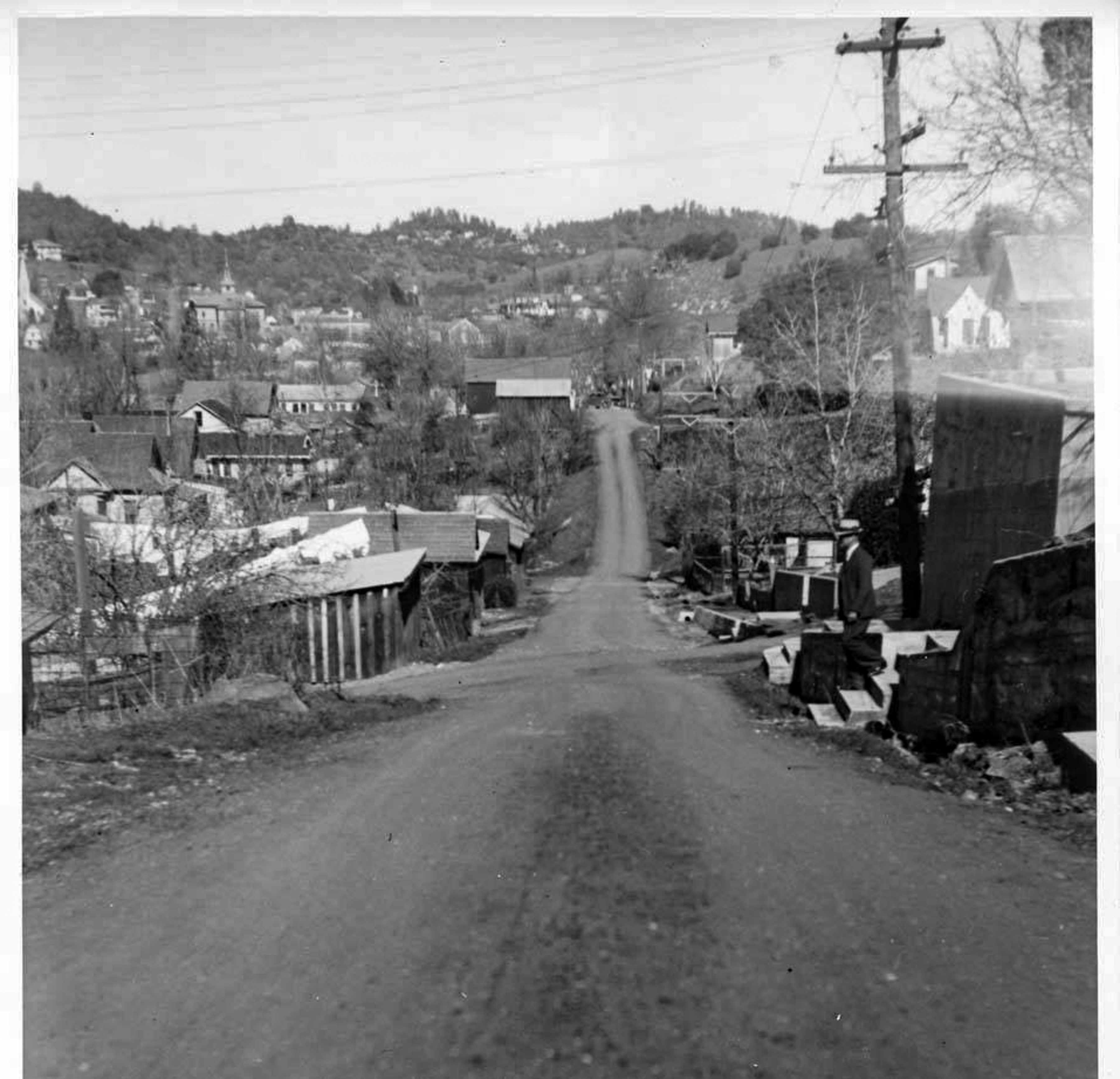
    My neighborhood around 1936

    By Tim Konrad

    Chapter One

    While mystics may speak of living in the eternal present moment, or the “now,” for most of us, says Hank Steuver, “there is only this sort of present-tense past that we all live in, full of remakes and revivals and constant nostalgia.”*

    In this space of which Steuver speaks, the clamor of the present competes for attention with the intrusion of recollections of unfulfilled dreams and memories, of plans thwarted and regrets borne of hopes unrealized, any of which can be triggered by the most surprising and seemingly insignificant phenomena. Any attempt to impose order over the resulting chaos appears at first blush as an invitation to fail, when it is just a manifestation of the cosmic dance between order and chaos that has gone on uninterrupted for time immemorial.

    In recognition of Steuver’s “present-tense past” and by way of acknowledging the fact that this is a state in which I frequently find myself, I have decided to surrender to its reality and do something useful with the material thus exposed by exploring it via the medium of writing.

    ***

    Since my formative years were spent in a small town in the Sierra foothills of northern California, a substantial part of the “constant nostalgia” that spins around in my head can be traced to the area in one way or another. Thus it seems perfectly natural that I choose Sonora as a focal point of my exploration, a place to begin my journey, since, owing to the decades-long tenure of my association with the place, I have much to share about it.

    To quote from Orhan Pamuk, in his tribute article in the November 1, 2018 edition of the New York Times, honoring the late Turkish photographer, Ara Guler, “For those who, like me, have spent (a long time) in the same city, the landscapes of the city eventually turn into a kind of index for our emotional life. A street might remind us of the sting of getting fired from a job . . A city square might recall the bliss of a love affair . . An old coffeehouse might evoke the memory of our friends” long since gone.

    Such is my experience when I return to the town in which I grew up–now much different than it was then, but loaded nonetheless with memories waiting to be resurrected at the slightest provocation.

    Having grown up in the same house and lived in it until I married and moved out afforded me a longitudinal view of how a neighborhood can change over decades.

    The neighborhood in which I was raised has changed much and yet looks much the same as it did in the fifties. Yes, there is the small apartment building sitting on a corner lot once dominated by a single-family dwelling, the parking lot illumination of which now intrudes upon the serenity once afforded by the twilight of evening. That spot was occupied by an old wooden garage when I was a child—a structure with no signs it had ever seen a paint brush except for the message scrawled across one of its doors, an artifact from WWII that stated “Kilroy Was Here.” One day when I was eight or nine I chanced to lean against a wall of that structure long enough to receive a wasp sting, the experience of which is probably the reason I still recall the building these many decades later.

    The other houses in the immediate vicinity remain intact save the one across the street, which caught fire after the inhabitant at the time, recently widowed and on oxygen, lit a cigarette too close to her oxygen tank. She survived the fire but the house did not. The people who rebuilt had the good taste to construct a dwelling that retained the architectural spirit of the original building, which was a boon to the neighborhood.

    The one house in the area whose destruction would be beneficial remains undisturbed, uninhabited and unsightly, as it is literally falling down. A big barn of a building, unimaginative in conception and ponderous in stature, its two stories unapologetically built right out to the street on the back side of a half lot, its front stairs long since gone, its paint peeling generously, stands as a seemingly open invitation to the shelterless, in defiance of the law of gravity, and as an opportunity for the fire department to teach new recruits how to put out residential fires.

    While the neighborhood structures are mostly intact, none of the original inhabitants remain, all having either moved on to other parts or other realms– mostly, due to the dictates of time, the latter.

    ***

    It all seems so far away as I sit drinking a beer on this unseasonably warm November afternoon one hundred thirty-eight miles and a lifetime away in the spoiled and crowded wilds of Sonoma County. Twenty plus years living here haven’t touched the deep sense of familiarity I still feel toward the place where I spent my formative years. Some of the issues remain the same wherever one lives–traffic density, the disappearance of open spaces, over commercialization and the myriad problems resulting from the overemphasis on money that characterizes our culture. I suppose every generation has felt some of the same things about the ways in which “progress” diminishes and cheapens our experience–the manner in which we interact with and relate to our surroundings. Every innovation seems to have its drawbacks and for every gain, something is lost. Usually, it’s issues pertaining to quality of life that suffer the most.

    Yet, it’s in our nature as a species to want to reinvent the wheel, it seems, and each generation has its own take on how to go about it. The only constants are that change will occur and money will be involved. Precedent is eyed with suspicion in this enterprise, and history is almost universally ignored or disregarded, followed eventually by the usual (but certainly not in all cases) homage to the wisdom of hindsight.

    So it has come to pass, for instance, that in the Sonora of my youth, one needed only pick up the telephone and dial “O” to get another human being on the phone. These days, one needs experience, luck and oftentimes also specific knowledge of phone codes before one can reach an actual person.

    The fruits of this so called “progress” are both large and small and can be seen in a variety of places. There was a time, for instance, when the shopping carts in the supermarkets were gathered inside the stores where they were more conveniently accessible to shoppers. I remember this being the case at my local Save Mart in Sonora where I used to shop. One day, presumably after the folks at the corporate office realized they could make more room for product by moving the carts outside, the shopping carts were relocated outside the building with the explanation that the move was made “for your convenience.”

    A much larger, and more egregious bit of commercial propaganda was pulled off successfully by the oil and gas industry during the so-called gas shortages of the 1970s. Before the gas shortage, people were accustomed to getting their tanks filled with no appreciable wait time at the pumps–it was literally taken for granted that all one needed do was drive up to the pumps and fill their tank. Then, OPEC held us hostage (or, at least, that’s what we were told) and the next thing you knew, people were waiting in long lines for their turn at the gas pumps and, rather than feeling resentful at the inconvenience, they were actually grateful they were able to get gas at all. And at an inflated price to boot! A fancy bit of social engineering, that!

    Not one to miss a beat, Madison Avenue took notice of the power achievable through the regulation of supply. Couple that with the advantages to be exploited by preying on the naïveté of the young, and add in the diminishing supply, thanks to attrition, of older folks who knew better, and, before you knew it, it became nigh on impossible to reach an actual person on a corporate phone call anymore. What had once been taken for granted had now become outside of common experience and, hence, mostly a thing of the past. And for whose convenience???

    ***

    Sonora was a quieter place back then–nothing like the bustle and fuss of the traffic generated today by being the regional hub of commerce for a three-county area. Where once the loudest sounds to be heard were the noon blast of the fire alarm at city hall or the Jacob’s brakes of logging trucks slowing down on Washington Street as they entered town from the mountains, now there’s the much-too-frequent  intrusion of sirens–police and fire–as respondents’ race to administer their services to those in need. In reflecting on these ‘Sireneers,’ as I’ve come to call them, I remember the time as a small child when I saw the Sons of the Pioneers (I love wordplay) appear in a Roundup Parade on Washington Street. As I said, memories lie in wait in profusion in such places.

    The Sonora of my youth was a town of 2500 souls, many of them second and third generation Italians whose progenitors emigrated during the latter half of the Nineteenth Century lured by the prospect of opportunities denied them for whatever reason in the “Old Country.” It was not uncommon in those early days, when accompanying my mother on shopping excursions, to recognize practically everyone one encountered. My father was, like his father before him, affiliated with several of the fraternal organizations that formed the backbone of social life in rural America at the time. My parents shared bonds with their friends that went back decades; the resulting connections ran deep.

    I would hear stories as I grew older about how the local Elks Club used to host an annual fund raising event, called “49er Night,” where members would retrieve old slot machines and roulette tables from storage (all of which was illegal since gambling was outlawed in the state) and set up, for one night only, a casino at the Fairgrounds. An extremely popular event, this went on for years until, one year, when Edmund G. “Pat” Brown (Jerry’s father, later to become governor of California) visited Tuolumne County when he was state attorney general. The local folks wined and dined him and told him about their event, after which Brown, upon returning to Sacramento, took steps to shut down the enterprise. My father, not a vindictive man, felt a sense of betrayal at Brown’s actions and never forgave him for it.

    I also heard tales as a child about how Sonora used to be more “wide open.” From illegal distilleries during prohibition, to prostitution, the place sounded like it used to be much more lawless and unencumbered than it was in the Sonora of my memory. My father told tales of how he and his friends used to go to outdoor dances in Columbia on Saturday nights. The dance floor was behind the Fallon Theater parking lot where the effects of earlier hydraulic mining had created a natural amphitheater, still visible today. They would park their Model T cars in the fashion of modern tailgate parties and serve up moonshine whiskey to the revelers.

    My dad’s former business partner, Ralph Denton, a man who described himself as possessed of “the gift of gab,” used to tell a story about a Mr. Nicolini, (father of the then County Recorder) from Chinese Camp, who was a producer of bootleg whiskey during Prohibition. The local constable, as the story goes, was an amiable person who, if he knew you, would extend you the courtesy of alerting you when the Feds planned to conduct raids on distilleries, in exchange, of course, for some product. Prior to the onset of one such raid, the constable warned Mr. Nicolini to conceal his operation, which, for reasons never made clear, but probably involving pride or stupidity, he neglected to do. As a result, he was cited and subsequently made to appear in Court. When he had his day in Court, the judge told Mr. Nicolini his fine would be $20, to which the man replied “That’s nothin’! I’ve got that in my ass pocket.” The judge continued, “and a week in jail. Do you have that in your ass pocket too?”

    In the prostitution department, one notorious “house of ill repute” was at Yosemite Junction, where Highway 120 veers south from Highway 108 below Jamestown. It was managed by one Dave Bonavia, a man well known for such enterprise in the Mother Lode of that time. Bonavia was implicated in a couple of scandals that came to public light while I was living in Sonora. One involved gambling and was the downfall of a business collaboration between Bonavia and a fellow named Russ Rolfe, who at the time owned the Sullivan’s Creek Restaurant at the site of what is now the Peppery Gar & Brill. At issue was a smaller building uphill and behind the restaurant itself and which was attached to the restaurant by a covered walkway. This building housed a gambling enterprise, run by Bonavia,  and, by virtue of it’s being physically attached to the restaurant building by the covered walkway, it led to the shuttering of the entire operation once it came to the attention of law enforcement.

    The other bit of scandal involved Bonavia and the sheriff at the time, a former Highway Patrolman named Mervin Mullins. Mullins was said by some to have been fond of forgiving truckers’ citations in exchange for a bit of cargo—say, a case of whiskey, etc., back in his state trooper days. When he was sheriff, Mullins was secretly tape-recorded having a clandestine meeting with Dave Bonavia on top of Myers Hill. While I can’t recall the subject of the conversation, its revelation caused a controversy that ultimately proved damaging to the sheriff and led to the end of his career.

    *Hank Steuver, Washington Post, 11/27/18

  • _1020715-Edit-2

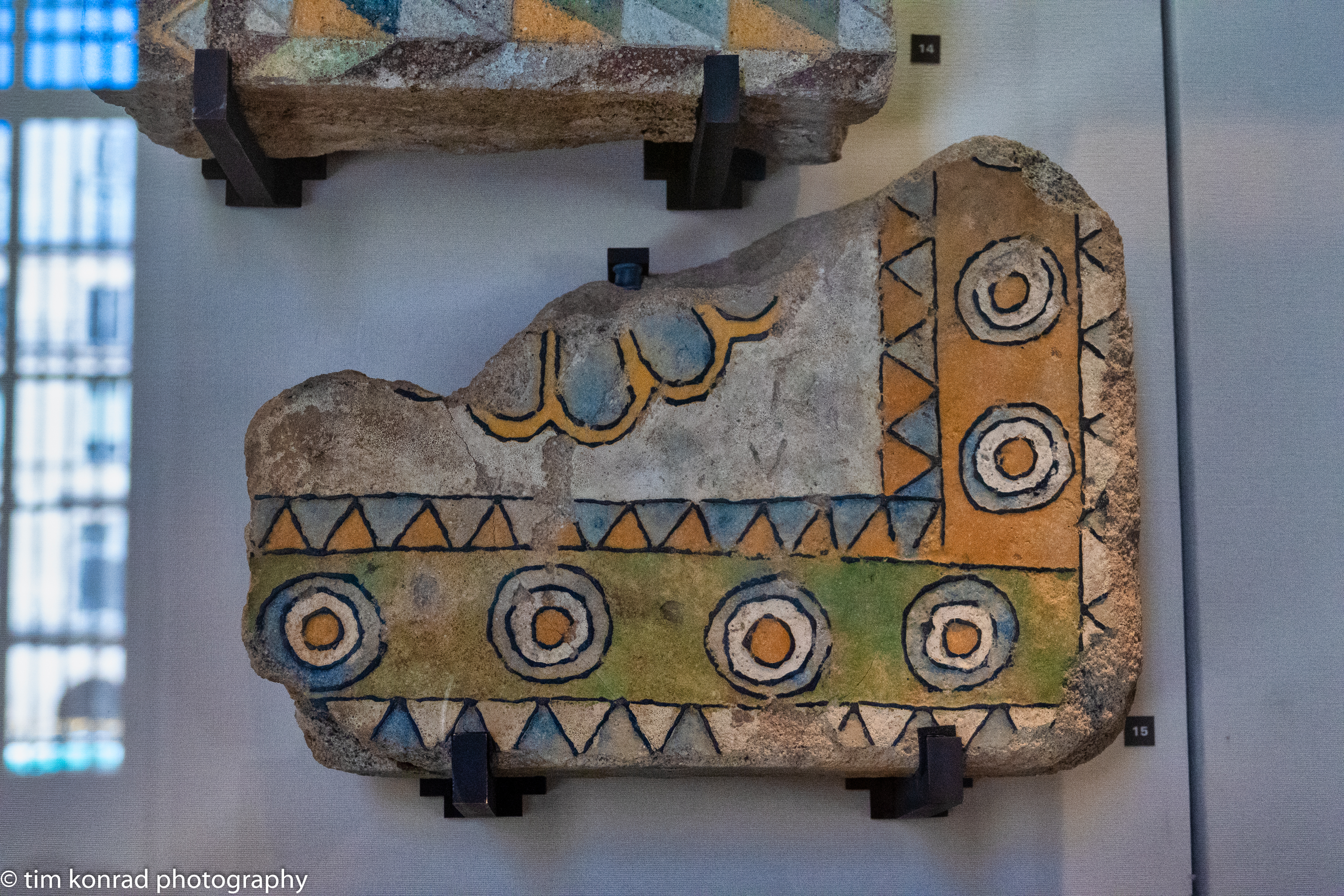
    Musing about the worldview

    Of the artisan who crafted

    The fragment from an ancient Roman decorative motif

    Represented on my computer monitor as a photograph

    Taken from a display in the Louvre,

    I marvel at how different

    Our world is today

    From the one in which the artist

    Found familiarity

    At the time of its making.


    As I study this treasure from the past,

    In the background can be heard

    A radio broadcast

    Sourced from the internet

    Speaking of events thousands of miles away

    Being brought within range of my hearing

    By a clever manipulation of electrons

    Made possible via an elaborate combination

    Of rare metals, processed silica and a host of other exotic materials

    Bound together by processes beyond the wildest dreams

    Of alchemists of yore.


    How could the designer of this ancient motif

    Even begin to comprehend

    A transatlantic phone conversation?

    The international space station? A Kindle?


    Would not such things, removed from the common understandings

    Of the times in which they were made to serve,

    Absent paradigms to frame their meaning,

    Be so extra-ordinary as to defy explanation?

    In such a time, would they not be likened to witchcraft?


    We have no way of knowing

    How people far in the future

    Will interpret artifacts from our time

    Any more than the artists who fashioned

    Works the likes of this frieze

    Could imagine the world we inhabit.


    For all man’s ingenuity

    And despite stunning accomplishments—

    The conquest of gravity, the miracle of antibiotics

    Quantum Theory, and on and on—

    Extreme longevity remains elusive.


    The ability to see beyond the horizon—

    To envision the sights and sounds

    Of future societies—

    Is a sight limited to mystics and sages.

    For most, such vision extends only

    To the horizons of our lifespans.

    Some mysteries, it seems, are destined to remain so.

    Just as our time belongs to us,

    The future belongs to others.

    Tim Konrad

    2020.01.02

  • Bad Optics

    80831036_3068873456470659_4248440701261447168_n.jpg

    Optics:

    Mick Mulvaney admits to the president’s Quid Pro Quo, saying it’s how business is done and to just “get over it.

    Mitch McConnell declares, before a trial date is set, that the president’s acquittal is a foregone conclusion and that he will coordinate the trial “hand in hand” with the White House.

    Defense:

    Apparently, “Yeah, he did it, so what? And while he didn’t actually do it, there wasn’t any wrongdoing anyway and regardless, his actions are above the law, but that Joe Biden guy . . . someone ought to ask him about his son’s Involvement with organized crime figures in the Ukraine. That’s where the focus should be. And then we need to figure out why Hillary is still out running free when she should be locked up alongside Shifty Schiff and Nancy Pelosi.“

    Conclusion:

    It’s a swamp all right, but not the one El Cheato campaigned to drain.

    Tim Konrad