sonora2sonoma

  • By
    Tim Konrad

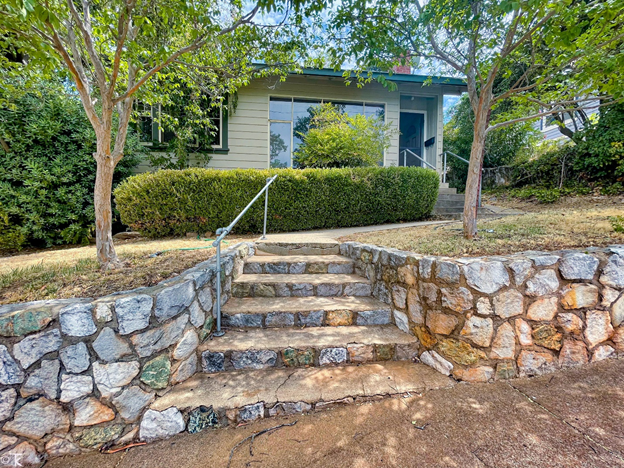
    The Old Homestead

    Growing up in the same house and living in it until I married and moved out afforded me a longitudinal view of how a neighborhood can change over decades.

    The neighborhood in which I was raised has changed much and yet looks much the same as it did in the fifties, with a few exceptions, such as the small apartment building sitting on a corner lot once dominated by a single-family dwelling. The light illuminating the building’s parking lot now shines directly into my living room, intruding upon the serenity once afforded by the evening twilight.

    That spot was previously occupied by an old wooden garage—a structure with no signs it had ever seen a paint brush save for the message scrawled across one of its doors, an artifact from WWII that stated “Kilroy Was Here.” Those three words, according to the Smithsonian magazine, “appeared almost everywhere American Soldiers went” in the years following the war, often accompanied by a cartoon-like drawing of a man with a big nose peering over a wall.
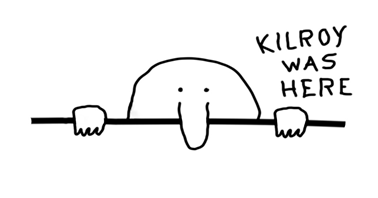
    The message was so ubiquitous it was featured in a 1948 Bugs Bunny cartoon where, believing he was the first rabbit to land on the moon, Bugs failed to notice the slogan clearly displayed, carved into a rock behind him.

    One day, when I was eight or nine, I chanced to lean against a wall of that structure long enough to receive a wasp sting, the experience of which is probably the reason I still recall the building these many decades later.

    The other houses in the immediate vicinity remain intact save one across the street, which caught fire after the inhabitant at the time, recently widowed and on oxygen, lit a cigarette too close to her oxygen tank. She survived the fire but the house did not. The people who rebuilt had the good taste to construct a dwelling that retained the architectural spirit of the original building, which was a boon to the neighborhood.

    The one house in the area whose destruction would be beneficial remains undisturbed, uninhabited and unsightly, as it is literally falling down.
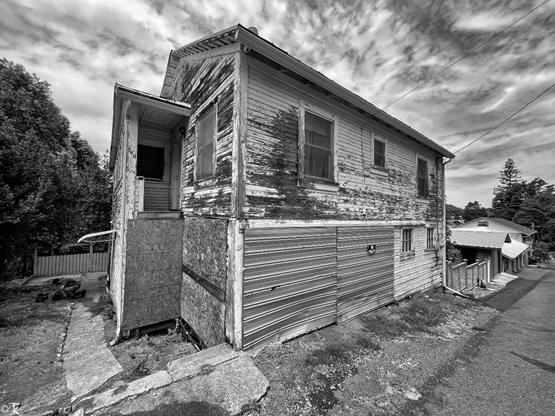
    Bertha’s House

    Situated directly opposite and across the narrow street from my parents’ house, this looming hulk can barely keep its foundation dry any more, ravaged as it’s been by time’s handiwork.

    Abandoned, decrepit, fallen way past disrepair, Betha’s house awaits a purported end date that seems forever forestalled by life’s little setbacks—the glacial pace of destruction permits, a profusion of unforeseen developments plus other assorted Coyote tricks. Having outlived its purpose(s), Bertha’s house hangs around ghost-like, looming, too caught up to notice the show ended years ago.
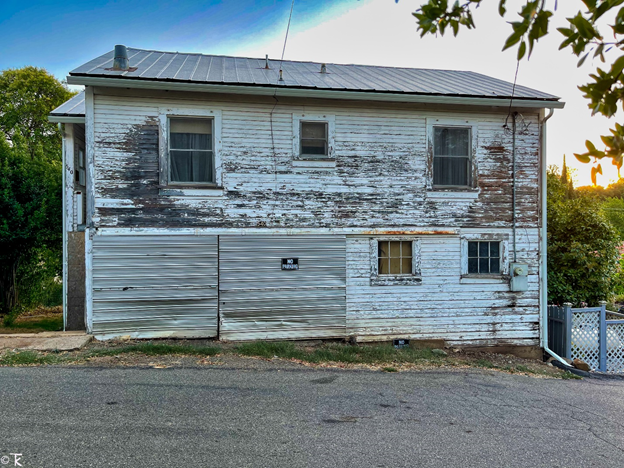
    Bertha’s House

    Built right to the edge of the street on a half-lot, in a time with fewer rules, Bertha’s house has the look of an afterthought with a permanent foundation undergirding it. Two-storied, box-like and utterly devoid of aesthetic considerations, form fell prey to function before the ink had dried on its construction blueprints. The idea of setback ordinances was unknown to the Tuolumne County officials of the time, so there was nothing to prevent someone from setting foundations literally as close to street-side as possible.

    Like her house, Bertha’s garden was humble but orderly, tended with the stern sort of love that doesn’t tolerate exuberance. On occasion a happy place, her yard was a child’s playground, a place to play kick-the-can on warm summer evenings as twilight faded and shadows deepened, enhancing places to hide amid the bushes.

    Now overgrown and neglected, only fragments remain of the garden’s former glory—an iris here, a daffodil there—peering out from the chaos, sparking memories, real or imagined.

    Grown entropic from decades hardened by remaining  rudderless, left behind and abandoned in all save title, Bertha’s garden these days is left with naught to do but watch the paint continue to peel off the tortured surfaces of its old companion, the familiar hulking frame towering over it, as both house and garden slowly surrender, like their owners before them, to their ultimate fate—decrepitude and ruin!

    A happy haven in its time, Bertha’s house provided shelter and nurtured a loving family, sights set on a happy future, with a son to carry on the family name. Those hopes were brought to fruition—a college graduation, a budding career, a promising marriage, children, raised in a distant enclave, followed by years spent in professional pursuits—and then retirement, those golden years now turned to dust, the hopes and dreams of three souls, united in family, now united in death. Three hearts now departed, their earthly work finished, off to explore that other place beyond toil, where joy, sorrow or surprise are no longer relevant and where expectation no longer drives the narrative.

    Haunted by ghosts real or imagined, Bertha’s house today stands as a melange of memories hearkening back to a time when the world had order, a peeling paint pavilion way past its prime, a cat-haven missing its cat lady and a fire awaiting its spark.

    The souls who lived there now gone, every one, Bertha’s house persists nonetheless, as if determined to maintain its prescient display of deterioration and decay as a reminder, like the graveyard, of the fate that ultimately awaits us all.

    While the rest of the neighborhood structures are mostly intact, none of the original inhabitants remain, all having either moved on to other parts or other realms—mostly, due to the dictates of time, the latter.

    To be continued:

    +++
  • By
    Tim Konrad

    Chapter Two

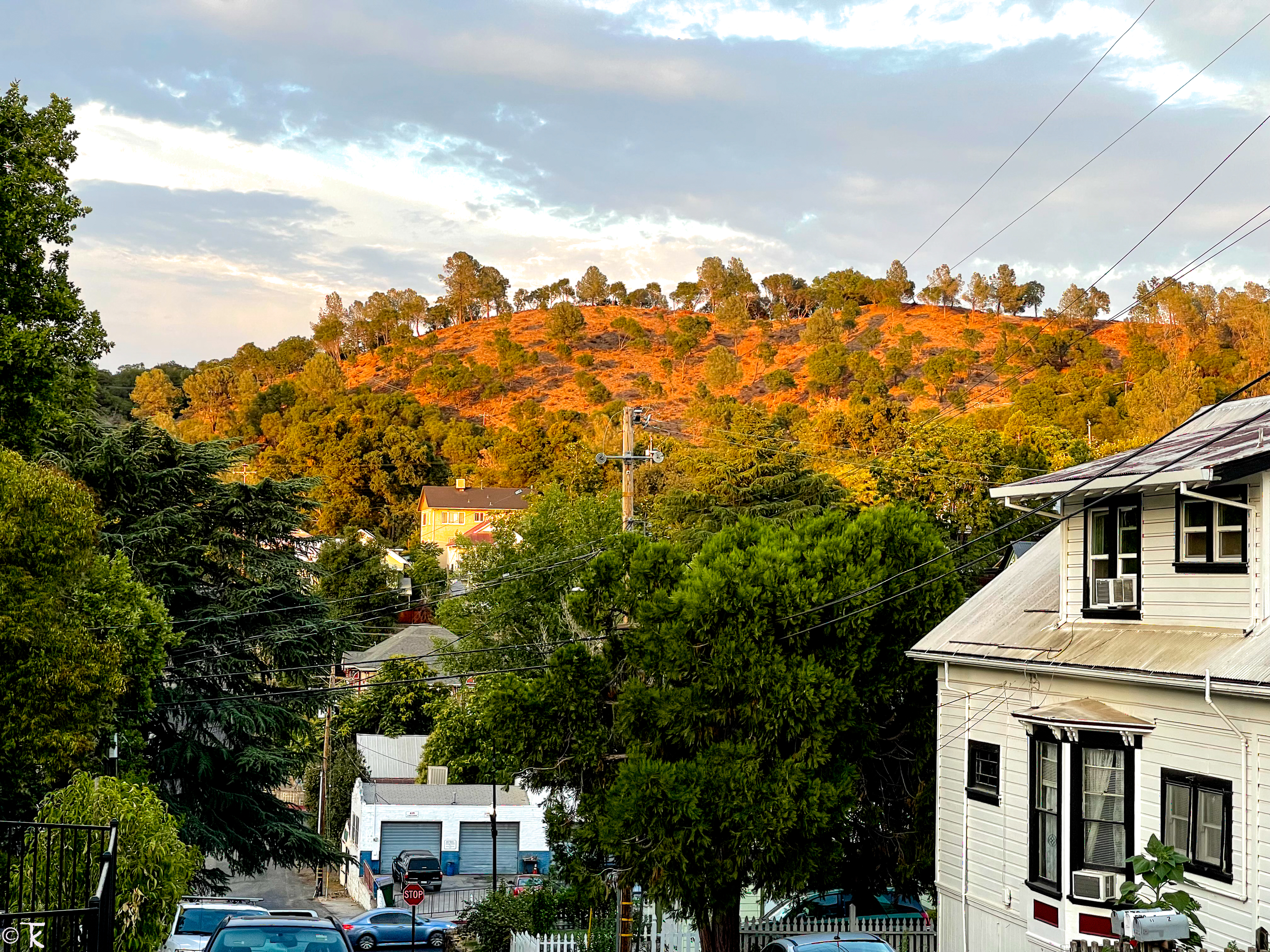
    The “woods” as seen from several blocks west

    The wall in my backyard served as a gateway to the world that lay beyond—the wonderful and wild woods, with their deep sense of mystery and surprise, teeming with secrets to be revealed about the wonders of nature. Those woods not only captured my imagination as a young boy but also featured largely in my dreams, ultimately coming to symbolize the vast, unknown, open page, or tabula rasa, of my life as it lay before me, yet unexplored and awaiting time and caprice for its unfoldment.

           I often and distinctly recall a moment sixty-plus years ago, when I sat perched atop that wall in reflection: If reflection is not an appropriate term to describe the musings of a boy of eleven, then musing most certainly is. It was the first day of summer vacation and the whole of my favorite season lay before me like an exciting and mysterious present yet unopened. Not only did I have a summer free of duties, responsibilities and school requirements to look forward to, I “mused,” but I also had my whole life ahead of me, with the reasonable and hopeful expectation that it might be blessed with longevity.

           I still remember how it felt to think these thoughts back then, similar to how I felt as a boy at Christmas-time when first seeing the tree ringed with presents, or the way it felt before taking that first bite of chocolate sundae at the ice cream shop. I’ve always savored the expectation preceding the experience, whatever the event itself might be. I still do so today; the promise, the mystery and excitement never cease to hold me in thrall.

           Now, as my number of days past exceeds those that lie before me, that moment on the wall seems more poignant than ever.

    As day turns into night, the dance of life and death, as with all the other dualities in life, denotes the beautiful yet frightening symmetry of all things. The poet and visionary William Blake perhaps said it best when he wrote, in his poem Tiger, Tiger Burning Bright “What immortal hand or eye could frame thy fearful symmetry?”

           But what once was hope need not become despair. It’s all a matter of perspective, really. Life truly is what one makes of it and tomorrow, if one chooses to see it as such, is another tabula rasa just as surely as it was to that eleven-year-old boy perched on that wall so long ago. Only now I have much more to reflect upon.

    ***

           The intervening years have brought equal shares of joys and sorrows, unfolding, as they did, largely not according to plan, which wasn’t surprising since, in my younger days, I hadn’t placed much stock in planning anyway. Aware of the fable of the grasshopper and the ant but equally aware that investing years toward a goal only paid off if one succeeded in living long enough to reap the rewards of such planning, I used that line of reasoning to justify a life marked by sometimes questionable decisions. Retirement being a distant and somewhat mythical concept back then, I only pursued goals with short-term rewards and effectively postponed any notions of accumulating savings toward retirement. It was only in my later years that my wish not to die destitute gained authority over the part of me that had allowed me to remain profligate for so long.

    To be continued:

  • By
    Tim Konrad

    A collection of short essays on my recollections of growing up in the Sierra foothills in the 1950s.

    Introduction

    The threads of the personal and the interpersonal are woven together throughout the Universe.

    ***

    While mystics may speak of living in the eternal present moment, or the “now,” for the rest of us, according to Hank Steuver, “there is only this sort of present-tense past that we all live in, full of remakes and revivals and constant nostalgia.” (Hank Steuver, Washington Post, 11/27/18)

    The clamor of the present, Steuver tells us, competes for attention with the intrusion of recollections of unfulfilled dreams and memories from the past, along with plans thwarted and regrets borne of hopes unrealized, any of which can be triggered by the most surprising and seemingly insignificant phenomena. Any attempts to impose order over the resulting chaos appear at first blush as an invitation to fail, when they are just manifestations of the cosmic dance between order and chaos that has gone on uninterrupted for time immemorial.

    In recognition of Steuver’s “present-tense past” and by way of acknowledging the fact that this is a state of which I’m only too familiar, what better thing could I do with the material thus exposed than to explore it via the medium of writing?

    ***

    Chapter One

    Growing Up in Sonora

    Sonora in the 1950s was typical of small towns across the nation back in those days—quiet, familiar, intimate even,  and far-removed from the hubbub and furor of city life in almost every way. It was a place of safety, a place where parents could allow their children to roam about, free of the fears that plague families today.

    My parents would frequently send me off with a couple of dollars in my pocket to catch a meal at my favorite eatery, the Europa, followed by a double feature at one of the town’s two movie theaters. A hamburger and fries at the Europa wasn’t complete without one of Mrs. Ball’s chocolate milkshakes, brought over from the Greyhound Bus station next door. Those milkshakes still remain among the best I’ve ever encountered.

    My mother and father seemed to know EVERYONE in those days. Grocery-shopping was, for my mother, as much a social excursion as an opportunity to resupply the pantry. She knew the grocer by name, as well as the butcher, the postman, the milkman, the garbageman and the guy who brought us bottled water. Most of our neighbors were friendly and personable, and some were like family.

    On Saturday nights, my parents would play pinochle with the sheriff, the head of the highway department and the president of the local lumber company. The sheriff’s wife was a cashier at the Sonora Theater, one of the two movie theaters in town, the other being the Uptown Theater. ; The town’s mayor, Odillo Restano,  owned the Sonora Theater, a grand, old-fashioned theater hall complete with sunken orchestra pit and balcony. It was demolished in the seventies to make way for a less artfully-inspired building dedicated to commerce, enterprise and healthy profit margins—in other words, a banking establishment.

    But I digress!

    As I was saying, the intimacy of small-town life provided a privileged setting for a child to grow up. Our dentist was my Uncle Charlie. Our family doctor officiated at my birth; he felt like an adjunct, if also scary, family member. In short, everything (but the doctor) felt familiar, safe, innocent, even. What unknowns lurked in the margins were still unknown to me. There were no recognizable impediments to my development save the ones I myself erected along the way.

    It’s impossible to write a history of one’s place without also probing the history and nature of one’s personal contributions. And that personal element, in my case, veered as far afield as my imagination permitted—ranging from seeking any mental constructs capable of justifying self-indulgence in my younger years to, years later, “after my brains grew in,” (to quote, large animal veterinarian Baxter Black), searching for and identifying any remaining unsupportable mental constructs or beliefs in need of un-learning.

    So, as is true of most things in life, what we bring to the party can have profound effects on what we experience.

    Meanwhile, back to the story . . .

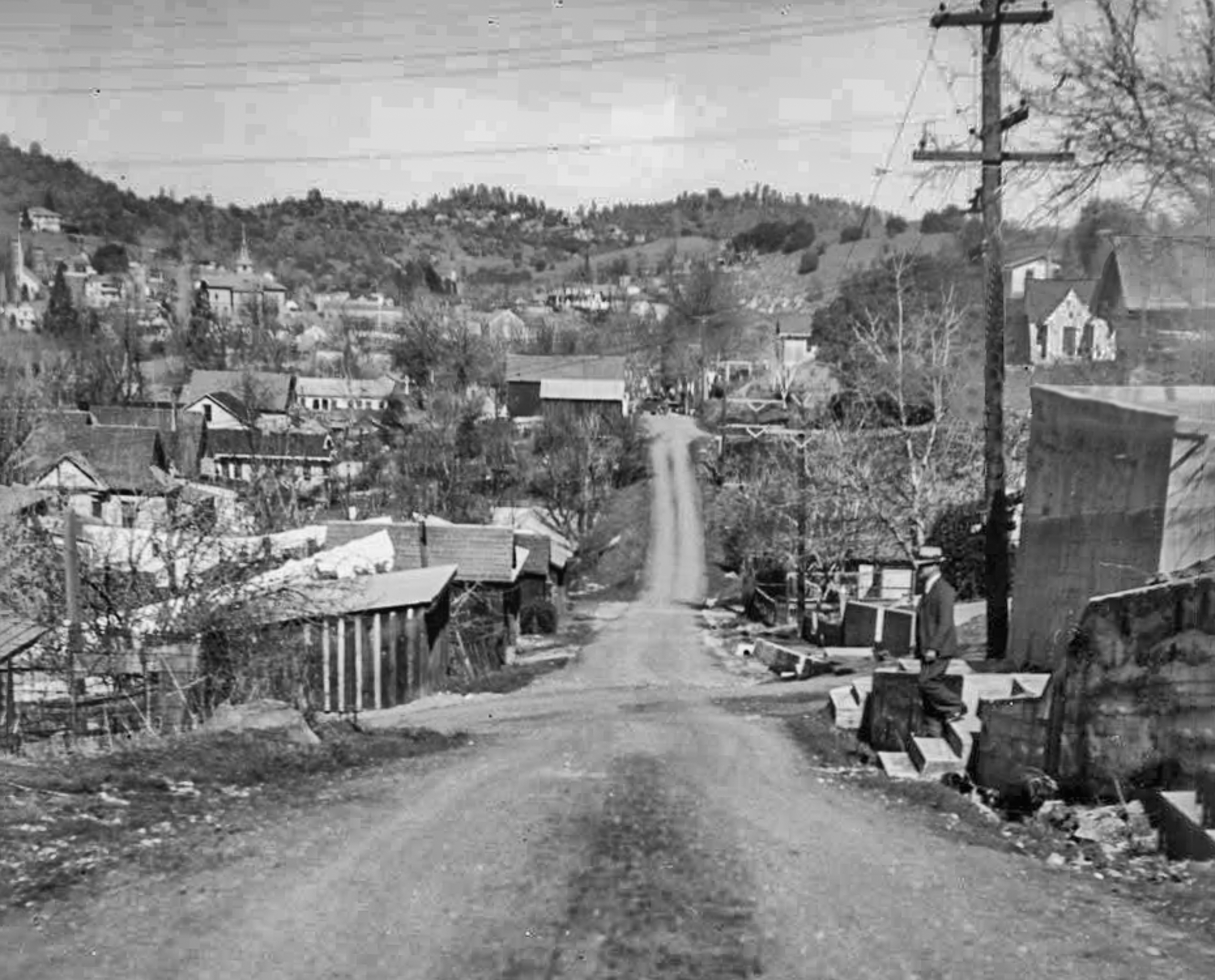
    My old neighborhood as it appeared in 1937

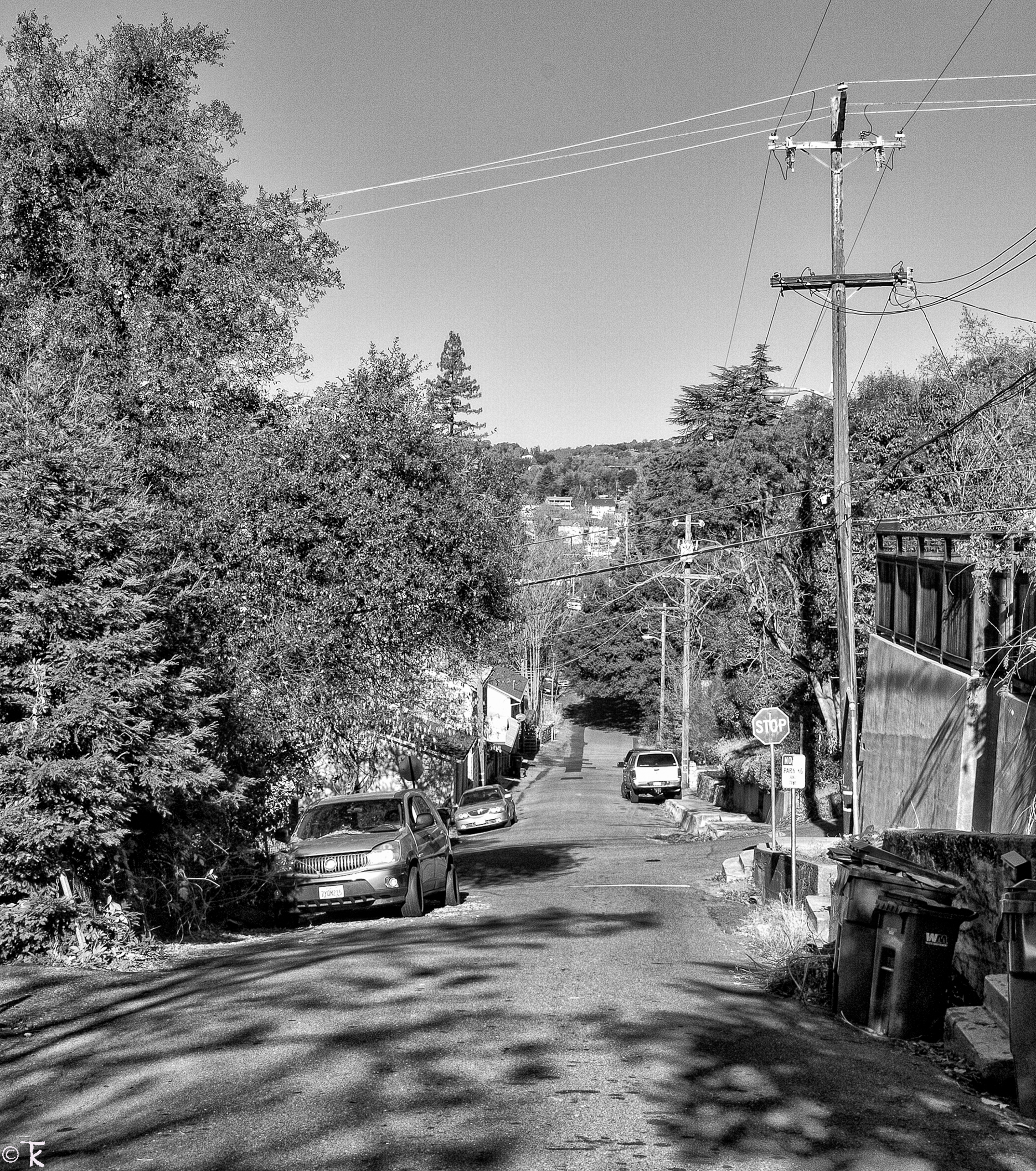
    Three blocks south of downtown Sonora, the house I grew up in had a large yard, the street behind it being the outermost of four streets that ran parallel to each other across the breadth of the gently sloping little valley that defined the environs of my neighborhood.
    My old neighborhood as it appeared in 2017

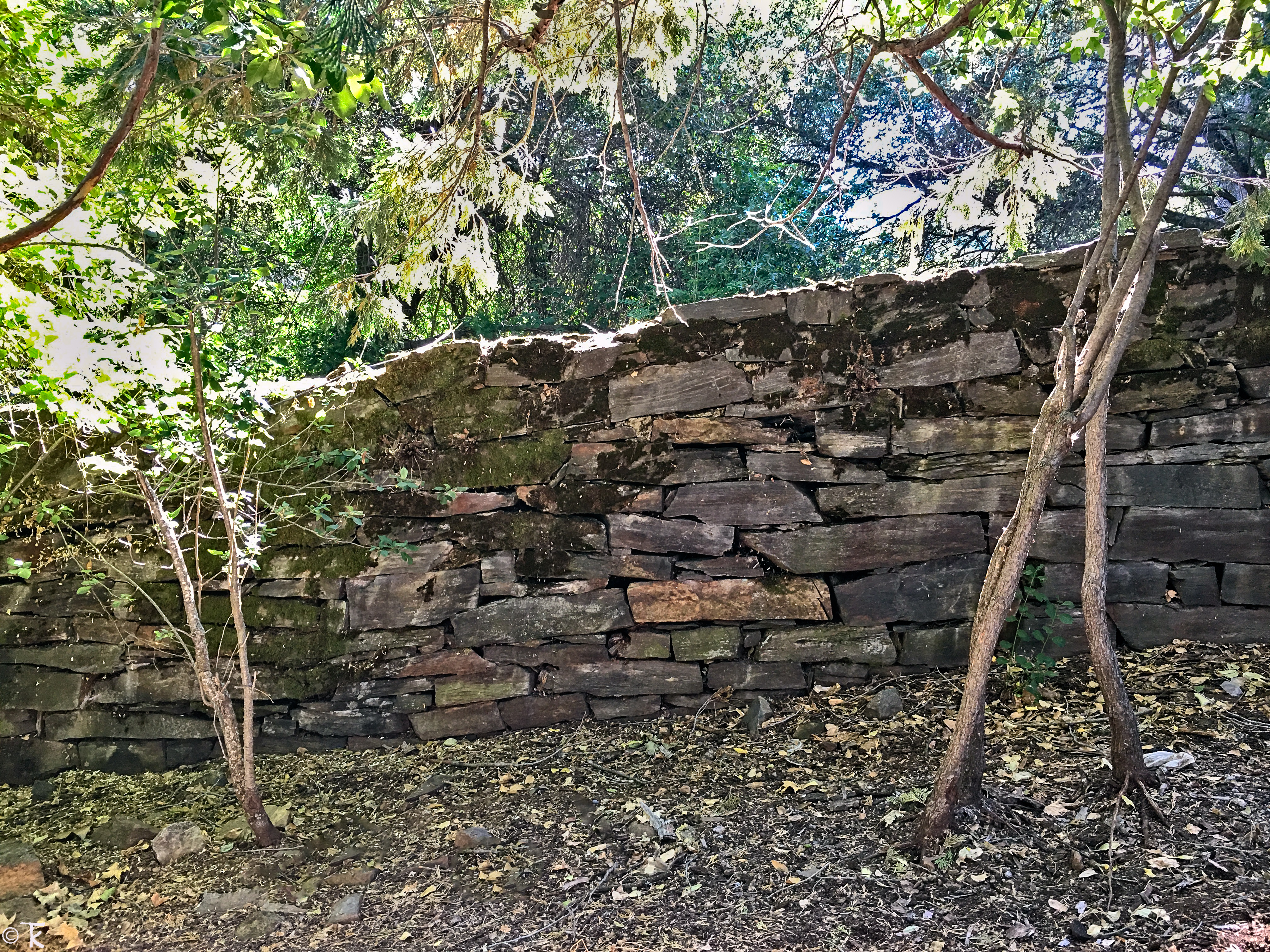
    Beyond the street behind my house lay an open stretch of hills, meadows and oak forest that extended for miles, relatively unobstructed by fences or buildings, toward the Sierras to our east. A rock wall, erected in the 1930s by the Works Project Administration, marked the boundary between my backyard and the world beyond. As the back street was above the level of our yard, access to it required scrambling up the wall the five or six feet to street level. Spaces between the rocks provided footholds making this climb easy for someone young and nimble to accomplish.

    Works Project Administration wall erected during the Roosevelt era

    To be continued:

    +++

  • Will We Still be a Democracy?

    The country I was born in was not a country in which legislators could swing elections to their candidates no matter what voters wanted. But today’s Republican Congressmen and women, judging by their behavior, have forsworn the basic principles on which our country was founded in order to hold onto power at any cost. These legislators, with seeming disregard for the consequences of their actions, have sacrificed their integrity, their honor and their credibility in their frenzied rush to uphold dominance over relevance.

    Limiting the power of the ballot has long been one of the Republican Party’s favored tools in their quest for power and domination. Lacking in policies that benefit the common man, rather than adapting those policies and platform to better serve the needs of their constituents, they have chosen instead to manipulate the machinery of democracy through schemes designed to suppress voting in regions with large concentrations of minorities who would likely vote in favor of their opponents, through gerrymandering districts in ways that give them political leverage, and through passing legislation on the state level permitting officials to invalidate votes that don’t agree with their agenda.

    It’s tragically ironic that Senator Manchin, in his quest to revive bipartisanship in the Senate, has chosen a path that will, if he doesn’t change course, and barring some other unforeseen miracle, almost guarantee its demise.  

    Tim Konrad

    June, 22, 2021

  • One of the Reasons Not to Rent Out My House Any More

    If renting out one’s childhood home

    Were a sociological experiment,

    Like a day job

    Where one could go home after a day’s work

    And not be personally affected

    By what the tenants did,

    It might be a worthwhile

    Endeavor.

    But, when one’s not the object under observation,

    Nor the subject of an ongoing experiment,

    But a player in an ongoing experiential drama

    Examining faith misplaced and trust exploited,

    The allure of extra money

    Assumes a duller sheen.

    So, when tenants crack the picture window

    And break the toilet, the experience

    Adversely affects  one’s trust

    In the basic goodness

    Of others.

    And when renters decide

    To transform a perfectly innocent

    Pocket door,

    With permanent marking pens,

    Into a 12-month calendar

    Denoting,

    In several disharmonious shades,

    The arraignments, parole hearings

    And reminders of prison visits

    Of the house’s various occupants,

    The sobering clang of alarm bells

    Should be heard clearly

    Resounding off the rooftops.  

    Had it not been for the familiarity

    Of one of the tenants

    With the finer points of eviction law,

    Their final ouster,

    Following the attic fire and subsequent red-tagging,

    Would have been unquestionable, swift

    And decisive.

    At the eviction hearing,

    Months later,

    One of them, the sole evictee present,

    Offered, seemingly oblivious

    To the irony,

    To clean up the mess she left

    Provided I allow her

    Another two weeks . .

    What value has experience, I ask,

    But to heed its call

    And learn its lessons?

    How often  

    Does one find the tenant

    Who cares for your house

    As if it were theirs?

    I guess I’m just not cut out

    For this rental business after all!

    One of the reasons

    Not to rent out my house

    Anymore.

    Tim Konrad

    June 10, 2021

  • Columbia Chronicles–The Day Gov. Reagan Came to Town

    Columbia’s  4th of July celebration was an event I looked forward to every year in my younger days. I was also not immune to succumbing to the curiosity and the quickening of the senses that accompanies  being in the presence of celebrity. Accordingly, it was not in my nature to forego a chance to rub shoulders with a famous person. But, when it was announced that then Governor Ronald Reagan would be the keynote speaker at Columbia’s Glorious Fourth of July Celebration that year, I chose instead to go camping.

    When the day came around, my then wife and I found ourselves camped for what we thought would be the weekend with a bunch of friends just downstream from Italian Bar. Several of us were skinny-dipping when some men stopped their truck and began yelling down at us from the road above, saying things like “put your clothes on” and “damn hippies,” etc. They became quite verbally abusive and threatening, even going so far as to say that if we were still there that night, they would return and “pick us off” with their rifles. They said these things even though there were children camping with us!

    We took their bluster as a real threat and broke camp and returned home. We also viewed the affair through the same lens we viewed Reagan, as manifestations of a fascistic world view where well-reasoned thinking and fact-based discernment are replaced by narrow minded self-interest guided by beliefs that are often at odds with objective reality. Reagan’s ascension heralded a dark time; the country is still suffering the adverse effects of his administration to this day.

    Tim Konrad

    June 10, 2021

  • Standing (still) across the narrow street

    From my parents’ house

    Just as it did in my childhood,

    Only now abandoned, decrepit,

    Fallen way past disrepair

    And awaiting a purported

    End date

    That seems forever forestalled

    By life’s little exigencies—

    Destruction permits, unforeseen developments

    And other assorted Coyote tricks,

    Bertha’s house,

    Having outlived its purpose(s),

    Hangs around ghost-like, looming,

    Too caught up to notice,

    The show ended years ago. 


    Bertha’s garden, like her house,

    Was humble but orderly,

    Tended with the stern kind of love,

    That doesn’t tolerate exuberance.

    Bertha’s house,

    A happy place!

    Provided shelter

    Nurtured a loving family,

    Sights set on a happy future;

    A son to carry on

    The family name.

    Those hopes were brought to fruition—

    A college graduation,

    A budding career—

    A promising marriage, children,

    Raised in a distant enclave,

    Followed by years spent

    In professional pursuits

    And then retirement—

    Those golden years

    Now turned to dust,

    The hopes and dreams

    Of three souls, United in family,

    Now United in death,

    All three souls now departed,

    Off to explore

    That other place

    Beyond toil,

    Where Joy, sorrow

    Or surprise

    Are no longer relevant

    And where expectation

    No longer drives

    The narrative.

    Tim Konrad

    June 8, 2021

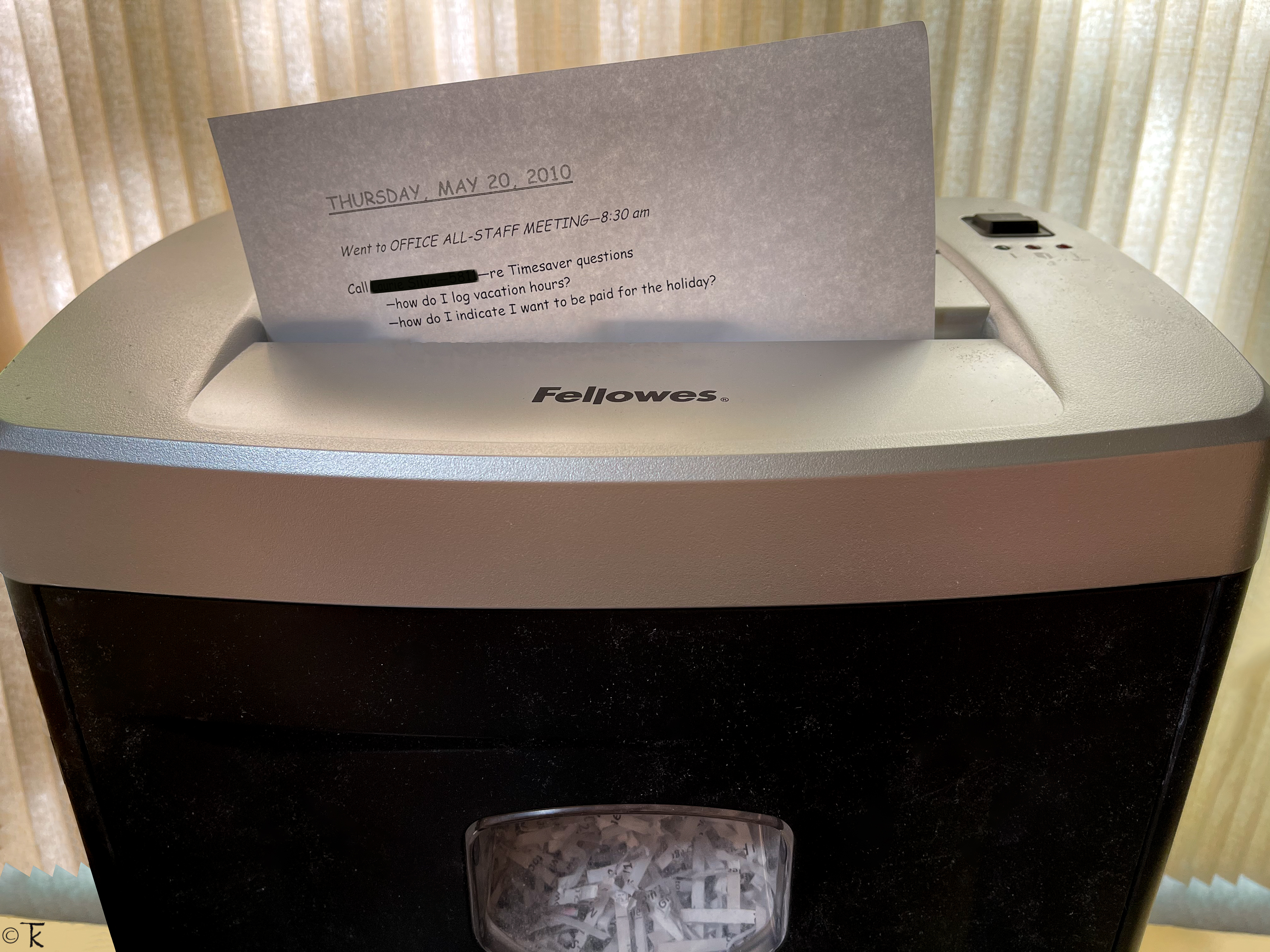
  • Spent much of today

    Paying back the debt incurred

    By putting off

    For years

    The dreadfully monotonous

    Business of shredding old documents—

    Financial information, odd bits,

    Old work notes

    From my days as a social worker,

    Personal stuff . . .

    Assorted artifacts—

    Memorabilia and dross—

    Whose elimination from the aggravating aggregate

    Of my “personal information”

    Would be, if not beneficent

    At least humane.

    Whirr, whirr! (Grinding noises)!

    Present payment for prior postponement!

    Whirr, whirr!

    mortgaged time; the Payment’s due!

    Whirr, whirr!

    Whirr, whirr!

    Watching those words disappear,

    One line at a time,

    I imagine them turning into ‘ouches’

    As they disappear into the event horizon

    Reassuringly disguised as a mail slot,

    Grinder running furiously,

    Overheating & stalling repeatedly

    Like an old Buick on a steep grade

    On a hot afternoon.

    Seeing those liberated word particles

    Accumulate like a confetti alphabet

    In the bowels of the word dissembler,

    (Thanks to its plexiglass intestinal inspector),

    Is at once gratifying and vaguely distressing.

    Observing those bits of bits formally known as words

    At once reduced, past morphemes

    Beyond affixes

    Way past phonemes

    Barely recognizable bits of paper, mess and dust,

    A solution long in the coming

    And a nesting rat’s dream.

    Witnessing that machine perform its duties

    Relentlessly consuming the product

    Of countless hours’ toil,

    With the cold indifference

    Of automated expediency . . .

    Is to behold the why and wherefore,

    The promise,

    And the curse,

    Of automation poised for domination.

    Automation—

    The long-sought solution

    To increased productivity—

    Not to lessen men’s labors,

    Or lighten their loads—

    But to increase efficiency,

    And, therefore the profits,

    Of those captains of industry

    Who sit behind desks

    And call it honest work.

    The wisdom missing

    In man’s embrace of automation,

    Gateway drug to artificial intelligence,

    Creates a blind spot,

    A nursery,

    Where AI is allowed to thrive

    Unencumbered by sentiment, emotionality,

    Reflection 

    Or discernment!

    What could possibly go wrong?!

    In the personification of obsolescence

    What, or who’s next?

    Whirr, whirr!

    Tim Konrad,

    June 3, 2021

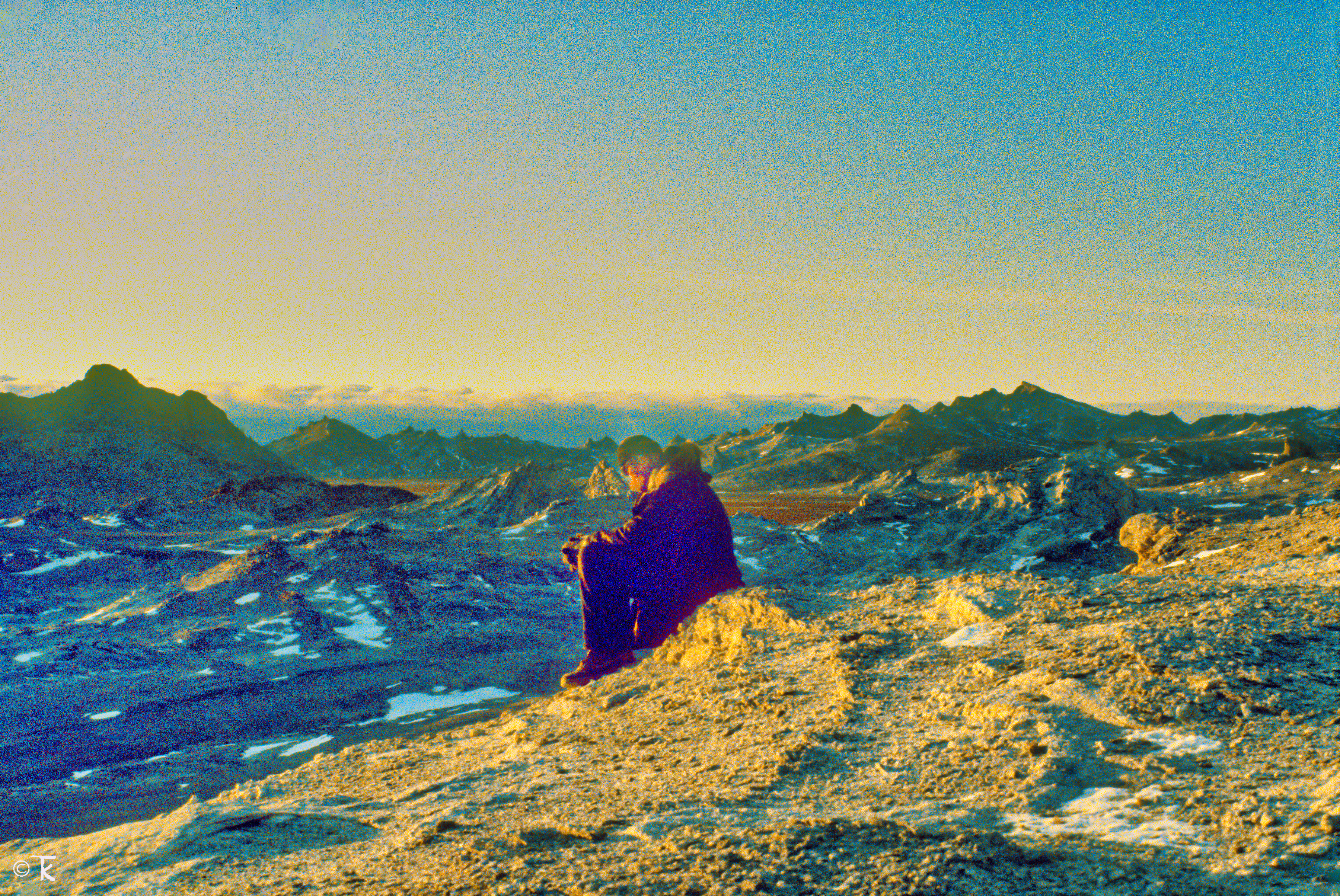
  • Sadly, I can no longer check my memory against Dave’s recollections, as he flew on to bigger skies several years ago. Big, strong and seemingly indestructible, Dave, or “Big Dave,” as he was known, was younger than Bill, Terry and me, but age appears to have little influence over such matters, no matter how much we might wish it were otherwise.

    Dave at the Mountains of the Moon   ©1981-Tim Konrad Photo

    Once thick as thieves, Dave and I had grown apart, largely because of poor decisions I had made. Accordingly, we had unfinished business in need of attention. Those matters were never resolved, and with Big Dave’s passing, must now remain forever so. It is my hope that, wherever he is, Dave is now engaged in pursuits so much more satisfying and all-encompassing as to render miniscule—too insignificant to warrant a passing mention—the concerns of us earth-bound mortals.

    Though the passage of years may have dimmed my memory, I will never forget the joy I experienced being in Dave’s company, nor his generosity of spirit, child-like curiosity and zest for life.

    Big Dave was one of those larger-than-life characters, a man possessed with boundless energy. His presence in the world drew attention no matter where he went or what he did. Well-liked and well-respected, Dave’s good-natured approach to life made him a valued member of whatever community he joined.  

    Bill and I have been friends since high school, where we were in the same graduating class; Dave was a handful of years younger. He and Bill had known each other growing up in the San Francisco Bay Area, where their fathers were mates in a sailing club competing in sailing races on the Bay. From an early age, both boys were filled with a love of adventure and drawn by the call of the sea.

    I first met Dave through Bill when he and his parents came to visit Bill and his mom and dad in Squabbletown, the site of a former Gold Rush town outside Columbia, in California’s Gold Country. In Bill’s time, little remained of the old town but rockpiles, memories and, for those who believe in such things, ghosts. Their home sat on an easy slope rising up above the flat where the town once stood. 

    Bill’s parents, Liz and Geoff, had a refreshing unconventionality about them; Geoff, a skilled shipwright, learned his craft while serving an apprenticeship in his native England. He had come to the Gold Country, also known as the Mother Lode region, to work as a master carpenter re-building old doors, windows and sash as a part of the restoration work then being performed at Columbia State Park.  

    Geoff had been associated with the Communist Party in the 1930s, and was involved in the civil unrest following the attempt to unionize dock workers in San Francisco during that period. He and Liz’s familiarity with the songs of Pete Seeger hearkened back to that time, about which they and Pete shared common cause. Bill’s parents’ awareness of the music of Pete Seeger was fascinating to me, since I’d never heard mention of him from my parents, and they were of the same generation as Bills’ mother and father.  

    Geoff cut a handsome figure, with his David Niven-esque moustache and thick shock of greying hair, his English accent only adding to the overall effect. Liz, though originally hailing from Kern County, CA., had affected her own version of an English accent, perhaps owing to her years spent with Geoff.

    Bill’s mother was literally a force of nature! Smart as a whip, Liz could crack that whip with the speed of a rattle-snake strike, effectively vaporizing the confidence of anyone foolish enough to provoke her ire. I experienced the sting of her whip on more than one occasion.

    Tolerant, if not entirely forgiving (I was never sure which), Liz could be equally charming. Her keen intelligence and intellectual depth, combined with her outspokenness, made her a formidable sparring partner, but also one not to trifle with. With Liz, there was no winning; the best one could hope for was to hold one’s own. And, with her, that was saying something. Liz was also known for her memorable and remarkable gin & tonics!

    Coincidentally, and quite by chance, one of their neighbors living just up the creek from them was Patrick Clark, a man with whom Geoff had attended grade school in England. In his retirement, Pat had constructed a miniature Elvin village beside his house, purely for his wife’s enjoyment. Sadly, she had passed just after the project’s completion. When I visited the site a few years later, it had fallen into disrepair.

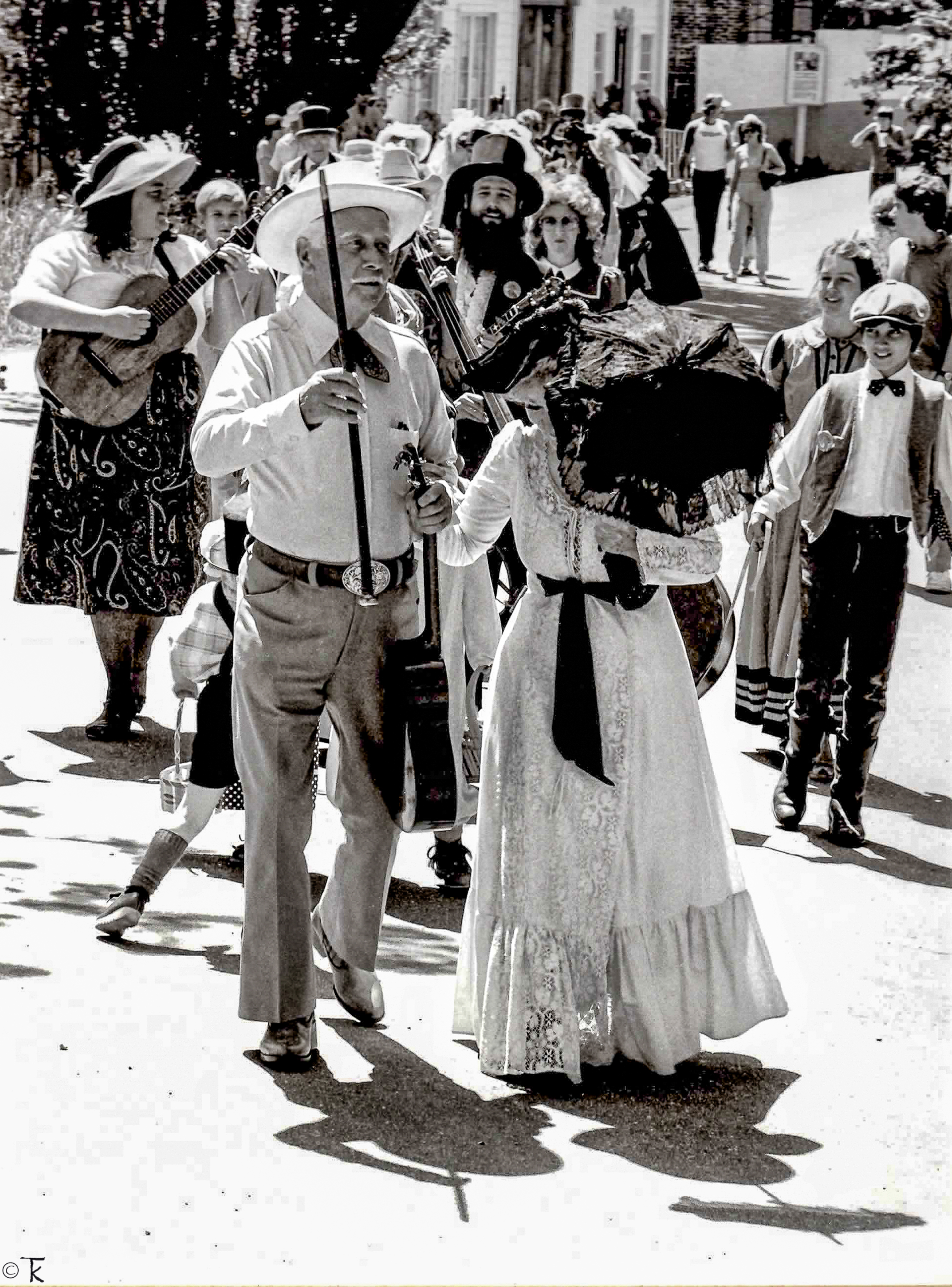
    Pat was a beloved character in Columbia in the 1980s, where he would entertain the tourists with his ukulele-playing and his charm. On one occasion, Pat served as grand marshal of Columbia’s annual Easter Parade.

    Pat Clark leading Easter parade   ©1984-Tim Konrad Photo

    Adding to the mystique of Bill’s parents, they lived “off the grid” long before that term came into common parlance. Between their acreage being landlocked and having no secured, legal right-of-way over which to erect utility lines, Liz and Geoff lived sans electricity or telephone service.

    Access to their property was via a deeply rutted and eroded dirt track accessible only by vehicles equipped with four-wheel-drive like the old Army jeep Geoff and Liz used to go to the store for groceries or visit their favorite tavern for a few beers. They heated their house with wood, burned oil at night for lighting, and used gravity to pipe spring water to the kitchen sink. Waste elimination was accomplished via the same means employed when Squabbletown had been awash in miners—the reliable, old-fashioned outhouse, spiders and all.

    Each year, Geoff grew a remarkable vegetable garden among the ruins of old stone buildings that once serviced the needs of the area’s miners, now reduced to heaps of rocks tracing the outlines where walls once stood.

    One of my iconic memories concerns an evening I spent at Squabbletown in 1960 or 1961. It was a couple of days after Thanksgiving, and I’d been invited to dinner. Friends of Bill’s parents were visiting for the weekend. After the meal, one of the guests, Joe Glickman, entertained those present by playing flamenco music on his classical guitar. Joe was a friend they’d known since the 30s, where he and Geoff had met while participating in a dockworkers’ strike.

    I can still visualize Joe, guitar in hand, mesmerizing those in attendance with the thrill and drama of his flamenco artistry, in a small room suffused in the amber-colored glow only oil lamps can provide, with the reassuring smell of oak burning in the woodstove and the rest of the world completely out of mind.

    ***

    When they were older, both men served in the Viet Nam conflict, Dave as a Marine paratrooper and Bill as an army captain piloting C-130 transport planes from Okinawa to Saigon. Dave’s war experiences parachuting behind enemy lines left him forever wary of his surroundings; he instinctively chose seats in public places that afforded him the ability to sit with a wall to his back while allowing him to monitor all the activity in the room.

    Dave’s experience of the conflict also helped form his pragmatic approach to life and gave him the freedom and confidence to embrace the fate-tempting lifestyle typical of those who aren’t intimidated by participating in risk-taking activities.

    Bill was the first to relocate to Nome. Once established, Bill began encouraging Dave to uproot his clan and follow suit, which he did a few years later. Terry, an RN, secured a job in public health in Nome and her new employer provided funds to help them move their belongings to their new home. Dave successfully re-established his general contracting business in their new community.

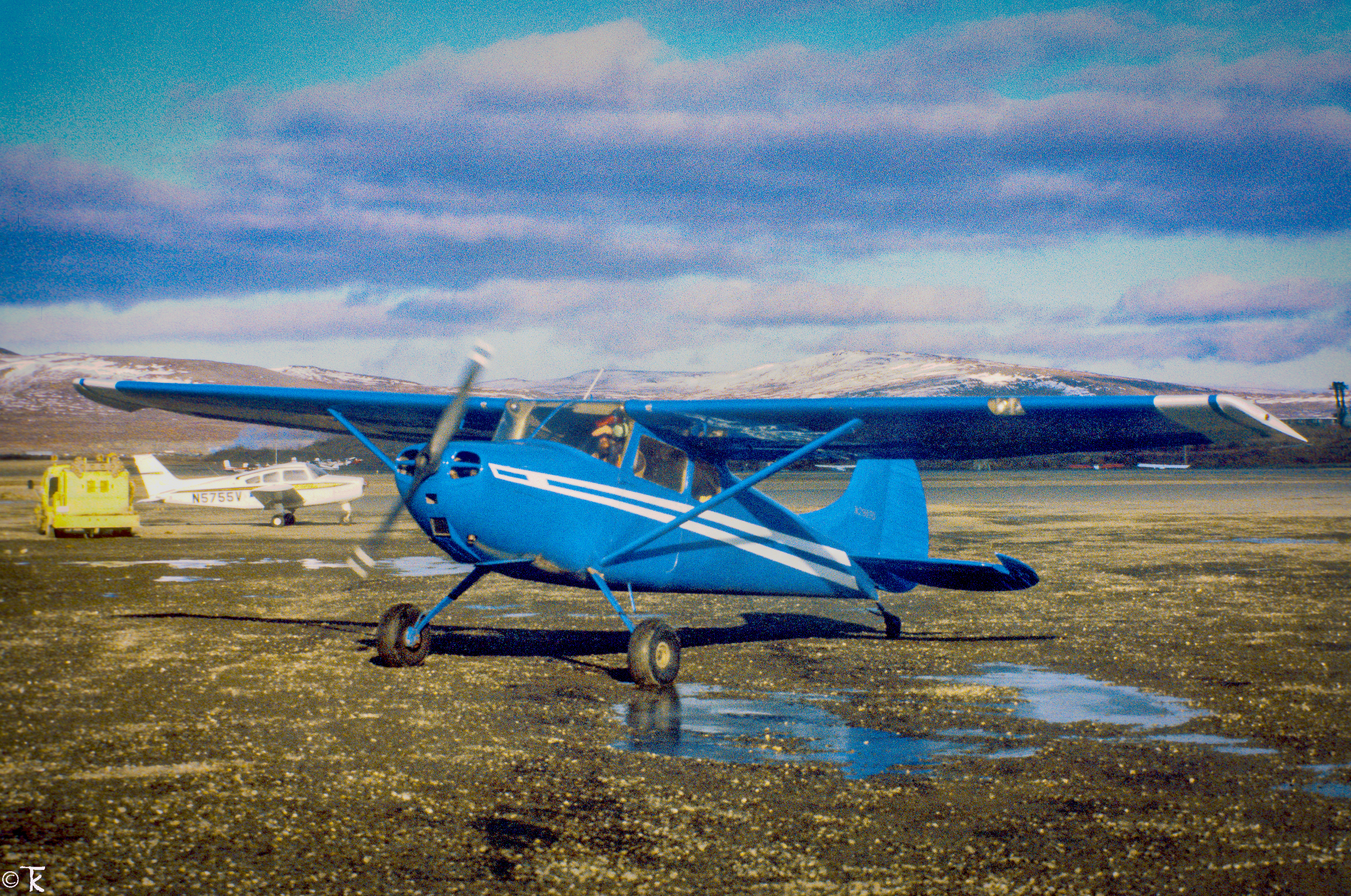
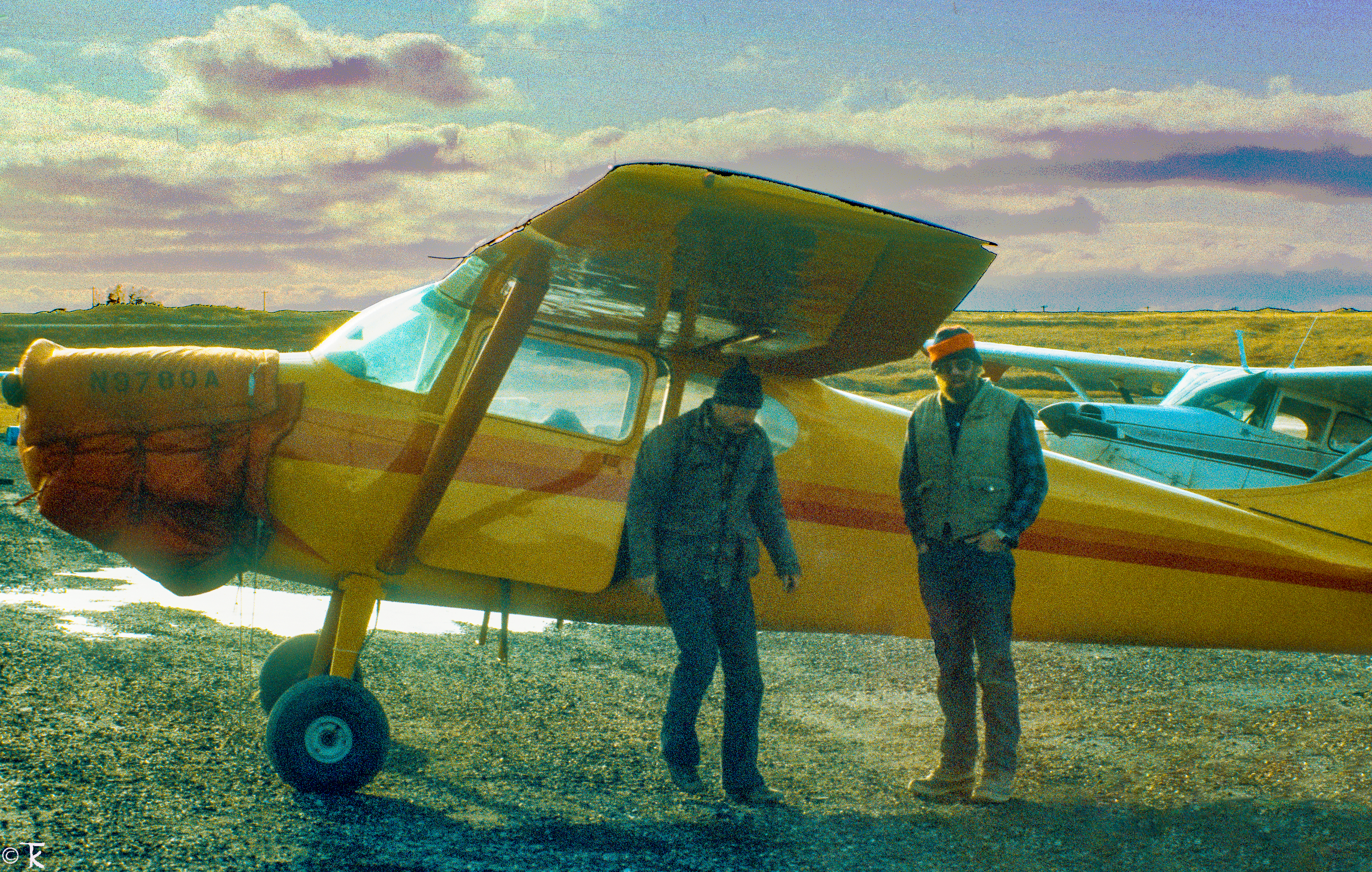
    Bill had a Cessna-130 and, before long, Dave had purchased one too. He would later supplement his house-building income with moneys earned working as a bush pilot for a local flying company ferrying people and freight to and from the outlying villages.

    Dave’s plane                                      ©1981-Tim Konrad Photo

    Bill and Dave at Bill’s plane                 ©1981-Tim Konrad Photo

    Whenever adventure beckoned, Dave was quick to answer the call. He never shied away from challenges, manning checkpoints along the course of the annual Iditarod race with the same enthusiasm he employed when erecting houses in mind-numbing temperatures or while flying fearlessly into freezing rain. Spending time with Dave was interesting, often exciting and always rewarding. And, I might add, memorable!

    Tim Konrad

    (To be continued . . )

  • Ever since first learning of my mortality

    I’ve been preparing for my death.

    Not always knowingly, in fact

    More often not

    Yet preparing nonetheless,

    Trying to make sense of

    And peace with

    That which exceeds understanding.

    Who will write my epitaph?

    The song of the mockingbird?

    The feel of the sun’s warmth on bare skin?

    The first blossoms of spring?

    The sound of water riffling over shallow rocks

    —the Songs of Rivers?

    Thunder? Lightning?

    The laughter of children?

    The kindness in an old man’s eyes?

    All these,

    And more.


    Like a task uncompleted,

    Like a loose hanging thread,

    I await my completion.

    Tim Konrad

    April 5, 2021