A surprise phone call the other day from my old friend, Bill, in Alaska, kindly pointed out a discrepancy or two in my recounting of the events presented thus far. But I digress! More on that later.
For now, suffice to say Bill helped me to sharpen up my memory a bit.
Of the short list of observations Bill offered, Pilgrim Hot Springs, he reminded me, had at one time been an orphanage.
First named Kruszgamepa Hot Springs, in the early 1900s the place had served, according to a State of Alaska-hosted website, as a “recreation center for miners attracted by its spa baths, saloon, dance hall and roadhouse.” After a fire in 1908 burned down the roadhouse and saloon, the site was acquired by the Catholic Church: Under the church’s ownership, it was transformed into a Catholic mission and orphanage, which is how it got its current name.
A series of epidemics in the first decade of the 20th century struck Alaska’s native populations harder than it did people in other places, resulting in many orphaned children. The orphanage served as a refuge for these children, as well as those who followed them, until its closure in 1941.
The lessons learned from the 1918 flu pandemic, Bill said, have served many native Alaskan communities well during the ongoing Covid-19 pandemic. By shutting their villages off from outside contact, these villages have thus far managed to remain virus-free.
If only our legislators possessed a portion of the wisdom of these people, or indeed even cared about such things, we might not be in the position in which we now find ourselves, made to endure senseless repetitions of the cycle of shut-down/open-up, with their attendant body counts and broken families.
If and when Covid is out-maneuvered into submission, it will be in spite of many of the public officials who did their damnedest to obstruct, in one way or another, the struggle to contain this virus. What possible inducements could persuade a person to perform acts that essentially aid the spread of a known, deadly pathogen, one can only imagine . . . maybe.
Personally, I cannot!
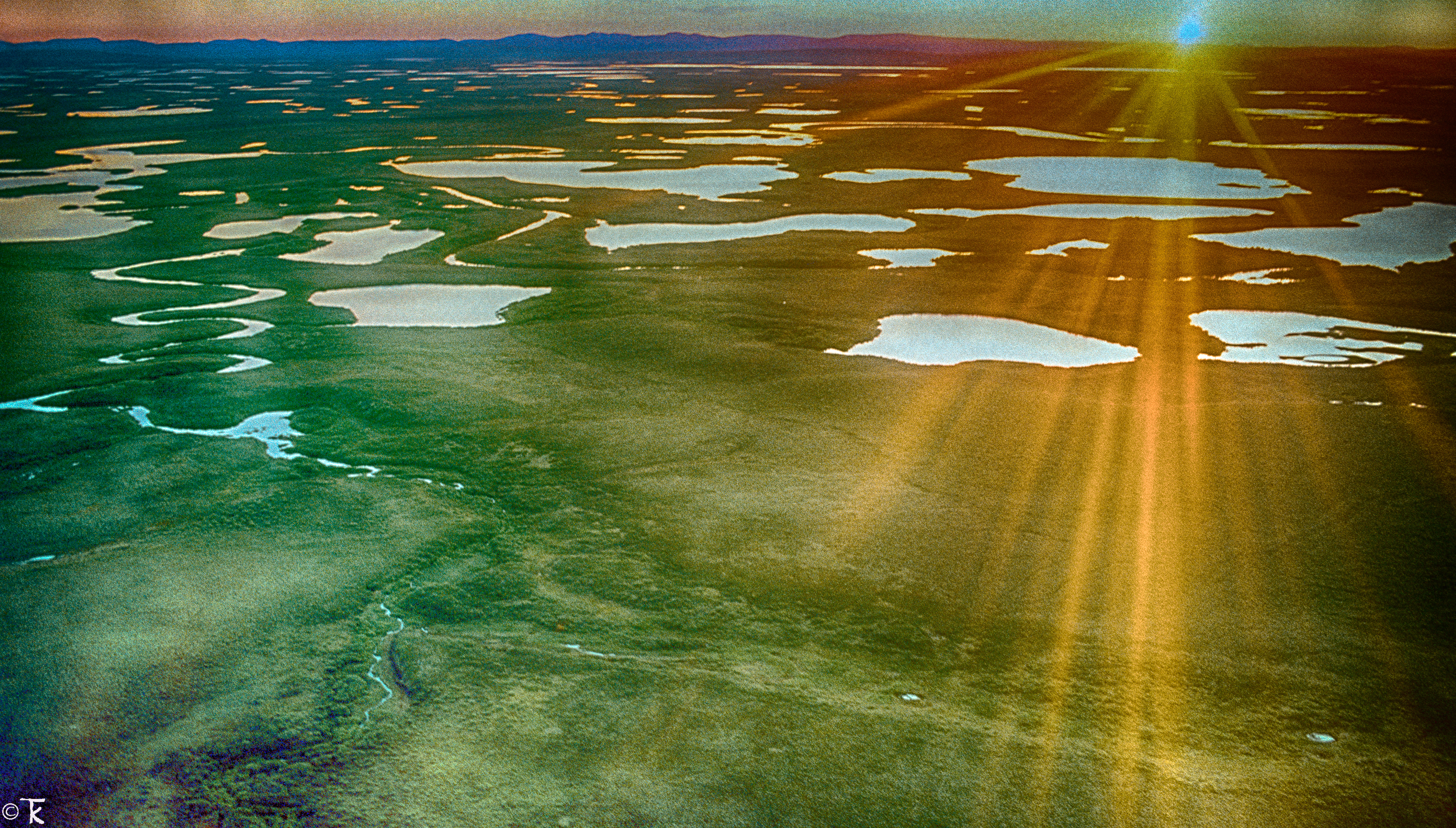
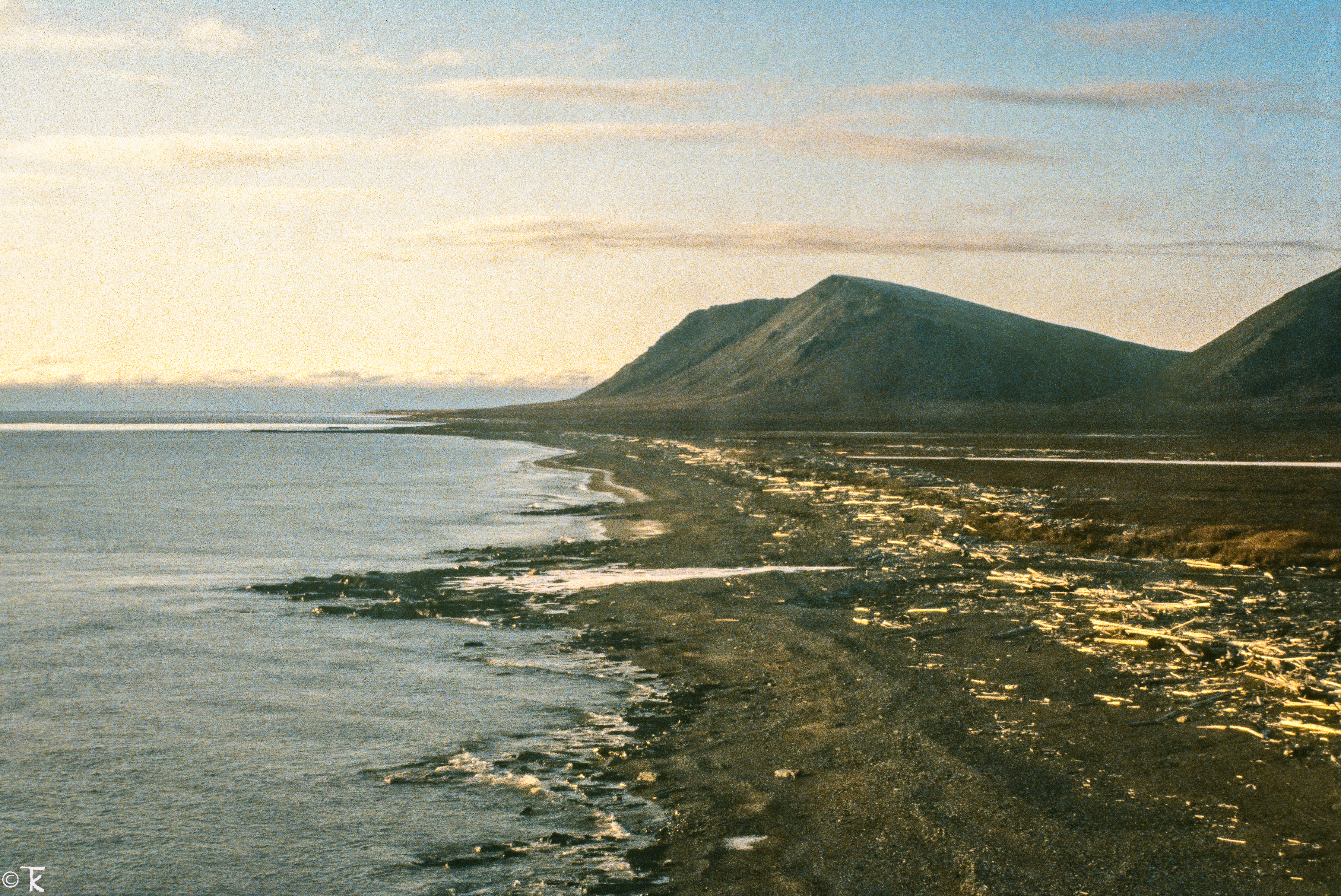
Dawn Over the Sawtooth Mts. ©1987-Tim Konrad Photo
***
On Memories and their Fallibility
Lately, I’ve been going through batches of old black & white 120 mm negatives—images of relatives and friends of my parents, travel photos and other memorabilia from their lives, many of them taken prior to my birth. From some of those taken after I came along, the ability to view graphic depictions of scenes that for decades have been available to me only through recall has been at once nostalgic and striking in how fuzzy some of my recollections appear when seen through the sharper focus of the camera’s lens.
Memory is a funny thing! It’s defining criteria, like opinions, vary from individual to individual. Some people possess near photographic clarity of recall, yet others remember little of their experiences. While many of us swear by our recall of events, we also require signed contracts to preserve the details of business arrangements, and for good reason! Simply said, regardless of the causative factors involved, memory serves some people better than it does others.
Having now lived in eight decades, two centuries and two Millenia, I possess an interesting lifetime’s worth of memories. For my entire life, I, like most people, have relied on my recall of events to guide my decision-making—what is commonly called “learning by experience.” While this exercising of memory may have served me well, the retrieval of long-term memory—recollections from the past—may not, it seems, be a similarly reliable enterprise.
Between the revelations afforded by my descent into family photo archaeology and the equally enlightening telephone conversation I had with my Alaskan friend, Bill, the other day, I am forced to concede that my long-term memory must be engaged, at least part of the time, serving someone besides me.
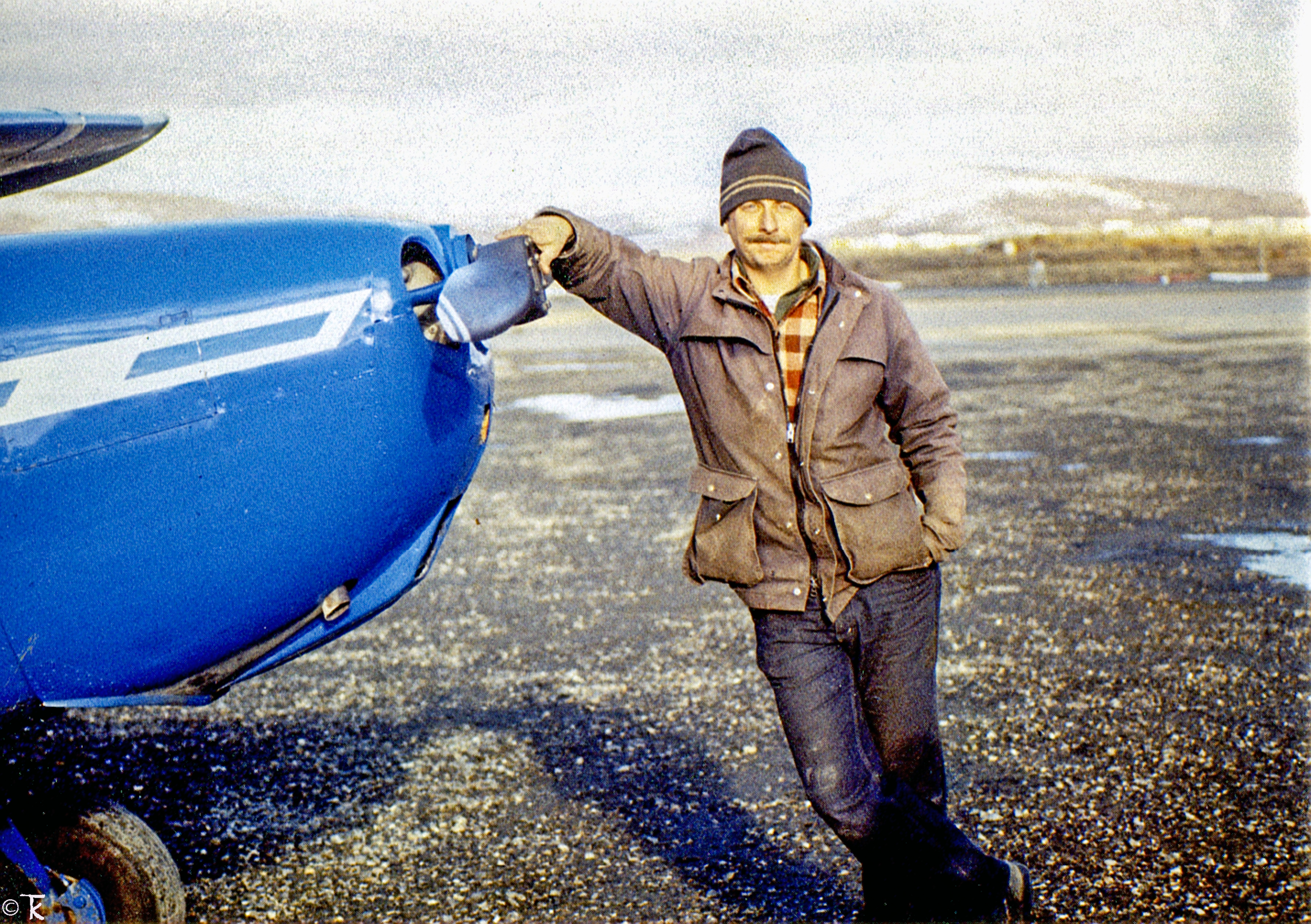
Recalling the tale I recently spun concerning my Alaskan friend and his close call with the melting ice that threatened his Cessna, Bill informed me, with a polite nod to fuzzy recall, that I’d gotten it wrong.
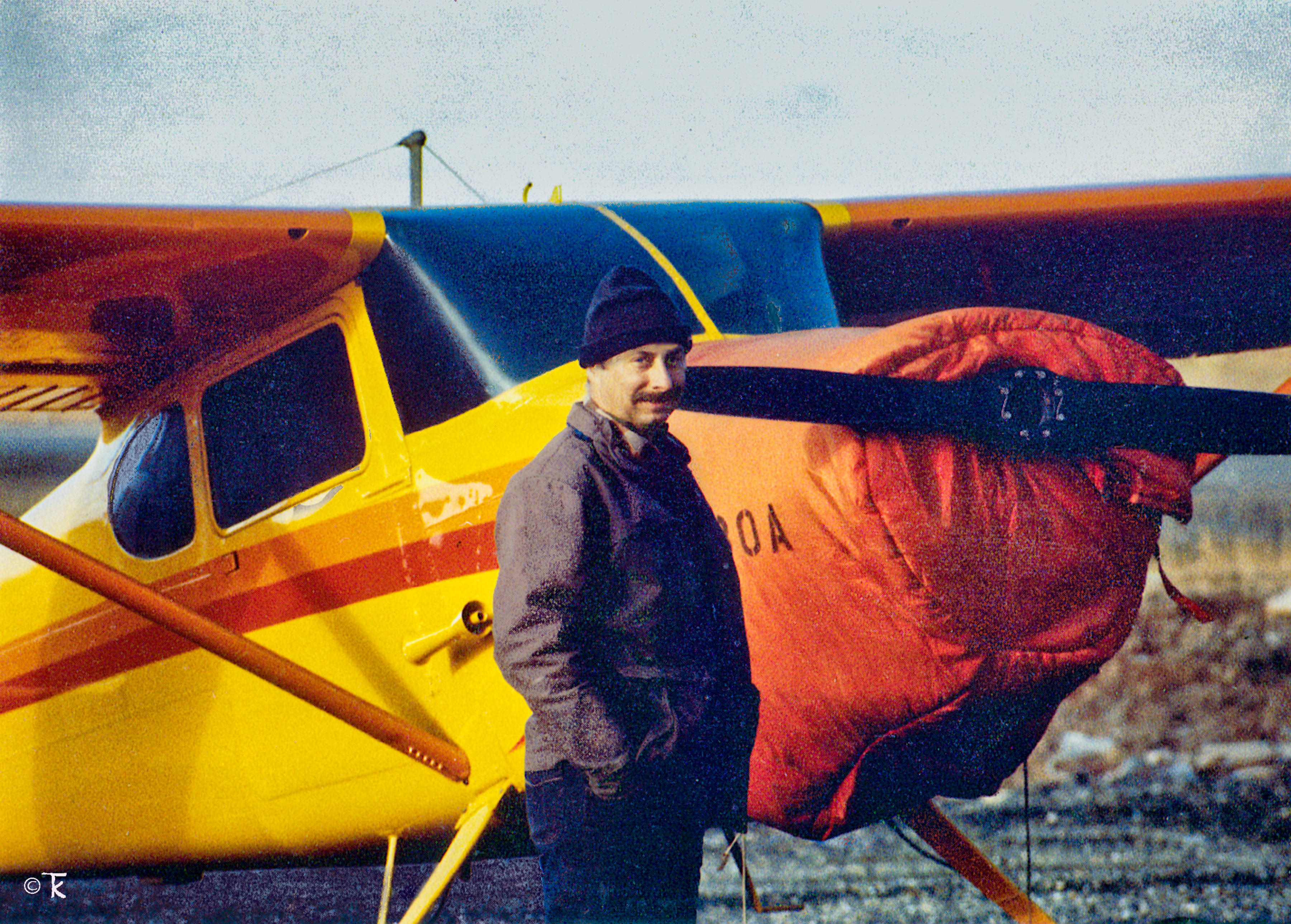
Bill and his Cessna 130 ©1981-Tim Konrad Photo
I’m rightly suspicious of ‘revisionist histories,’ especially now that I’ve become the unwitting author of one myself. Truth be known, I’d gotten the salient points right. There had been an aircraft, and breaking ice had been involved. Much of the rest, however, had become muddled into a mess of misremembered mush: It bore little resemblance to Bill’s recollections, and, as he was the key figure in the story, he, above anyone else, should know the true tale of what transpired.
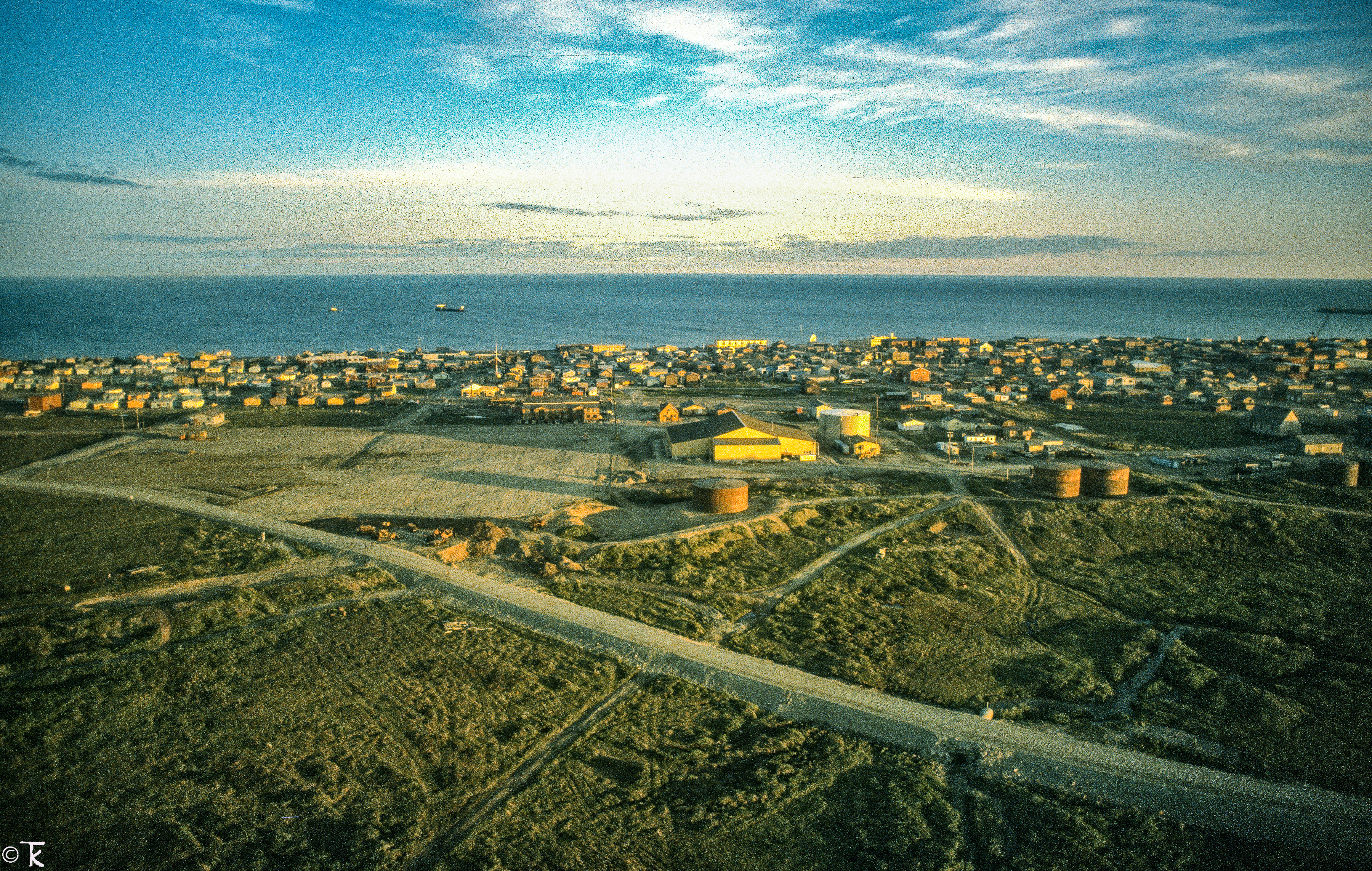
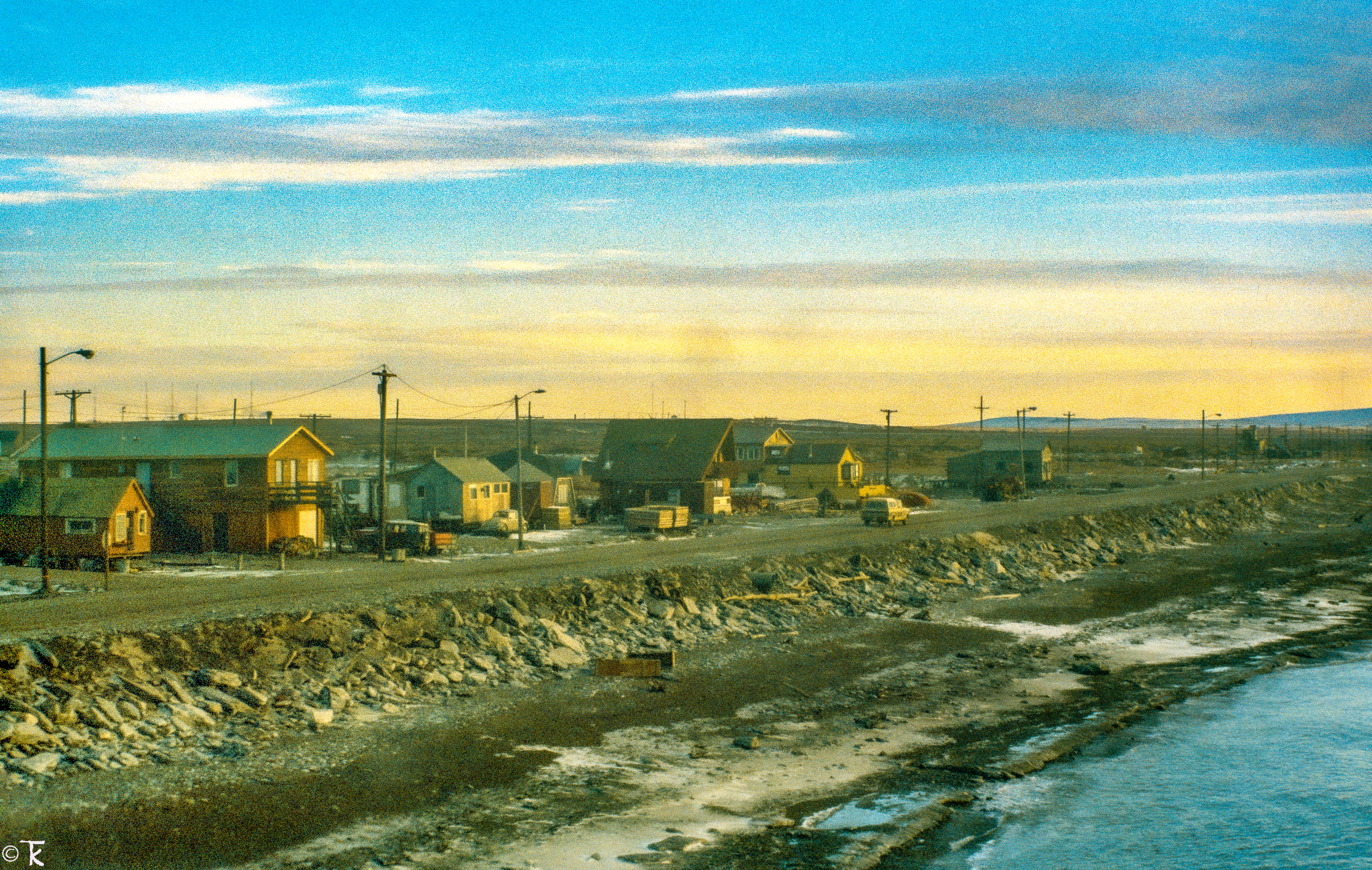
As told by Bill, the incident began in Elim, not Golovin. Elim, Bill explained, was situated on Norton Sound, where the sea ice was more liable to fracturing and breaking off during stormy weather.
Bill’s plane had been parked for the night on the ice adjacent to the shore. He had just recently swapped his plane’s tires for skids so he could land on iced-over bodies of water. In the wee hours, he was awakened by the sound of several neighbors banging on his door and warning him that the ice was cracking and he needed to move his plane immediately.
What ensued resembled a comedy-of-errors scene from an old Mack Sennet film as Bill re-told how he had needed to use a small boat to reach his plane, which by the time he’d dressed and gone outside was sitting atop an ice floe drifting 8 feet from shore.
Tense minutes followed as he’d uncovered the plane’s cowl and fired up its engine. Bill’s plane had no instrument lights but did have a landing light and a headlamp. He chose not to use the lights on takeoff because, he said, he hadn’t wanted to mess with his night vision. As a consequence, the only gauge he could see was the rpm gauge, which, as it had been coated with radium, glowed in the dark. The snow on the ground, he judged, provided good enough visibility to allow VFR flight, and his plane had navigation lights on its wingtips and a rotating beacon plus what Bill termed a “pretty good” landing light on the wing.
Bill had intended to fly across the peninsula to Golovin, where a girlfriend of his resided, but the storm made flying there impossible, so he returned to Elim. The village runways all had good reflectors lining them and the maintenance man at the airstrip in Golovin, a fellow named Dan, was out plowing the snow off the landing strip at 3:30 am when Bill returned. He made a low pass to signal his intent to land and Dan pulled his snowplow off the runway so Bill could touch down.
By lining up his plane with the reflectors lining the airstrip, Bill said, his landing light “define(d) the runway well.” With the help of his plane’s rpm gauge to judge his air speed, coupled with his skill in interpreting the sounds produced by the plane’s stall warning, he was able to land the plane safely. Flying with minimal instruments was familiar to him, Bill said. His airspeed indicator had the habit of freezing up every winter. As a result, he said, he had grown more reliant on the “aural moan from the stall warning” to alert him when he needed to adjust the plane’s speed.
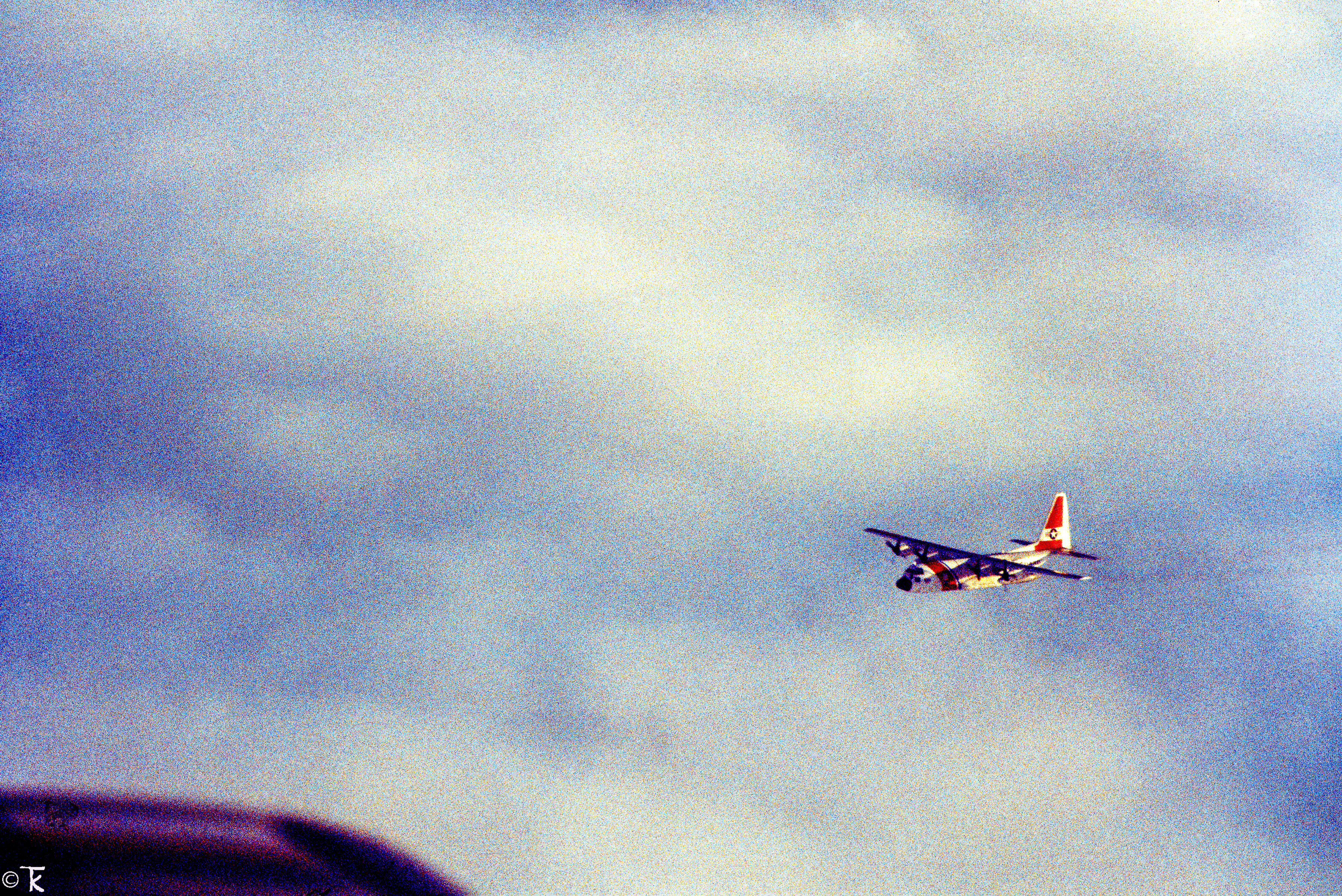
Bill displayed his characteristic modesty in the manner in which he downplayed the stressfulness of the incident by adding that he had become accustomed to night flying during his 700 or so hours spent piloting C-130s in Vietnam.
***
Another matter of faulty recall on my part was corrected when Bill reminded me that muktuk is actually the Inuktitut word for whale blubber and not seal blubber. The Inuktitut word for seal blubber, which he said he found much less palatable than whale blubber, is uqhuq, or uqsuq. Blubber, according to Wikipedia, is “an important part of the traditional diet of the Inuits and other northern peoples because of its high energy value and availability.”
To whatever degree my reputation as an accurate reporter has been been damaged by these revelations, that damage is more than offset, in my view, by the importance of honesty above all other considerations save, perhaps, that of artistic license. Which is to say, an error is only perceived as such once it becomes noticed by someone. Until then, it’s just a part of the story!
I hope you will agree.
Tim Konrad
(To be continued . . )